Evolution of Calligraphy in India
(1800-1899) Pre-Independence
(5 items)
Evolution of Calligraphy in India(1800-1899) Pre-Independence
(5 items)
(5 items)
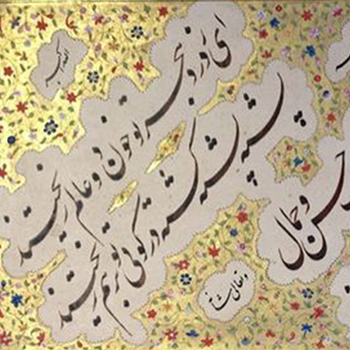
Calligraphy by Sayyid Muhammad Amir Rizvi
Sayyid Muhammad Amir Rizvi was a famous calligrapher from Delhi in the Mughal period.
Details >>
Calligraphy by Prince Muhammad Sultan Fath al-Mulk Shah
This calligraphy is by Mirza Muhammad Sultan Fath al-Mulk Shahi, son of the last Mughal ruler, Bahadur Shah II.
Details >>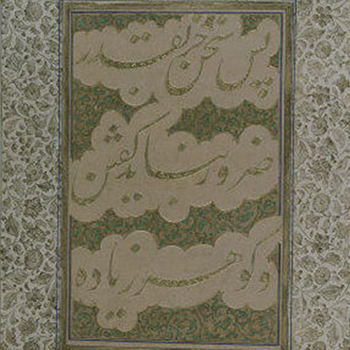
19th century illuminated and embossed calligraphy
This image is from an Indian album, dated 1866–67, at the Victoria and Albert Museum. India began to receive and practice fingernail art in the latter part of the 1800s. The method remained essentially the same, but it was enhanced with native decorations like colouring, gilding, and lighting the previously unadorned surface. The calligraphy's elevated surface and background are gilded in addition to its lit borders.
Details >>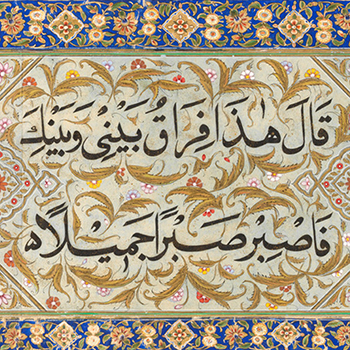
Arabic manuscript in Naskhi script
This Arabic manuscript on paper has text written in two lines of bold, large naskhi script in black ink on a pale green ground. It is decorated with vegetal motifs in gold and further illuminated cornerpieces, as well as blue, gold, and brown illuminated borders.
Details >>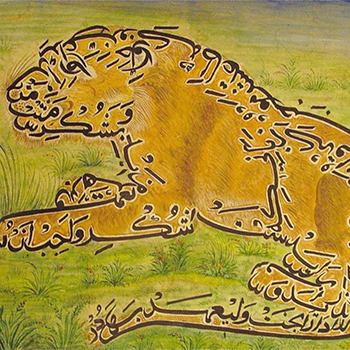
Calligraphy by prince Darabakht
This calligraphy was done by Prince Darabakht, heir to Mughal Emperor Bahadur Shah II. The eldest son of Bahadur Shah II, Mirza Dara Bakht Miran Shah Bahadur, was the crown prince of the Mughal Empire from 1837–49.
Details >>