Evolution of Coin Design in India
(1200-1299) C.E
(4 items)
Evolution of Coin Design in India(1200-1299) C.E
(4 items)
(4 items)

Gadahara Simha
by Ahom Dynasty
by Ahom Dynasty
The Ahom Kingdom was founded in the 13th century by migrants from northeastern Burma who conquered the old kingdom of Kamarupa. The kingdom was able to withstand invasions from the Bengal sultanate and even the Mughal empire, although the king was forced to pay some tribute, and Aurangzeb even briefly issued coins in Assam. Eventually, the kingdom was defeated by invading Burmese armies in 1821–22. At that point, the British stepped in and made Assam a British protectorate in 1825. The earliest coins from the Ahom kingdom date from the 15th century. Originally, the coins were round, but in the 16th century, the shape of the coins was made octagonal, supposedly because the Yogini Tantra mentions that Kamarupa is eight-sided. The octagonal shape and the long series make these coins highly popular with collectors.
Details >>
Ghaznavids
by Ghaznavid Dynasty
by Ghaznavid Dynasty
A fascinating coin in that it is one of the few bilingual coins from this period, showing the Islamic professions of creed in both Arabic and Sanskrit! This variety has al-qadir above and billah to the left on the obverse. Also, the reverse margin reads: avyaktiya name ayam tankam hato mahamudapura samvati. Although the first Muslim conquerors in India were the Habbarids of Sind and the Amirs of Multan, their effect on the country was not very far-reaching. The Ghaznavids were a Turkic dynasty that started out as regional governors for the Samanids in the area of Ghazni in modern Afghanistan. They became independent in AH 389 (= 999 CE) and expanded their realm into northern India. Mahmud, the son of the founder of the dynasty, embarked on a major military campaign, as a result of which he became the ruler of most of present-day Afghanistan, Iran, Pakistan, and northwestern India. The Ghaznavid dynasty succumbed to the Ghorids in the late 12th century.
Details >>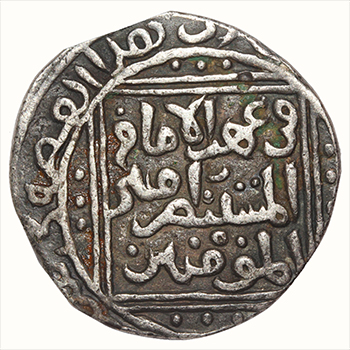
Razia Sultan, Silver Tanka
by Mamluk Dynasty
by Mamluk Dynasty
Razia Sultana was one of the few queens regnant in the history of India and thus one of the few women to issue coins. This coin was minted during the early days of the reign of an exceptional leader who steered the Delhi Sultanate from 1236 to 1240. Razia Sultan (she was not a fan of 'Sultana') was the daughter of Iltutmish of the Mamluk dynasty and the first woman monarch of this land—and among very few of her number in the world. Coins of Razia are found in silver and bronze; one gold coin of Bengali style is also known. Silver tankas were issued from both Bengal (Lakhnauti) and Delhi. Initially, she issued coins from Delhi in the name of her father, Iltumish, citing the title Nasrat, i.e., the female title of Nasir.
Details >>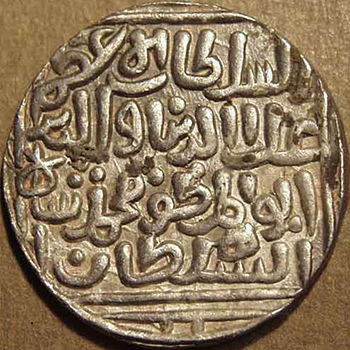
Alauddin Khalji coins
by Khalji Dynasty
by Khalji Dynasty
Ala ud din Khliji issued coins in gold, silver, copper, and billon. Gold and silver tankas issued by him are very common and were struck at three places: Delhi, Dar al-Islam, and Deogir. He also struck some square tankas in both metals, but they did not have the mint name inscribed on them. Alauddin Khalji minted coins with the legend Sikander Sani. Sikander is Old Persian for 'victor', a title popularised by Alexander. While sani is Arabic for second, the coin legend (Sikander-e-Sani) translates to 'Second Alexnder' in recognition of his military success. His coins omitted the mention of the Khalifa, replacing it with the self-laudatory title Sikander-us-sani Yamin-ul-Khilafat.
Details >>