Product Design
Batch 1971-1973
(13 items)
Product DesignBatch 1971-1973
(13 items)
(13 items)

Card Storage System and Time Punching Machine
by B. Kalra
by B. Kalra
The industrial revolution was added to history books in the 17th century. Since then, more and more rules and regulations have been constituted for the hiring of labour and the remuneration of workers in an attempt to discover a satisfactory one that would be acceptable to the employer and adequate for the workers to suit a particular type of industry. One of the oldest methods in existence of remunerating workers is the "time work method," also referred to as "day work," "day rate," "time rate," etc. By this method, the worker is paid a stated sum per day of 8, 9, or more hours, or per week of 40–48 hours and upwards, in accordance with the custom prevailing in the particular industry. The general popularity of this system of remuneration may be attributed chiefly to its simplicity as regards the calculation of wages, etc. In modern practice, however, this method is modified by the introduction of various bonus schemes. In fact, the institution of schemes embracing a monetary incentive towards increased production has resulted in a considerable increase in production, with a consequent benefit to the employer and employee. Hence, this method is adopted by the maximum number of industries and is still going stronger and stronger. In the time-work method, the first essential is the ascertainment of the total time spent inside the factory, etc., for which the worker is entitled to draw wages. The three chief methods of recording workmen’s time are manual recording, the check or disc method, and the time recording clock method. The manual system is the oldest and is still in use, mostly in small industries. The disc method, which is superior to the manual system, is gradually falling into disuse. The time recording clock method is becoming more popular. The device used for recording a worker’s time is a time punching machine. The existing time punching machine has good scope for development and improvement, so a redesign of it is sure to receive a warm welcome.
Details >>
Autorickshaw
by Jagannathan Arvind
Details >>
by Jagannathan Arvind
India is a developing country. Her economic conditions are typical, as are her culture and the mode of living of her people. The country's per capita GNP is Rs 650 per annum. This also implies that only three million people in the country, or about five percent of the total population, earn more than Rs 5,000, and only six million earn more than Rs 3,000 per year. People in the uppermost income bracket are the owners of the 10 lakh motor cars that are on Indian roads. A lower section of this income bracket, earning between Rs 6,000 and Rs 12,000 per annum, can also afford some kind of motorised vehicle. However, this group cannot ever hope to buy a motor car, which costs around Rs 20,000. As a result, they must either forego the great conveniences provided by a family vehicle such as a car or opt for a secondary mode of transportation. The only substitute vehicle that also has a lower price and is suitable for family use would be some kind of two-wheeler, such as a motorcycle, scooter, or moped, all of which are poor substitutes for a regular family vehicle.
It is in this analytical framework that the three wheeled autorickshaw could fulfil a pressing transportation need for the average Indian. Being a small vehicle with a simple structural design and sufficient power (7 horse power), it is probably the closest reality to the concept of a people’s car. However, the autorickshaw is not accepted today as a family vehicle, despite its tremendous versatility and potential. The cost of the autorickshaw, at about Rs 8,000, is quite reasonable during the lifetime of the middle income group. This can be understood in its true perspective when the cost of the autorickshaw is compared to the cost of the existing motor cars, which cost two to three times as much. Despite these factors that position the autorickshaw as the ideal vehicle, it must now be noted that it severely lacks in several critical functional aspects, rendering it unsuitable for use as a family vehicle.
The primary aim of this project is to redesign the existing autorickshaw with a view to eliminating all these inherent defects and initiating the genesis of a far superior design specifically meant to provide all the functions of a family vehicle, unlike the existing multipurpose vehicle, which is modified to serve the purpose in a limited way.
Such an approach to the problem should give birth to a singularly unique design that would, in effect, be a substitute family vehicle for that large section of the population that cannot afford a motor car but does feel the need for one. It cannot be stressed enough here how significant such a solution would be for the immediate and substantial improvement in the standard and quality of living of the Indian people.

Drafting Table
by K. C. Mahapatra
Details >>
by K. C. Mahapatra
Designers everywhere must be aware of the great changes taking place in the drawing office. Drafting is rapidly becoming a new technology. The drawing office environment, which has hardly changed in the past half century, is undergoing a revolution. The employment of advanced electronic equipment and automated drafting machines within the drawing office has given rise to the creation of an atmosphere much more in keeping with the draftman’s important role in industry today.
Quality and reliability standards of products have become more rigorous, and manufacturers have been faced with the problem of needing to reduce overhead costs. Lowering standards of accommodation in the drawing office, coupled with the feeling of not being paid a salary proportional to the importance of their contribution to the company’s success, have resulted in trained drafttsmen leaving the drawing office for other related fields. These factors gave rise to the need to automate the traditionally manual methods of drawing offices in order to reduce to a minimum the lead time required between the conception of an idea and its production reality. And the drafting machine, as a device, is central to this.
The fuller utilisation of the higher abilities of draftsmen is a major challenge today. To meet this challenge, ways and means of reducing the time and effort required to make drawings are needed. Among these ways and means are the use of simplified drafting machines and methods, the elimination of non-essential and exclusive use of drafting aids, and time savers.
Unlike in foreign countries, India cannot go for computer-aided drafting machines because of the high capital costs involved in it. The majority of drawings required by industries today in India are still produced by manual methods, and this situation is likely to continue for some time.
Most of the drawing machines manufactured in India today are so expensive that an ordinary designer can never afford them. Furthermore, in the available drafting machines, no human consideration has been taken into account, resulting in user fatigue. The unnecessary floor area taken up by its bulkiness and complicated operational sequences make the product still worse. After studying the aforesaid problems, the redesigning of the drafting table was felt to be long overdue.

Safety Equipment for Welders
by Liladhar Jethwa
Details >>
by Liladhar Jethwa
Every industrial establishment, small and large, is now equipped with welding appliances. Welding has become one of the principal means of fabricating and repairing metal products. Modern welding has become one of the principal means of fabricating and repairing metal products. Modern welding methods date from the discovery of electric current by Davey in 1912. In 1881, electric welding was first brought into use. The first practical torch having an oxy-acetylene flame for welding was used by Fouche and Picard in 1901. This method was first applied in 1903.
The vast expansion of welding processes used in industry can be judged by the amount of welding material used every year. In the U.S.A. in 1937, five billion cubic feet of oxygen and two billion cubic feet of acetylene were used for welding. In the same year, 155,310,000 pounds of welding wire were also used. Welding finds extensive use in the following industries: aerospace and rocketry, automotive, railroad, shipbuilding, containers, furniture and fixtures, industry machinery, personal service machinery, building and bridge construction, maintenance, etc.
Welding is subject to greater hazards than any other manual or manufacturing activity, and these may lead to serious accidents not only for the workman himself but also for those in his vicinity. For this reason, safety regulations for welding have been framed by all the countries in the world.
Due to the nature of the process, the welder’s body and clothing must also be protected from radiation and burns caused by flying globules of molten metal. The arc, in addition to being very bright, is a source of infrared and ultraviolet light, which are harmful to the eyes and skin. The fumes also cause some problems.

Cloth Measuring Device for Retail Shops
by M. R. Gandhi
Details >>
by M. R. Gandhi
The importance of cloth is indicated by the fact that it satisfies man's second, but not secondary, economic need after food. The textile industry is the world's second-largest industry, consuming 10% of global energy and playing a significant role in the global economy.
At the retail level, millions of metres of cloth produced by global industry are measured manually with a measuring stick or tape. The process of cloth measurement at retail level is the most habitual, oldest, and most universal.
The idea behind taking up the project is to design an intermediate link between customer and salesman that will make retail cloth measuring more convenient and faster. Such a design can become a boon for the salesman at the time of stock checking, particularly for the mill’s retail shops.
Considering the present case of industrial and technological development, fashions, and a competitive market, it is found that the major factor governing the production of cloth in industry is the feedback that the sales department obtains from the sales of the cloth at retail level. Bearing all these factors in mind, I feel that my attempt at designing such a device will be justified.
Playground Equipment for Children
by R. A. Naik
Details >>
by R. A. Naik
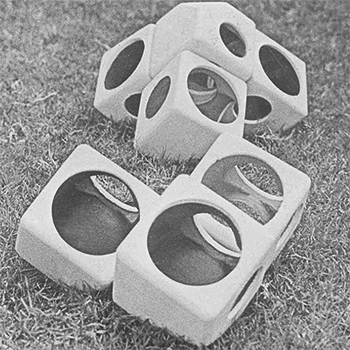
Man is the kind of animal that must have adventure, excitement, and romance. The pursuit of happiness, the love of adventure, and the desire for achievement are great motivating forces, which are realised most fully in recreation play.
Universally, play is the chief occupation of the young child during his waking hours. Through play, the child attains growth and experience, it is the major business of life for him. It is nature’s way of affording outlets for the great biological urge for activity and the means of acquiring skills. A playground is an area designed to afford a wide range of enjoyable and desirable activities for children of elementary school age, youth, adults, and families. Equipment is provided in the playground to provide opportunities for play.
The report refers to the work carried out for the design of playground equipment for children in the age groups of 5–6 years and 12–14 years. The work starts with the facts regarding play, its psychological understanding; social and other relevance. This leads to the formation of concepts and ideas. The designer then proceeds with the development of the idea. The last section leads to the proposal for the equipment. The proposals are not solutions in and of themselves, but rather a first step toward the change-oriented organisation of space and theme for one of the environments that the child encounters. The proposals suggested are experiments outlined that may lead to the solution.
Miss. B. Sampat's sincere efforts to expose her knowledge, time, and experience for the design are heartily acknowledged, and the Industrial Design Center's efforts to convert this work into a play are beyond words.
Mobile Shops
by Harikumar Nair
Details >>
by Harikumar Nair
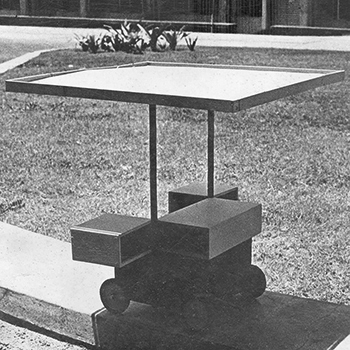
Escape from poverty is the problem of the poor. Attempts have always been made to solve this. The poor try everything, including begging the resourceful, before taking up the trade of vending their wares. This is only a small area of self-employment available to them. But still, they cannot afford regular shops because of their low finances. Then they have to find the market. In addition to this, they have a day-to-day economy and cannot be sure of the continuous supply of commodities. The mobile shop is the basic equipment for selling their wares. It transports the commodity to the market; the source may be far from market locations, so it lets him choose his own market at times. The existing mobile shops concentrate mainly on food items with little or no preparation. They are good to start with, since they require minimum know and do not require a large financial investment; otherwise, the number of items can be limited to the financial capability.
Sometimes the whole family helps prepare the items. Also, food items are easier to sell. The mobile shops also sell small articles when they are handicrafts or are cheaply available. They may have to change locations according to market conditions, seasons, trends, or personal difficulties. Sometimes even the commodity is changed depending on availability, changes in resources, seasons, markets, etc. The mobile shop owner faces a number of operational challenges, such as finding resources and continuously feeding them, transporting commodities, being unaware of market conditions and an unstable economy, and dealing with legal restrictions regarding selling on the sidewalk, such as licenses, etc.
The problems are complex when the mobile shop cannot find a suitable market for its commodities and wandering becomes a daily routine. The shop suffers losses if perishables are not sold in a timely manner. The mobile shop is a convenient arrangement for city dwellers. The general atmosphere of hurry and the need for fast service almost induce the common man to use these shops. Also, mobile shops are found to be very suitable for recreational environments. The sale of goods on the streets is prohibited by city authorities due to health concerns. The mobile shops also tend to use the pavement and sidewalks and get in the way of people. This creates issues with traffic and pedestrian movements.

Bread Toaster for Catering Establishments
by Siddha A. K.
Details >>
by Siddha A. K.
Toasting is the process of dehydrating bread. Toasting is primarily done to make the bread more tasty. Simple bread slice cannot be eaten without either butter or jam but a toast can be eaten independently. An oven-hot toast tastes better than an ordinary bread slice or a cold toast. In the case of toaster heat is given by means of radiation.
In these fast-moving days, bread has become one of the most important food items. It is a ready-made food item that does not require much further preparation and is cheap. The busy housewife of today or the working lady finds it suitable to serve bread either at breakfast or during the meals. So it is time-saving as well as cheap. However in India the bread has remained as a secondary article and not the main one. Therefore it can be seen that there is a heavy demand for a toaster which can serve the need of a restaurant or a hostel mess.
At present, a person has to wait for quite a long time to get a hot toast in the restaurants as well as in the hostel mess. This has been seen by myself and also has been head from many people. The reason behind this waiting is the non-availability of suitable toasters for such catering establishments. Hence I have chosen this problem. With the increase of hotel going people and the increase in hostel messes, the demand for such a toaster will be always on the increase. Hence I think this attempt in designing such a toaster will get a warm welcome.

Fruit Drier
by Subhash A Avasare
Details >>
by Subhash A Avasare
Drying of foods in order to preserve them during the seasons of abundance for the consumption during the season of shortage is an old art. In India this technique was much widely used in olden days. The traditional dry fruits like kokam ‘Ambapoli’, Manuka and dried mushrooms are eloquent testimony of our ancestors knowledge of dehydration technology. The word dryer, evaporator and dehydrator are at present used as if synonymous therefore at this stage it is essential to clarify the difference between those terminologies. To dehydrate means to remove water by any means, squeezing centrifuging or evaporating. Drying means removal of all possible liquids, water, ether, alcohol etc. from the solids. Evaporation is drying not under well controlled conditions of temperature, humidity and air flow, whereas dehydrator ensures much controlled conditions. In this discussion it is too early to say what degree of controlled conditions.
We are aiming at, hence it is preferred to call the machine a drier rather than a dehydrator or an evaporator. Just as the civil war stimulated the canning industry the Boer War and the First World War stimulated the dehydration industry. To conserve the cargo space enormous amounts of foods were dehydrated during the two world wars. In Germany in 1898 there were 3 drying plants and in 1917 there were 1900. It is this that increased her ability to maintain her food supply during 1939 to 1944. To give an idea of the space conservation may I illustrate with an example. A tonne of apricot in canned form weighs 2800 lbs and in dried form only 400 lbs leaving aside advantages due to the less costly and light packaging. The most economical method of drying is by sundrying and a majority of dried fruits today are sundried.
Domestic Flour Mill
by Subhash B. Bidre
Details >>
by Subhash B. Bidre
Raw materials often occur in sizes that are too large for the user, and therefore, they must be reduced in size. Depending on whether the material is a solid or a liquid, this size reduction operation can be divided into two major categories. If it is a solid, the operations are known as grinding and cutting; if it is a liquid, the operations are known as emulsification or automization. Grinding and cutting reduce the size of solid materials by mechanical action, dividing them into smaller particles. Perhaps the most extensive application of grinding in the food industry is in the milling of wheat grains to flour, but it is used on many other occasions, such as in the grinding of corn for the manufacture of corn starch, the grinding of sugar, and the milling of dried foods.
More than 6000 years ago, people ceased to eat grain in its wild state and began to break it up with a rude kind of pestle and mortar. Later, a primitive hand mill came into use. This consisted of two stones with roughened surfaces between which the grain was ground. The quern, the next mill to emerge, was made of two circular stones, the upper one rotating around the lower, to which it was attached by a metal or wooden pin. The corn was introduced between the stones by means of a funnel in the upper stone, which also had a small hole near its edge into which a stick was inserted to serve as a handle. The quern is still used by semi-civilised people, and in remote parts of Ireland, the Hebrides, and the Shetlands. Down to 1874, the grindstone remained the basis of the flour mill, but the power was supplied by animal labour, wind, and water. In smaller mills, grind stones are still used, and certain types of flour are produced. They are made of ‘buhr’, a very hard silicate. They are from 4 to 6 ft. in diameter, and their surfaces are grooved or furrowed from the centre to the circumference. The ‘hopper’ supplies the grain through the centre of the upper stone; the wheat is pushed along the grooves and broken upon the ridges.
Modern method: In modern flour mills, chilled iron rollers have taken the place of grind stones. The first successful steam mill was erected in London in 1784, and iron rollers were first used in 1840, following their introduction in Budapest. Hungary became the world centre for flour mills on account of this improvement. Minneapolis soon adopted it, becoming the most important flour mill centre in the world. It remains one of the most important centres today. Since 1880, the system of roller milling has been in operation in all large mills. As a source of motive power, steam has largely been replaced by electricity.
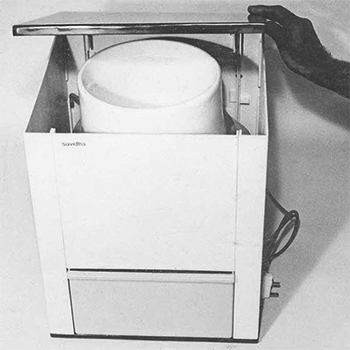
A domestic flour mill is a smaller version of a commercial flour mill. The traditional pair of stone wheels is driven by an electric motor. The other main parts of the mill are the hopper and the drawer for collecting the flour. It has been found out that mostly housewives operate the flour mill, and as it is, no ergonomic factors have been considered in the present design. It is also felt necessary to increase the aesthetic value, reduce the cost, and make its operation easier so that its services could be extended to a larger number of people.

Room Furniture for Students Hostels
by Suhas Kakde
Details >>
by Suhas Kakde
Long before history began, a monkey relaxing on a tree twig with its back against a vertical branch may have inspired man to create furniture. Many episodes in the Ramayana and Pre-Ramayana revolve around a throne, an ornamental piece of furniture in the centre of the room. Wood and metals have been involved in this business since then. Today, furniture has become an expression of style. With a wide variety of materials, many forms, feelings, and facilities are possible. Cost is the chief criteria. Unfortunately, one cannot sit in some chairs that are attempts to express and combine the character of hard plastic with good design. A few of them have sculptural values but less mobility and comfort. Furthermore, they frequently restrict our human freedom of movement. Whatever the material and the form of the furniture, it must be ergonomic and economical. In these years, furniture has become a concept in practically all urban hostels. This does not imply that the application was correct or that it met the requirements.
The age of technology offers us advantages that should be expressed in our surroundings; so that experiments with form and construction are adjusted to contemporary technical and social realities. The careless and rough handling of furniture by students at their school-homes, the average standard of living of our average society, and simple expectations about comfort and beauty call for extremely studied, economic, functional, and ergonomic sets of furniture, respectively. The design also depends on the environment. In remote rural areas, schools can afford to have spacious rooms for hostels, but then they may face the problem of having the skills to convert the available raw materials into the necessary set of furniture. In this context, my design is based on standard industrial inputs.
Portable Electric Saw
by U. S. Devadiga
Details >>
by U. S. Devadiga
Wood has always been one of man's most important resources. Directly and indirectly, in fact, it has been one of his basic necessities. For example, primitive man used wood to make fires and to make the clubs with which he could protect himself and hunt. His wooden hunting weapon brought meat to his fire and fur clothing for his body. Besides clothing himself with skins, he used them again with wood to make crude shelters. He made the shelters he didn't make from wood and skins by weaving three branches together.But it was not until thousands of years later that he learned to make wooden houses. During these years, he used wood for his tool handles and for his first machines, the lever and the wheel. Wood also provided his first means of transportation when he learned to make crafts, wagons, and ships.
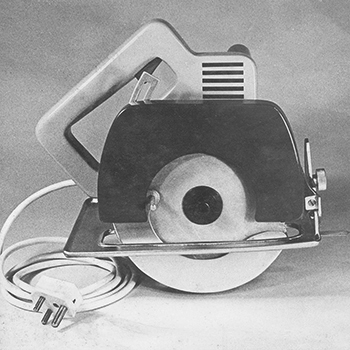
Throughout history, man has perfected ways to bend, carve, smooth, polish, stain, and paint wood, as well as change its size, shape, and appearance to suit his needs and his ideas of beauty. One of the most widely used and oldest known machines for woodworking is the circular saw. Circular saws are defined as machines in which the working tool takes the form of a steel disc equipped with teeth on its periphery. This disc, usually known as the circular saw blade, is mounted on an arbour in the case of bench saws or on a spindle in portable saws, from which it derives a circular motion.
The various types of circular saws are grouped in the following categories:
- Ordinary table saws.
- Rip saws, including travelling carriage saws.
- Automatic edgers with one or more saw blades.
- Cross-cut saws.
- Firewood saws.
- Portable electric hand saws.
The preceding sections of this report primarily address the portable electric saw, which is widely used for cross-cutting and ripping sawing of wood.

Bird Scarer
by V. R. Patil
Details >>
by V. R. Patil
India is primarily an agricultural country, and nearly three-quarters of its population depends directly on agriculture for a living. Therefore, agricultural development is intimately connected with the joy and happiness of the people in this country. Total grain production in India could be around 106 million tonnes per year, with a safe five percent increase if bird damage could be avoided. Numerous efforts are made to eliminate this loss, but they are never completely successful.
The first attempt, still used in most parts of our country, was the use of a sling, which has its own drawbacks and limitations, the main one being the unsatisfactory short range it covers. Another method widely practised is to hang a dead bird or to make human figures in the field. The fact that birds are afraid of irritating noises led to the development of many bird scaring devices, which used sounds of various frequencies and a few that sounded like predatory bird voices. These have been found to be successful only for a very short period of time before birds get habituated to them. Plastic nettings stand as an alternative and reliable solution, but they are too costly for a poor country like ours. The use of plastic and paper bags is also in practice, but they too are costly and prove to be detrimental for the growth of crops. This project deals with the fabrication of some simple, but reliable, bird scaring devices.