Faculty Project2009-2018
(16 items)
(16 items)

Design of the Indian Rupee Sign
by Udaya Kumar
by Udaya Kumar
The Indian Rupee Sign was designed by Udaya Kumar Dharmalingam, an associate professor at the Department of Design; he holds a PhD in Design from IIT Bombay and is currently a professor at IIT Guwahati. His design was selected in 2010 after a national competition was held by the Indian government to create a symbol that would represent the Indian currency globally, similar to the US dollar, British pound, and euro. The introduction of this symbol was a significant step in giving India a unique identity in the international financial community. The design of the Indian rupee sign is a combination of Devanagari script and the Roman alphabet. The symbol is derived from the Devanagari letter (Ra), representing "Rupiya" in Indian languages, and also bears a strong resemblance to the Latin letter "R," which links it to the Roman script. This fusion of scripts reflects India’s linguistic diversity and bridges the country’s ancient heritage with its modern, global identity. The two parallel horizontal lines at the top of the symbol convey the stability of the Indian economy. This design of the Indian rupee sign has since become an iconic representation of India's modern financial system, blending its rich tradition with the aspirations of a rapidly growing economy.
Details >>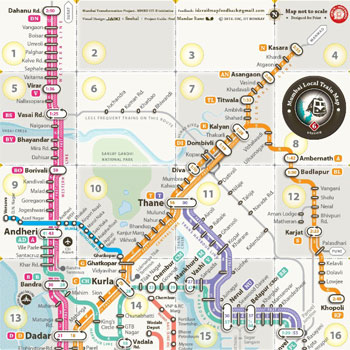
Mumbai Rail Map (MRM)
by Prof. Mandar Rane
by Prof. Mandar Rane
The Mumbai Rail Map (MRM) is a significant project designed by Prof. Mandar Rane from the Industrial Design Centre (IDC), IIT Bombay. The map was created to simplify and enhance the experience of navigating the complex railway network of Mumbai, one of the busiest public transportation systems in the world. Prof. Rane’s design provides a clear, easy-to-read, and aesthetically appealing representation of Mumbai’s intricate railways, helping millions of commuters better understand and use the system efficiently. The Mumbai railway network is spread over three major lines: Western, Central, and Harbour. Navigating these lines can be confusing, especially for new or occasional users. The Mumbai Rail Map distils this complex information into a clean, organised visual format. The map uses colour-coded lines for the different railway routes (Western Line, Central Line, Harbour Line, and Trans-Harbour Line), making it easier for commuters to identify and follow their respective routes. Prof. Rane’s design ensures that the text and symbols are legible and accessible to a wide range of users, including those with visual impairments. The use of contrasting colours and bold typefaces ensures clarity in various lighting conditions and from different viewing distances.
Details >>
Supporting Treatment of People Living with HIV / AIDS in Resource Limited Settings with IVRs
by Prof. Anirudha Joshi
by Prof. Anirudha Joshi
The project "Supporting Treatment of People Living with HIV/AIDS in Resource-Limited Settings with IVRs" was led by Prof. Anirudha Joshi from the Industrial Design Centre (IDC), IIT Bombay. The project focusses on using Interactive Voice Response (IVR) technology to provide support to people living with HIV/AIDS in resource-constrained environments, where access to healthcare infrastructure and medical support may be limited. IVR (Interactive Voice Response) is a technology that allows users to interact with a system through voice commands and key presses. In this project, IVR was used to provide automated voice-based support to people living with HIV/AIDS. The IVR system was designed to be multilingual, offering support in local languages to ensure that patients could understand the information provided. This was crucial in regions where multiple languages are spoken and literacy rates may be low. The project involved close collaboration with local healthcare providers and NGOs working with HIV/AIDS patients. This ensured that the system was tailored to the specific needs of the patient population and integrated with existing healthcare services.
Details >>
Ek Mukta
by Girish Dalvi
by Girish Dalvi
Ek Mukta is a modern, versatile, and elegant typeface designed by Prof. Girish Dalvi, a faculty member at the Industrial Design Centre (IDC), IIT Bombay. The typeface is part of a larger family of fonts created to address the need for a contemporary, open-source Indian typeface that supports multiple Indian languages. The Ek Mukta typeface is notable for its readability, flexibility, and aesthetic appeal, making it widely used for both print and digital media. Ek Mukta is an open-source font, which means it is freely available for use by the public and can be modified and redistributed under the appropriate license. This has made it popular in both academic and professional settings. The typeface supports multiple Indian scripts, including Devanagari, Gurmukhi, and Gujarati, making it a valuable resource for a diverse range of languages and users. It provides consistency across scripts, helping users create harmonious multilingual documents and designs. Ek Mukta is a significant contribution by Prof. Girish Dalvi to the world of typography, providing a modern, accessible, and versatile typeface that supports the unique linguistic and cultural needs of India while also being a useful tool in global design contexts.
Details >>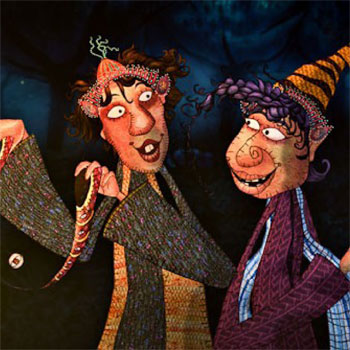
Goopi Gawaiya Bagha Bajaiya - Animation Film
by Shilpa Ranade
by Shilpa Ranade
"Goopi Gawaiya Bagha Bajaiya" is an animated feature film directed by Prof. Shilpa Ranade from the Industrial Design Centre (IDC), IIT Bombay. The film, released in 2013, is an adaptation of the iconic children's story "Goopi Gyne Bagha Byne," written by Upendra Kishore Roychowdhury, and it was famously adapted into a live-action film by Satyajit Ray in 1969. Prof. Ranade's animated version brings a fresh and visually rich take on the classic tale, introducing it to a new generation of audiences while preserving its cultural significance. Prof. Shilpa Ranade’s version of the film is distinguished by its hand-drawn 2D animation, giving the film a unique, painterly aesthetic that sets it apart from modern 3D animated films. The animation reflects traditional Indian art styles, blending folk art influences with contemporary storytelling techniques. The colour palette and character designs are inspired by Indian culture, particularly drawing from Bengali and rural Indian visual traditions. The characters are quirky, exaggerated, and expressive, fitting the whimsical and fantastical tone of the story. The film was widely praised for its innovative animation style and the way it reimagined a beloved classic for contemporary audiences. It was selected for several prestigious international film festivals, including the Toronto International Film Festival (TIFF), the New York International Children’s Film Festival, and the Mumbai Film Festival.
Details >>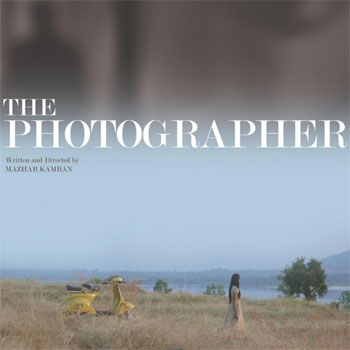
The Photographer & Uncle the School in himself
by Mazhar Kamran
by Mazhar Kamran
Mazhar Kamran, renowned for his work in both fiction and documentary, directs the film The Photographer & Uncle the School within Himself. This film explores the relationship between photography and identity, blending the personal with the historical. The documentary centres around a character referred to as "Uncle," who is both the subject and the photographer, capturing images that reflect his journey and experiences. The film engages with themes of memory, identity, and the role of the photographer in framing reality. Mazhar Kamran is an Indian filmmaker and cinematographer known for his versatile contributions to both independent and mainstream cinema. A graduate of the Film and Television Institute of India (FTII), Kamran has carved a niche for himself in both fiction and documentary filmmaking.
Details >>
Colour Projects launched for Royal Enfield
by Prof. Kanika Jolly
by Prof. Kanika Jolly
Kanika is an accomplished motorcycle designer with a rich professional background. She held the role of Deputy Manager in the Industrial Design Studio at Royal Enfield Motors, Chennai, and further contributed as the motorcycle lifestyle and accessories designer at Royal Enfield Motors, Gurgaon. Kanika has also lent her creative expertise to diverse sectors, collaborating with renowned names like General Motors, TATA, RedTape, Crew BOS, and fashion designers Rahul Mishra and Shah Rukh Zaidi on various projects. Kanika graduated from the IDC School of Design, IIT Bombay, as an automotive designer. The Colour Projects launched for Royal Enfield by Prof. Kanika Jolly likely involved designing colour schemes and finishes for the iconic Royal Enfield motorcycles. These projects would focus on integrating design aesthetics with the brand’s heritage, creating colour combinations that resonate with Royal Enfield's vintage and modern motorcycle ranges.
Details >>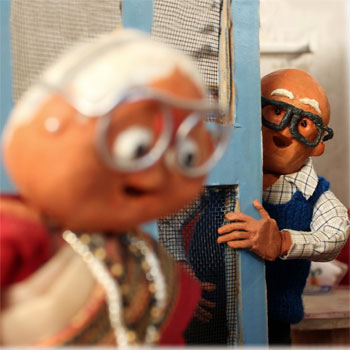
Lakshmi Aayi Hai - A Short Claymation Film
by Prof. Swati Agarwal
by Prof. Swati Agarwal
Lakshmi Aayi Hai is a short claymation film created by Prof. Swati Agarwal, who is known for her contributions to animation and storytelling through the medium of stop-motion. The film uses claymation, a technique where clay figures are animated through frame-by-frame photography, to tell its story. The film is not only an example of the creative potential of claymation but also reflects cultural and societal values through an animated format. It offers an accessible way to engage audiences, especially children, with important themes like prosperity and celebration, often linked to Indian festivals like Diwali, where the goddess Lakshmi is worshipped.
Details >>
Hum Chitra Banate Hai - Animation Film
by Prof. Nina Sabnani
by Prof. Nina Sabnani
Hum Chitra Banate Hai is an acclaimed animation film directed by Prof. Nina Sabnani, a renowned animator, filmmaker, and academic. The film is a beautiful fusion of animation and traditional Indian storytelling, highlighting Prof. Sabnani's interest in indigenous art forms and their integration with modern animation techniques. The title Hum Chitra Banate Hai, which translates to "We Make Images," reflects the central theme of the film: the process and significance of storytelling through images. The film is set in the Kutch region of Gujarat and revolves around the traditional craft of kaavad storytelling, a form of visual storytelling that uses painted wooden panels to narrate mythological and folk tales. The film combines hand-drawn animation with live-action sequences, blending traditional art forms with modern animation techniques. The film has been praised for its sensitive portrayal of the lives and work of traditional artisans and for raising awareness about the importance of preserving indigenous art forms.
Details >>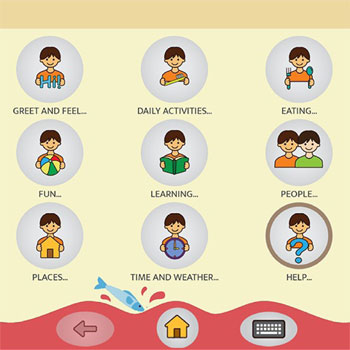
Jellow Communicator
by Prof. Ravi Poovaiah
by Prof. Ravi Poovaiah
Jellow Communicator is an innovative communication tool designed to assist individuals with speech and language disabilities, particularly those with conditions such as cerebral palsy, autism, and developmental disabilities. The project was spearheaded by Professor Ravi Poovaiah and Dr. Ajanta Sen. The journey of Jellow started in 2004 as a tangible physical product. Following this, in 2008, it was made available on desktops. Then, after extensive user studies, it was conceived as a complete communication system available on a variety of platforms. Jellow has been supported by IIT Bombay, the e-kalpa project from the Ministry of Human Resources and Development, the Innovation Fund Award from Unicef, the National Trust, the Ministry of Social Justice and Empowerment, Nair Hospital, and the University of Connecticut, USA, along with several NGO's working in the field of persons with disabilities. Jellow Communicator utilises a symbol-based communication system, making it accessible to individuals with limited verbal communication abilities. It consists of a grid of symbols representing various words, phrases, and actions. Users can customise the communication grids based on their specific needs and preferences.
Details >>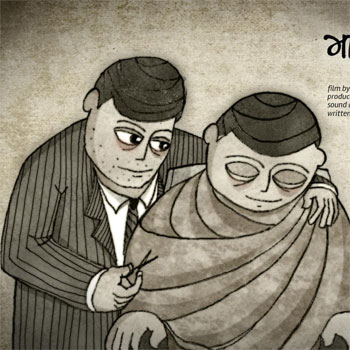
Maacher Jhol - Animation Film
by Prof. Abhishek Verma
by Prof. Abhishek Verma
Maacher Jhol is a critically acclaimed animated short film directed by Prof. Abhishek Verma, known for his socially relevant storytelling through animation. The film focusses on LGBTQ+ themes and is celebrated for its sensitive portrayal of identity, acceptance, and familial relationships. Maacher Jhol explores themes of acceptance, love, and identity. It deals with the struggle many LGBTQ+ individuals face when coming out to their families, particularly in traditional societies where such topics are often considered taboo. The film subtly conveys the fear, anxiety, and courage required to express one’s true self to family members while also addressing the power of food and culture as a medium of connection. The film uses 2D hand-drawn animation combined with a minimalistic yet expressive visual style that conveys deep emotional undertones. The characters’ movements and facial expressions are crafted to communicate the subtle tensions and unspoken emotions that occur within the family dynamic. The colour palette, influenced by the warmth of home and tradition, enhances the emotional depth of the story.
Details >>
Mumbai Transformation
by Prof. Nishant Sharma
by Prof. Nishant Sharma
Mumbai Transformation is a project led by Prof. Nishant Sharma, an academic and researcher with a focus on urban design and planning. The project examines the rapid urbanisation and transformation of Mumbai, one of the most densely populated cities in the world, while addressing the challenges and opportunities that arise in a megacity undergoing significant changes. Mumbai has experienced tremendous growth, resulting in infrastructural challenges such as traffic congestion, inadequate housing, and strained public services. The Mumbai Transformation project focusses on understanding these challenges and proposing innovative design and planning solutions to improve the city’s ivability. A core objective of the project is to explore how Mumbai can grow sustainably. This involves looking into efficient land use, eco-friendly transportation systems, and the integration of green spaces within the urban environment. The project advocates for a balance between development and environmental preservation.
Details >>
Trophy Design for Kala Utsav
by Prof. Sugandh Malhotra
by Prof. Sugandh Malhotra
The Trophy Design for Kala Utsav was led by Prof. Sugandh Malhotra from IDC IIT Bombay. Kala Utsav is a national initiative under the Ministry of Education, aimed at promoting the arts in school education. The design of the trophy aimed to reflect the spirit of creativity, artistic excellence, and cultural diversity celebrated in the event. Prof. Sugandh Malhotra, known for his expertise in product design, was tasked with creating a trophy that not only represented these values but also had a strong aesthetic appeal. His design approach typically involves a deep understanding of form, functionality, and symbolism, ensuring that each element of the trophy resonates with the ethos of Kala Utsav.
Details >>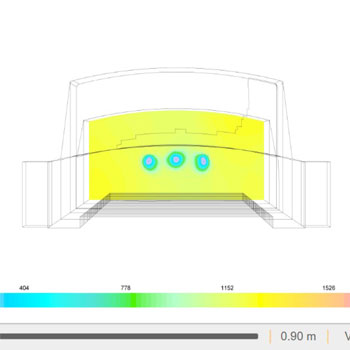
Interactive visualisations for reheating furnaces for National Institute of Secondary Steel Technology
by Prof. Anirudha Joshi
by Prof. Anirudha Joshi
Prof. Anirudha Joshi from IDC IIT Bombay worked on interactive visualisations for reheating furnaces for the National Institute of Secondary Steel Technology (NISST). The project focused on creating tools that visually represented the complex processes involved in reheating furnaces used in the steel industry. Reheating furnaces are crucial in the steel production process as they heat steel to a temperature suitable for further processing, such as rolling. However, the operations can be intricate, involving variables like temperature control, fuel consumption, and furnace efficiency. Prof. Joshi's interactive visualisations aimed to simplify these complexities, enabling operators and engineers to better understand and optimise furnace operations. These visualisations likely included dynamic models of the furnace environment, heat distribution, and process flows, allowing users to simulate different scenarios and observe the effects in real-time.
Details >>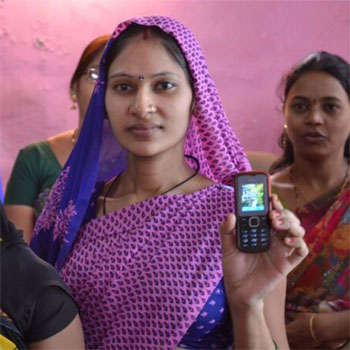
Extending mMitra, study of a mobile phone based support for urban poor pregnant women in India through pregnancy and infancy in their chosen language with Dasra / Armaan / Johnson & Johnson
by Prof. Anirudha Joshi
by Prof. Anirudha Joshi
The "Extending mMitra" project, led by Prof. Anirudha Joshi at IDC IIT Bombay, focusses on supporting urban poor pregnant women in India through their pregnancy and infancy phases. The initiative is a mobile phone-based platform that delivers essential health-related information to women in their chosen language, providing guidance and support during pregnancy and early motherhood. Dasra, Armaan, and Johnson & Johnson collaborated on the project to enhance maternal and child health outcomes. The mMitra platform provides voice calls or messages that cover critical topics such as nutrition, prenatal care, infant care, immunisation, and more. This personalised communication system helps overcome language barriers and provides timely advice for women who might not have easy access to healthcare services.
Details >>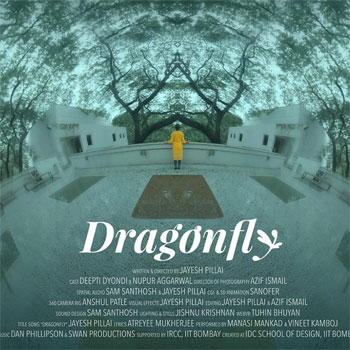
Dragonfly - VR Film
by Prof. Jayesh Pillai
by Prof. Jayesh Pillai
"Dragonfly" is a VR film created by Prof. Jayesh Pillai from IDC IIT Bombay. It is an experimental virtual reality (VR) narrative that explores immersive storytelling through the medium of VR, allowing viewers to engage in a 360-degree visual and auditory experience. Prof. Jayesh Pillai, who is known for his work in interactive media, VR, and immersive environments, designed the film to push the boundaries of how stories are told in a virtual space. In "Dragonfly," viewers are not just passive observers but are enveloped within the story's world, enabling a deeper emotional connection to the narrative and its characters. The film utilizes cutting-edge VR technology to craft a visually rich environment, emphasizing the potential of VR as a medium for storytelling. The title "Dragonfly" symbolizes transformation and change, themes often central to Pillai's work.
Details >>