
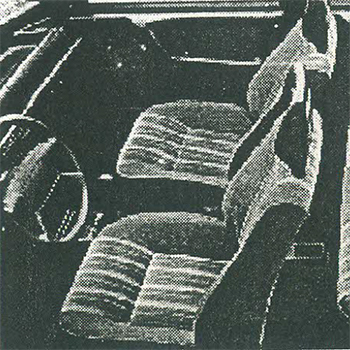


If the exterior shape is currently born more out of technology than art, the interior remains a domain almost entirely dominated by creative instincts. There are the inevitable ergonomics and human factors to be considered, of course, and the package envelope developed according to the engineering rules has to be the starting point, but the final appearance of the interior is essentially decided by artists and designers.
As in the domestic and commercial fields of interior design, there are strong outside influences coming to bear on the actual style of how the car looks inside, what is acceptable in taste, and how far the thresholds of appearance and material usage can be pushed. For example, it took several years for cloth fabrics to meet the durability standards required for high-wear areas such as a car seat surface, and even longer for plastic moulding technology to allow the production of a rattle-free full-width facia.
Within the industry itself, the interior designer’s job carried much less prestige than the major role of creating the outside shape. Exteriors carry a much stronger identity, both for the company and the individuals responsible, although ironically, it is the interior that the buyer has to live with more closely throughout his period of ownership. No car was ever bought on the strength of its interior alone, however.
During the initial post-Second World War recovery in Europe, the priority was simply for cars to fill the void of independent transport. As long as it worked, it was acceptable in the strong seller’s market that prevailed. Practical black or natural tan interior colours in any hard-wearing material were the rule because they blended neutrally with all exterior colour ranges. There was little thought for comfort in the modern sense, none of the sophisticated moulding techniques for foam. Trim and carpets were tailored, stitched, and clipped in place using methods not far removed from the traditional coach-building crafts.
Generally, though, in the period up to 1970, little creative talent was displayed in the car interior. There were distinctive styles, such as the traditional wood-veneer fascia panels of luxury models, which found their way right down to American fashion for color-keyed interiors. However, most popular vehicles exhibited a distinct lack of integration, with painted dashboards, exposed seat runners and lower frames, visible window mouldings, and an abundance of exposed screw heads. Instruments were still separate gauges with bright rims, black faces, and white spindly needles covered by reflecting glass. Switches were placed wherever there was room on the fascia, and steering wheels had black shiny rims mounted on sprung wire spokes. In large corporations, interior design work was physically divided at the steering wheel, with one team handling everything in front and another handling everything behind. The segregation showed clearly in the product.
The role of interior designer has changed and is expected to change further in the future. Interiors of automobiles have changed and will continue to change. Car interiors are given equal attention as this has helped in adding real value to the vehicle as a product. Though the interior designer is not much of a celebrated figure, media attention is picking up on this aspect too. And businesses will undoubtedly profit from it.