
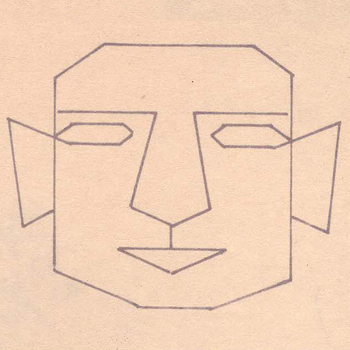


It is extremely difficult to define "form." In general, the shape of an object can be explained or described using common language. But this ends by defining it in the precise language of mathematics, and one method tends to follow the other in strict scientific order and historical continuity.
Mathematical definitions are too strict and rigid for common use, but their rigour is combined with all but endless freedom.
The precise definition of an "ellipse" introduces all the ellipses in the world. Through this controlled and regulated freedom, anybody can reach synthesis through mathematical analysis.
The details in which the figure differs from its mathematical prototype are more important and interesting than the features in which it agrees. Even the peculiar aesthetic pleasure with which common men regard a living object somehow ties up with the departure from mathematical regularity that it manifests as a peculiar attribute of life. In the morphology of living things, the use of mathematics' methods and symbols has made slow progress.
According to "Louis Sullivan, Form Followers Function," but form is not dependent only on function; it also responds to forces acting on it, which may be mathematical, environmental, or historical. There is an infinite variety in nature, often following some law or rule. Slight complexity exceeds a man's mental capacity to analyze. In living objects, this variation can be obtained by destroying the prototypical form of an object.