Home / Alumni / Profile / Detail

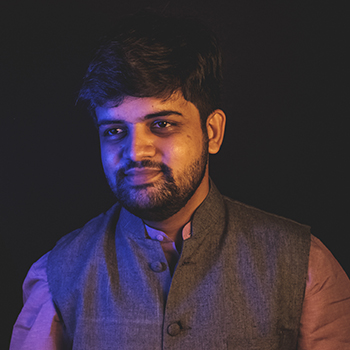
Nishith Parikh | Mdes ID 15-17


Related Images


Source: India,   IDC IIT Bombay

Date: 2015-2017 

Medium: Photograph

Credits: IDC


Detailed Description

Nishith Parikh is the co-founder and CEO of Hornback E-Mobility. He received his M.Des in Industrial Design from IDC (IIT Bombay) in 2017. Prior to that, he did his Bachelor of Engineering in Mechanical Engineering from Vasavi College of Engineering. His previous work experiences are: Production and Development Manager at Rupa Industries (2012–2015), Industrial Design Intern at Godrej & Boyce Mfg. Co. Ltd. (2016), CEO at Rupa Industries (2018–2023), and Co-Founder at Kachbo Design (2018–2023).


Related Links:
https://www.behance.net/nishithparikh


Reference Links:
http://ddsidc.com/2017/portfolio/nishith/


Projects

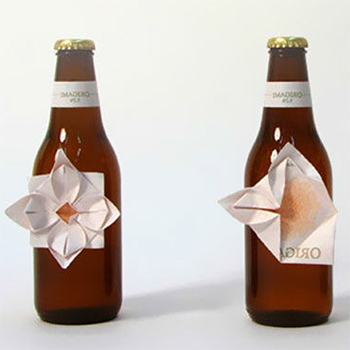
Defining Interactive Packaging

Off late, it has been observed that we tend to issue fancy names and terminologies without much thought about the impact they would create. One such name (which is also the topic of this paper) is interactive packaging." In this paper, we look to identify and define the true meaning of interactive packaging. Extensive study has gone into this paper, which includes everything from a literature review to speaking to experts in packaging from India and abroad. In this paper, we attempt to bring out a clear definition of interactive packaging. We also want to shed light on other terms like intelligent or smart packaging and determine if and how they differ from interactive packaging.


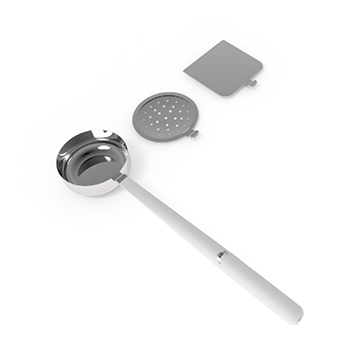
Development of a smart cooking aid. Godrej and Boyce Mfg. Co.

Cooking is the practise or skill of preparing food by combining, mixing, and heating ingredients. Anyone who has a fair amount of experience in cooking knows that it is certainly more than that. It is, in a way, science. It is how different ingredients react with each other over time and how the reactions can be altered with various factors such as time, type of heat source, and also the type of vessel used. It is a delicate balance of flavours and textures, and the experience of eating that perfect meal is unlike any other.

India, owing to its diversity, has a wide variety of cooking habits and cultures. Each region has over the years developed its own staple food based on the produce and environment. Food habits vary not only across large distances but also between two different places in the same state. As a result, no other country in the world offers such complexity and diversity in its cooking habits as India does.

Indian cooking is one of the most complex of all cuisines. Originally developed by our ancestors, it usually involves quite a few ingredients and multiple steps. Even something as common as a dal has around three to four cooking processes. These steps are essential to not only obtain the best flavour but also retain its nutritional properties. So, it is no secret that Indian cuisine is considered to be the most balanced and healthy of all. Recipes passed down from generations have ensured that rich and healthy food is still consumed by a considerable number of people. Even though newer cooking appliances like microwaves and induction cooktops have made their way onto the market, we have still found a way to cook our Indian dishes on them.


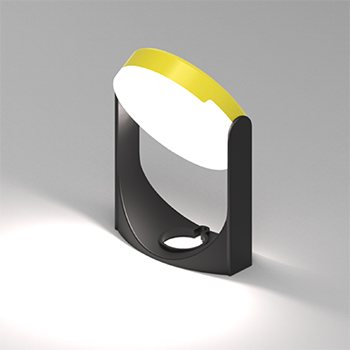
Redesign of the (Million SoUL) Solar Lamp

A staggering 40% of our country’s population still uses the kerosene lantern as their main source of lighting. In the age of efficient and affordable lighting solutions, it is the bitter truth that we as a nation must accept. Million SoUL is an IIT Bombay initiative where people work to localise solar energy through the local assembly, sale, and usage of 1 million Solar Urja Lamps (SoUL) in India. Te team is rigorously working to enable children in the rural parts of India to study without the dependence on primitive forms of lighting such as kerosene lamps. This project is an attempt to redesign the lamp made by Million SOUL so as to improve its usability, reduce its overall cost, and also bring a comprehensive change with respect to the current design.


Product for catering service on semi luxury non suburban Indian Passenger Trains

The number of passengers travelling in non-suburban Indian trains has almost doubled in the past four years. Consequently, more trains have been added, and a lot of these include express trains that run over long distances. As a result, more people now have to be fed. The methods have, however, remained more or less the same for quite some time. Even in semi-luxury express trains like the Rajdhani, Shatabdi, etc., we can still see the primitive ways of serving food. This project attempts to solve the problems faced by the waiters on semi-luxury express non-suburban trains with regard to the distribution of food to the passengers.