Home / Alumni / Profile / Detail

Pooja Kulkarni | Mdes ID 15-17


Related Images


Source: India,   IDC IIT Bombay

Date: 2015-2017 

Medium: Photograph

Credits: IDC


Detailed Description

Pooja Kulkarni is the senior designer for industrial design and human factors at Boston Scientific. She received her M.Des in Industrial Design from IDC (IIT Bombay) in 2017. Prior to that, she received her bachelor’s degree in industrial and product design. Her previous work experiences are: intern at Nasan Medical Electronics Pvt Ltd (2014–2015), assistant executive designer at Futuring (2017–2018), technical lead - industrial design at HCLTech (2018–2021).


Related Links:
https://podesigns.wordpress.com/


Reference Links:
http://ddsidc.com/2017/portfolio/pooja/


Projects

Ergo-design considerations on respiratory filter design for Brick Kiln workers

Bricks are a very important raw material in the construction industry. Due to the rapid urbanisation, the requirement for bricks is high. India is the second-largest producer of bricks (after China), yet most of the tasks are still performed manually.

There is a huge discrepancy in the wages and the working hours for the brick kiln workers. Also, the working conditions are wretched. Low wages and hazardous working conditions lead to the deterioration of the health of the workers and lower productivity.

Usually, an entire family is involved in brick production, and they get Rs 400–500 for 1000 bricks. Although the industry provides employment to a large number of people, it violates their rights as the labourers are underpaid and exploited. "The labourers become bound after they take an advance. They are physically tortured by the contractor if they wish to leave their job. Even their payments are stopped, making it hard for an entire family to survive," Sudhir Kumar Katiyar, project coordinator of the Udaipur-based non-profit Prayas Centre for Labour Research and Action, said at the dialogue.


Summer Internship at 3F Design Company

The project was to design a desktop organiser series using organic forms and create an interesting range of products that will stand out on the office desk. Using unconventional forms, materials, and processes to design products that will be manufactured in small quantities. The minimalist cube made during the Advanced Forms course was the starting point for the project. Aluminium casting and resin casting were the two processes that were shortlisted. Another inspiration for the project was the product range developed by Mukul Goyal.


Design of a Deployer Device for Endo Retractor

During a laparoscopic cholecystectomy, traditionally, four incisions are made. One is for the laparoscope, two are the operating ports, and one is to hold the gallbladder to expose the Calot’s Triangle that needs to be cauterised to separate the gallbladder from the liver. Endoretractor was designed by Lata Chawla with BETiC and under the guidance of Dr. Rasik Shah to hold the gallbladder in place. This device eliminated one port and the need for human assistance during the surgery.

As the endorectal retractor in itself is an innovative design, no specific devices were used to deploy it. A crude set of devices and a lengthy procedure were used to test and validate the device. As the device is soon to be launched into the market, the need for a sophisticated deployer device arose.


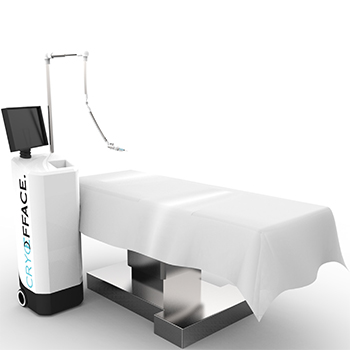
Device for Cryoablation of Tumors in Soft Tissue

In the past two decades, major developments have happened in finding alternate cure methods for cancer. Cryosurgery is one such promising technique that uses extremely low temperatures to kill cancer cells. As this procedure can be performed with minimal invasion, it has huge benefits over the traditionally performed surgeries. Research and development have been happening in developing devices for curing breast cancer using cryosurgery.

Abdul Mateen A. G. Shaikh, Prof. Atul Shrivastava, and Prof. Milind Atrey have designed a liquid nitrogen cryoprobe and tested it for ice formation. This device needs design intervention to make it usable. There is scope to innovate and come up with a product that can change the cancer research scenario worldwide.

The project aims to design an ergonomic probe for cryosurgery for breast cancer, which can later be scaled to incorporate other organs, and also propose a system for the same. The primary aim of the project is to design an ergonomic probe, keeping in mind the design constraints for a class II device and also for a cryogenic device. An operative process that requires less time compared to the current operative processes and is minimally invasive has also been proposed.