
Home / Alumni / Profile / Detail

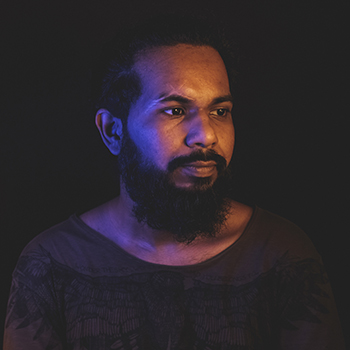
Akvil Sakhare | Mdes IN 15-17


Related Images


Source: India,   IDC IIT Bombay

Date: 2015-2017 

Medium: Photograph

Credits: IDC


Detailed Description

Akvil Sakhare is a designer, entrepreneur, and strategist. He received his M.Des in Interaction Design from IDC (IIT Bombay) in 2017. Prior to that, he did his Bachelor of Engineering at the Indian Institute of Technology, Bombay. After graduation, he worked as a UI/UX Designer in companies. Now, he works as a freelance designer for various clients, including global startups, NGOs, spiritual and cultural organisations, and independent artists. He also develops his own projects. His previous work experiences are: User Interface Designer at Trell (2015–2016), Teaching Assistant at D'source, IDC School of Design (2016–2017), Experience Designer at Elysian Studios (2016–2017), Product Designer at Dozee (2017–2018), Senior User Experience Designer at Docsumo (2018–2019), User Interface Designer at DhanWise (2019), User Experience Designer at C1 India Pvt Ltd (2019), Senior User Experience Designer at NTREE Innovative Solution Pvt Ltd (2020), Senior UX Designer at PracticeNext Digital (2021), Senior UX Designer at Peepal Design (2021).

Related Links:
https://www.behance.net/akvil?tracking_source=search_users|Akvil%20Sakhare


Reference Links:
http://ddsidc.com/2017/portfolio/akvil/


Projects

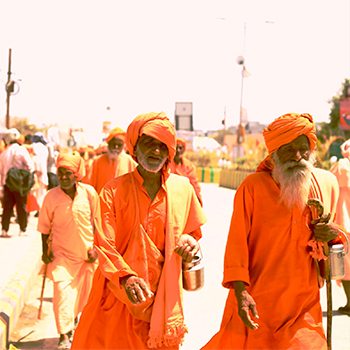
Cinematic Virtual Reality experience of The Kumbh Mela

Cinematic VR experiences consist of 360-degree video and ambisonic audio, where the video and audio each account for 50% of the experience. 360-degree cameras capture the visual spherical field of human awareness. Ambisonic microphones record a sound field that can be decoded into binaural audio. Many cameras and sound systems are being developed in the field, but as of now, most 360-degree cameras record in 2D and don’t have spatial audio. The basic idea of cinematic VR is to capture more senses for more presence.

Simhasth-Kumbh Mela is a reunion of Sdhus from all sects of India. It happens every twelve years in Ujjain, Madhya Pradesh, and we captured it in the summer of 2016. It is the largest gathering of people on Earth.


The Allegory: Virtual Reality Experience of the Journey from the Allegory of Cave

The Allegory of the Cave is a theory concerning human perception that claims that knowledge gained through the senses is no more than an opinion and that, in order to have real knowledge, we must gain it.

It describes a group of people who have lived chained to the wall of a cave all of their lives, facing a blank wall. The people watch shadows projected on the wall from objects passing in front of a fire behind them and give names to these shadows. The shadows are the prisoner's reality. One of the prisoners escapes the reality of the cave and witnesses the reality outside. He begins to understand his new world, sees that the sun is the source of life, and goes on an intellectual journey where he discovers beauty and meaning.

This story has been narrated and interpreted in many forms over the years. This project is focused on creating a version of the journey of this story in virtual reality. The project proposes a retelling of the story in a subjective manner so that the person experiencing it feels like he is going through the events in the story.

The project is deployed as a virtual reality experience, which people are invited to experience. The evaluation takes into account observations, feedback, and suggestions for improvement from the visitors, measuring the impact and fine-tuning the experience.


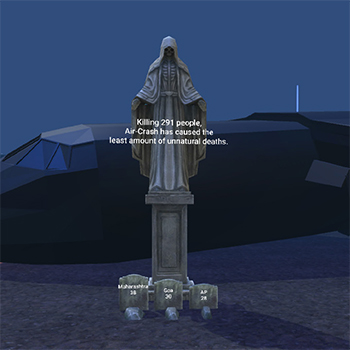
Memento Mori : VR Data Visualization of Un-natural Deaths in India

In the last few years, virtual reality (VR) has experienced advancement after years of hibernation. As compared to traditional mediums of data visualisation, VR as a medium is significantly different, and the use of VR in data visualisation has not been explored much.

This report explores the process of visualising data in virtual reality by creating a data story by drawing upon various visualisation and design principles in two dimensions (2D) and extending them in three dimensions (3D). By using government data on unnatural deaths, the design process includes exploring the data, generating design ideas, and iterating prototypes to come up with the final design.

The project, deployed as a VR application, is multiplatform and can run as a standalone application or in a web browser. The evaluation takes into account observations, feedback, and suggestions for improvement while measuring the impact and fine-tuning the experience.

The project is an example of what is possible. It shows that VR data visualisations aren’t inherently intuitive but can make more sense if delivered through storytelling.