Product Design
Batch 1998-2000
(11 items)
Product DesignBatch 1998-2000
(11 items)
(11 items)

Teaching Technology Through Design
by Aurobinda Narayan Pradhan
Details >>
by Aurobinda Narayan Pradhan
With the increasing impact of technology on society, we are almost submerged in a technological environment. However, technology, in various forms, has become so much a part of us that, we hardly consider the living environment to be technical, but that doesn’t change the facts. To make the most out of a "technological environment," we must use technology more intelligently. And to do so, we must be technically literate. So, here's why technology should be learned, and more importantly, "why technology should be taught."

Documentation for Kumbharwada
by Ghodke Rajesh Prakash
Details >>
by Ghodke Rajesh Prakash
Kumbharwada documentation- This subject gave me an opportunity to explore my favourite medium, photography, and more than that, to learn about the largest slum in Asia, Dharavi, the Kumbharwada. Kumbharwada is known as Mumbai's "most creative neighborhood." To begin with, the project was to gather the most basic information, like, "Where is this place?" and "How do I get there? Who should I meet there? and many other questions. I had an unusual experience upon arriving in Kumbharwada for the first time, but the work there provided me with much-needed motivation, new hope, and a broad perspective to look at through the eyepiece of my camera.
As somebody has written, "Pottery is a measure of a country's civilization." It is one of the oldest methods through which man has tried to express himself, his thoughts, his surroundings, his culture, his institutions, and his soul. Pottery is all about tradition. Some designs date back thousands of years and have been passed down from generation to generation. These crafts have evolved over time and are now one of the most prominent and promising business opportunities. There are approximately 800 houses in "Dharavi," or Kumbharwada. Each house has its own potter and its own designs. What I observed was that some work with the same older methods and techniques of pottery, while some of them have blended their work and approach with the modern world and its technology. They are developing their work to cope with the needs of modernization, but some of them don’t bother about all these factors; they just carry on their working methods of pottery and earn money. There are as many attitudes as there are different designs. If pottery is a work done with the soul and gives each individual its own touch, then let it be a mass produced item or an art piece for a special occasion. The work reflects the image of the potter.
Even though they now have electrically charged wheels with variable speeds, the technique of throwing clay on the wheel will never die. Their hands simply create the forms, unending creations, and limitless designs that give us enormous options for selecting the kind of work with which we decorate our living rooms, gardens, and surroundings. All this and many more things with different experiences can be discussed, as I had a wonderful opportunity to prepare and peep through the window of potters' creations.
Imagery as a Private Experience and Architectural Teamwork
by Hrishikesh Deshmukh
Details >>
by Hrishikesh Deshmukh
Mental imagery is a very important part of the design, and each of us experiences it. But surprisingly, the literature on design research does not offer insights on the creative use of imagery in design. An important question is: how does mental imagery affect teamwork if the partners working as a team are placed geographically apart? Does mental imagery in such a case improve the problem-solving process when the two partners exchange their image experiences? Or does it pose itself as a hindrance as the partners are unable to communicate their mental imagery to each other, blocking the process of problem solving.
This experiment was part of a series of collaborative experiments with visual designers and architects to investigate the role of mental imagery in teamwork. A pilot experiment was conducted to better understand the project and its purpose. This was very important to know how the teamwork progresses, how the mental imagery helps or hinders the teamwork, how comfortable the team members were with sharing their images and understanding each other, etc. For the experiment, two architects were invited, and an architecture problem was given to them. And there were pauses in the experiment where each participant was questioned about his or her partner's mental imagery.

Psychological perception of product form: elements-Automobiles
by Kiran R. Dhotare
Details >>
by Kiran R. Dhotare
Globalization and liberalisation began in India in the early 1990s, with the automotive industry leading the way among many other industries. Until then, there were only a few players in the automotive industry who provided very few options for the Indian customer. But with the globalisation process, major automotive players from all over the world, like Honda and Suzuki, to name a few, were already setting up their roots in India. Owing to the success of this initial liberalisation policy, many other automotive giants around the world started looking towards India to exploit the potential market. Companies like Hyundai, Ford, and Volvo set up their manufacturing facilities in India. Looking at the potential market in India, they contemplated going a step further and setting up R&D facilities in India, which would help them study the needs of the Indian market and accordingly develop products, right from the concept stage to the manufacturing stage. Owing to this potential, a large scope is envisaged for the styling and design industry in India.
Considering this potential and the competition faced due to foreign manufacturers, the automotive styling industry in the country started gearing up, and a few vehicles in the country rolled out with improved styling. But despite all the sincere efforts, the industry has failed to attract, or rather, distract, the Indian consumer from opting for a foreign vehicle. The major factor behind this phenomenon seems to be the design itself. Typically, the designer creates his designs with some preconceived notions that almost always fail when the customer purchases the car. This happens due to improper or misjudged communication between the designer and his immediate audience.
Mental Imagery as a Private to Public Experience: Conceiving of Moving Images as a Team
by Mandar Bhedasgaonkar
Details >>
by Mandar Bhedasgaonkar
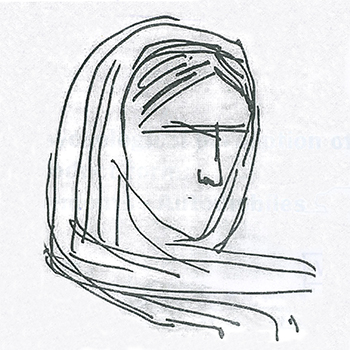
In the piolt experiment, a team of two visual communication designers was asked to design a video film. Findings show that private imagery experiences remain only partially accessible to the team members, and these inadequacies have serious implications for the synergy of the teamwork. Access to each other's descriptions and sketches was insufficient for understanding the details and richness of their personal imagery experiences. The vital details, such as understanding of the size, scale, proportion, and 3-D movement of the objects, background music, and lighting conditions, were seldom communicated, making way for ambiguity and assumptions. Both designers had to share the effort to discuss and sketch while continuing their mental involvement in creative efforts. Besides the personalization of the language-imagery relationship, the vagueness of the sketches made access to other people’s imagery more difficult.

Inner Experience of Spaces During Interior Design Projects
by Muktha S. Hiremath
Details >>
by Muktha S. Hiremath
This experiment was a study of the mental imagery and the experience of spaces during the process of interior design. The experiment was not only used to study the potential of mental imagery in interior design in the absence of other media, i.e., sketching, but it also made a comparative analysis of the imagery during architectural design. The experiment is a continuum of the experiments conducted on designers. This experiment was carried out to study interior designers or architects when designing interiors to ascertain the role of mental imagery, which is different in approach and detailing as compared to the architectural design process. This was achieved by using an experienced architect and blindfolding him during the act of design. The conclusions reached indicate that the designer was able to use imagery very effectively during the act of design.

Ceramics for Pets
by Naga
Details >>
by Naga
Working with clay is a hedonistic pleasure that comes with the responsibility of commanding erratic movements and wet nose rubs. The special project at IDC is an introduction to the specialty of touching clay in order to look into the lives of wild existences. The demand for a range of products for pets as a sign of domestication, be it a bowl, an anthill, a kennel, an aquarium, ornaments, etc., to be produced industrially, needs a study of accustoming pets to home life and domesticity. The possibilities are endless, from the utilitarian bowl to the "one of a kind" folly ceramics.

References of Objects and Attitudes to objects in Folk Songs of the Past
by Prabhakar M. Waghmare
Details >>
by Prabhakar M. Waghmare
The project is a reference list of objects and attitudes toward objects in folk songs of the past. Folk song is a glorious part of Indian culture. India is rich in its diversity. This topic concentrates on Maharashtrian folk songs. The regional language is Marathi.
In Maharashtra, many different types of folk songs exist. One of them is called "ovi." This poem is divided into four verses of four lines each. Each line contains no more than 4-5 words. It shows the lifestyle of a Maharashtrian farmer. These songs (Ovi) are full of morals, good thoughts, and messages that boost the hardworking farmer’s life. Generally, this art is performed in villages by women. This art is still alive and well in a few villages in west Maharashtra, where it is practised by elderly people. People used to sing these songs while working. It was an integral part of the Marathi farmer’s life, which teaches them how to live in society "with my mouth, not by words.
Documentation of State of Typography in Marathi
by Pradnyaa More
Details >>
by Pradnyaa More
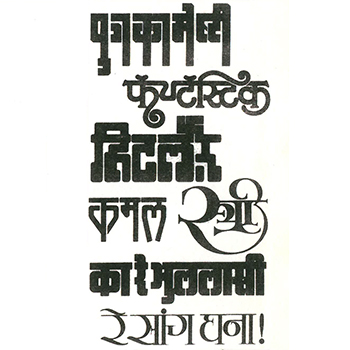
Marathi, the local language of Maharashtra It is widely used and found everywhere, but most people still work with English typography. Very few people are actually looking at Marathi to make the type, the script, the design, or the typography better. Though there are experiments happening in Marathi typefaces, very few people are actually working in typography and graphic design. Marathi is still a neglected language to work on with typography. Even I worked with English typography for the elective in the third semester, when there was a choice. Reasons..unknown.
When Prof. Kriti Trivedi gave this project as a topic, I was desperate to know the work done in Marathi. My mother's tongue: as the project was started, it was seen that not many changes occurred in Marathi typography as compared to the Western work. Whatever changes happened, they were because of the change in printing methods, and sometimes they were the influence of some good designers, like Sri. Dinanath Dalal, Subhash Awchat, and Prof. R. K. Joshi. From the early period, some people and groups, such as Javji Dadaji, Ranuji Aru, Nirnaysagar Press, and various type foundries after that, publications like Keshaw Bhikaji Dhawle, Mauj and Popular, and ITR, have tried to improve the state and have worked extensively in the field. But those are very few in number. Many people are becoming distracted as new media and trends emerge.
In spite of development and good work in the field, it hasn’t reached the level of wide acceptance due to less propagation, sometimes even because of keeping secrecy about the work in fear of getting copied, and mostly due to poor documentation.
Design of Alternative Widgets
by Sameer Bhagwat
Details >>
by Sameer Bhagwat
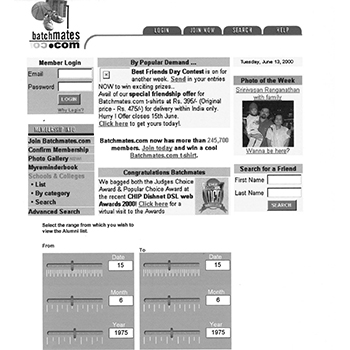
In the given environment of the Windows platform or any such platform, newer versions will always keep getting added; new features will get added, and new widgets will get added. This project seeks to comprehend how the user interacts with the interface and to develop some guidelines for micro-level interface design.
Many widgets exist in different forms and functions. A survey and a brain-storming session to understand some existing problems in the widgets or otherwise to develop a new widget for an application opened a gamut of exploration. The whole direction of the experiment is to come up with a gadget and do a user analysis of the gadget. Issues like navigation, wizards, branch history, and range specifiers were discussed, after which we got down to the range specifier option.

A study on Wearable Computing for Children
by Sreejith Unikrishnan
Details >>
by Sreejith Unikrishnan
Wearable computing facilitates a new form of human–computer interaction involving a small body-worn computer (e.g., a user-programmable device) that is always on, always ready, and always accessible. In this regard, the new computational framework differs from that of hand-held devices, laptop computers, and personal digital assistants (PDAs). The "always ready" capability leads to a new form of synergy between humans and computers, characterised by long-term adaptation through the constancy of the user-interface.
A wearable computer is a computer that is subsumed into the personal space of the user, controlled by the user, and has both operational and interactional constancy, i.e., is always on and always accessible. Most notably, it is a device that is always with the user and that the user can use while walking around or doing other activities.