Mobility Design
Batch 2022-2024
(22 items)
Mobility DesignBatch 2022-2024
(22 items)
(22 items)
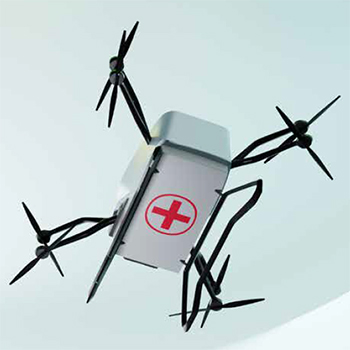
Designing an Organ Transportation Drone (Unmanned Aerial Vehicle)
by Aditya Mahamuni
by Aditya Mahamuni
Organ transplantation offers a lifeline to patients with severe medical conditions, but its success depends not only on skilled surgical teams but also on the rapid and reliable transport of donated organs. With demand far exceeding supply, traditional road and air transport methods—limited by delays and logistical challenges—can jeopardise organ viability, especially for those with very short preservation windows. This growing urgency calls for a major shift in transportation approaches. Drone technology presents a transformative solution by enabling faster, more efficient, and obstacle-free delivery of organs. This project explores how integrating drones into the organ transportation system can overcome time sensitivity, geographic barriers, and regulatory challenges, ultimately creating a novel Organ Transportation Drone model that improves delivery efficiency, enhances transplant success, and helps bridge the widening gap between organ supply and demand.
Details >>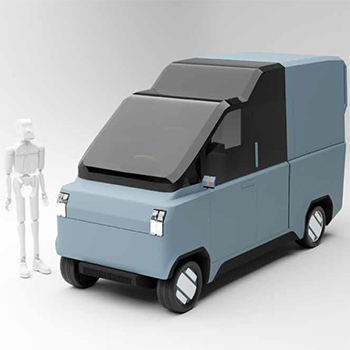
Designing an Urban Commercial Vehicle
by Aditya Mahamuni
by Aditya Mahamuni
Mumbai’s wholesale markets face significant congestion due to the use of large commercial vehicles—ranging from big trucks to smaller mini trucks and vans—that are difficult to manoeuvre through narrow, crowded streets. These oversized vehicles slow traffic and affect residents, drivers, workers, and customers, while many mini commercial vehicles are also used for personal travel. This situation highlights the need for a compact commercial vehicle designed specifically for the demands of Indian wholesale markets, one that can improve the efficiency of both goods and passenger transportation and support smoother market operations. A mini truck–van hybrid offers a promising solution, combining modern design, practical features, and eco-friendly elements. Its compact size and adaptable cargo space make it suitable for tight market environments, helping enhance overall efficiency and ease of movement within these bustling areas.
Details >>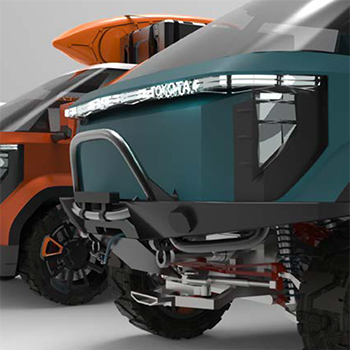
Reimagining Toyota LiteAce- Compact adventure getaway mobility
by Muhammed K Abdulla
by Muhammed K Abdulla
This project explores the concept of the transformation of a revered automotive classic. Inspired by the iconic Toyota LiteAce, this design initiative aims to breathe new life into the compact adventure vehicle landscape, bridging the gap between heritage and innovation. The report provides a comprehensive overview of the design journey, including all the background research and analysis. It also delves into the creation of a lifestyle-centric configuration, aptly named the “voyager”, which prioritises comfort, practicality, and adaptability. The project’s core objectives involve the meticulous customisation of the LiteAce, ensuring that it retains its compact charm while embodying the dynamic spirit of modern adventure. It is an exploration into the future of adventure vehicles, where the road is an invitation to new horizons, and the journey is as integral as the destination.
Details >>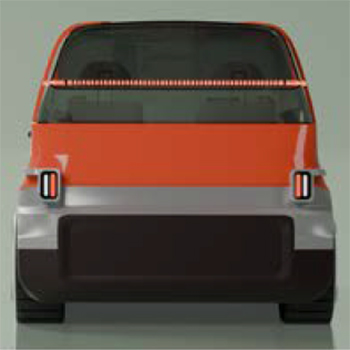
Glide Micro Car for Urban India
by Muhammed K Abdulla
by Muhammed K Abdulla
This report outlines the development of Glide – an innovative microcar designed specifically for the dynamic and crowded urban environments of India. The project aims to provide a sustainable, efficient, and convenient transportation solution tailored to the needs of the urban population in India. The microcar’s design emphasises compactness, manoeuvrability, and eco-friendliness, addressing the critical challenges of traffic congestion and pollution in urban areas. By conducting an extensive primary user study, it is ensured that the design is user-centric and meets the actual needs of the market. Also, current microcars from various markets are extensively studied, assessing factors such as footprint efficiency, user satisfaction, and overall performance. Ultimately, this project seeks to blend sustainability, innovation, and practicality, offering a transformative solution to urban transportation challenges and contributing to a more efficient and environmentally friendly urban landscape.
Details >>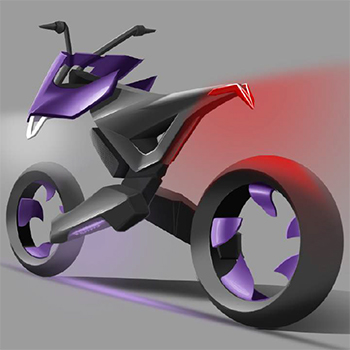
E-bike for university students in future
by Navneet Maharana
by Navneet Maharana
The project was aimed at designing a concept for the personal mobility of students in the future universities, which will be large-scale with high-tech infrastructure. Research was conducted to understand the user and their wants, needs and aspirations, and a comprehensive study about the future of technology and infrastructure was also done. The main aim of the project was to come up with a unique vehicle architecture which resembles the bicycle of the future. Various ideations were developed, and the final concept was designed according to the future persona and the inspiration/theme board. The concept was further detailed out by incorporating future tech and future scenarios.
Details >>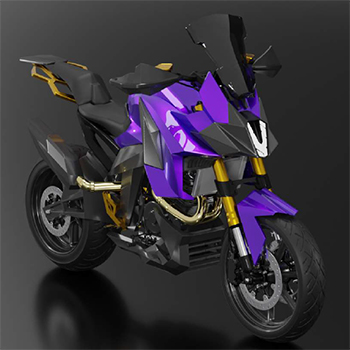
Motorcycle for Indian youth
by Navneet Maharana
by Navneet Maharana
The main aim of the project was to identify the needs and aspirations of the Indian youth motorcyclists. After the user research, the inference was to provide a fresh motorcycle design which can perform both daily commutes as well as weekend-long rides and can be launched soon. A crossover adventure sports motorcycle category was identified in the middleweight segment (popular in the Indian market), and thereafter, numerous ideations were made. The final concept was developed with a design language inspired by the theme board (aspirations of the user persona) and detailed and rendered out in a way that it attracts the Indian youth to purchase and experience it.
Details >>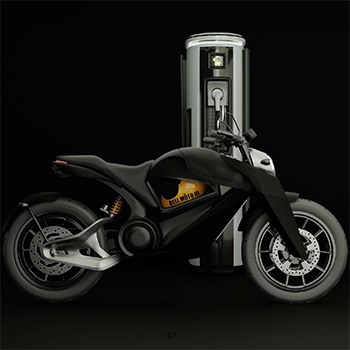
Designing a Motorcycle for female riders India
by Paresh B Bhandarkar
by Paresh B Bhandarkar
This research focuses on developing a motorcycle tailored for the specific needs of female riders in India, addressing comfort, safety and cultural preferences. Employing a user-centric approach, the study analyses existing motorcycles’ limitations through surveys, interviews and ethnographic studies. Key design features are identified to enhance the overall riding experience for women. Ergonomics is a central consideration, accommodating diverse body types and riding styles. Safety features are integrated to address female riders’ concerns and India’s unique traffic conditions. Cultural and aesthetic aspects are explored to align the final product with the varied tastes of female riders across regions. The findings contribute to a design prototype presented through sketch renders and CAD modelling, with subsequent feedback from female riders. Continuous refinement aims to strike a balance between performance, safety and aesthetics. This project serves as a guide for creating gender-inclusive motorcycle designs, fostering a more accessible motorcycling culture for women in India. The emphasis on a user-centric approach paves the way for gender-inclusive motorcycle design, promoting inclusivity and safety on the roads.
Details >>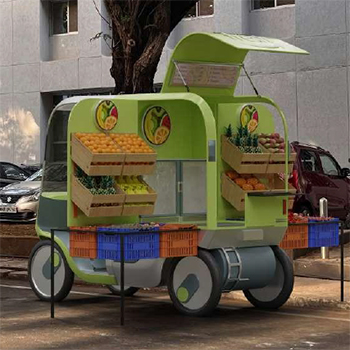
Mobility solution for fruit hawkers and vendors in India
by Paresh B Bhandarkar
by Paresh B Bhandarkar
This project focuses on designing a specialised mobility solution tailored for hawkers, vendors and last-mile delivery in India, with a specific emphasis on addressing the challenges faced by fruit sellers. The project aims to create a modular vehicle system that can accommodate the diverse needs of street vendors, allowing for flexible configurations based on location, seasonality and inventory requirements. By conducting thorough research and engaging with stakeholders, including fruit sellers themselves, the project seeks to gain a comprehensive understanding of their daily operations and mobility needs. Through innovative design approaches, such as incorporating collapsible storage units and ergonomic seating arrangements, the project aims to optimise space utilisation, enhance user comfort and improve operational efficiency. Furthermore, the project explores the integration of sustainable materials and an energy-efficient propulsion system to minimise environmental impact and promote long-term sustainability. By designing a holistic system encompassing vehicle design, logistical support, and vendor training, the project aspires to empower fruit sellers with the tools and resources they need to thrive in urban street markets, ultimately contributing to inclusive economic development and vibrant urban communities in India.
Details >>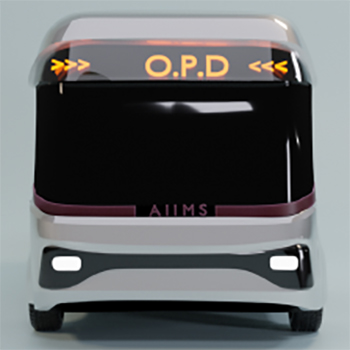
Designing an Electric Shuttle For AIIMS Campus
by Piyush Tanwar
by Piyush Tanwar
The unavailability of effective first-mile and last-mile connectivity emerges as a significant factor discouraging people from opting for public transport, leading them to rely on personal vehicles. This challenge is a nationwide concern, impacting urban mobility and contributing to the escalation of private vehicle numbers. AIIMS, a premier medical institute in India, confronts a similar challenge with first-mile and last-mile connectivity. While public transport efficiently takes patients, staff, students, and visitors to the main gate, navigating within the campus becomes a considerable hurdle. Parents without personal vehicles, including students and staff, face inconveniences, often relying on sporadic modes of transport like auto rickshaws. The situation worsens during nighttime and adverse weather conditions, compelling patients to undertake lengthy walks due to the scarcity of available transportation. This connectivity gap leads to a surge in personal vehicles on campus roads, resulting in road congestion and parking space shortages. The exponential growth in private vehicles emerges as a primary contributor to air and noise pollution within the serene AIIMS campus. After the initial user study, it has become evident that an internal transportation system, run by the AIIMS administration, can be a transformative solution. This proposed system aims to seamlessly connect various crucial landmarks within the campus, including gates, hostel complexes, and markets. After collection of all data, a design brief is formulated.
Details >>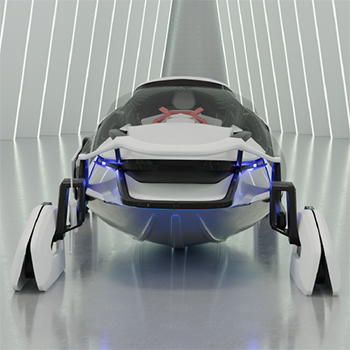
Designing Adventure vehicle for snowy terrain using biomimicry
by Piyush Tanwar
by Piyush Tanwar
Winter landscapes offer a unique and captivating environment, yet many existing snow vehicles prioritise speed at the cost of agility and environmental responsibility. This project focuses on developing a new type of snow vehicle designed to enhance mobility in snowy terrains while reducing ecological impact. Drawing inspiration from nature—such as the smooth gliding of penguins and the agile movement of snow rabbits—the concept uses biomimicry to achieve efficient, adaptable performance across varying snow conditions. The aim is to create a vehicle that balances excitement with sustainability, enabling users to explore winter environments with greater ease, reduced environmental disturbance, and improved connection to the natural landscape. By integrating innovative design principles with nature-inspired functionality, this project seeks to redefine winter transportation and expand the possibilities for safe, efficient, and eco-conscious snow exploration.
Details >>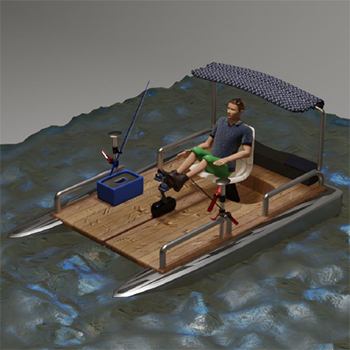
Designing a human powered watercraft for fishing and relaxing purpose on a lake and pond
by Pratyush Mahapatra
by Pratyush Mahapatra
This concept introduces a groundbreaking human-powered fishing boat designed specifically for serene lakes and ponds across India. The vessel aims to elevate the fishing experience while encouraging fishing as a recreational sport. Beyond its functional purpose, the boat also has the potential to serve as a sustainable tourism attraction, showcasing the natural beauty of India’s water bodies. By blending leisure, adventure, and ecological awareness, this idea envisions a renewed fishing culture that supports eco-friendly tourism and promotes the conservation of aquatic environments.
Details >>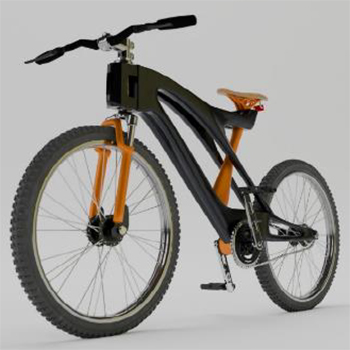
Designing a bicycle that can be 3d printed in modular section, easily assembled and customizable to on frame
by Pratyush Mahapatra
by Pratyush Mahapatra
The DIY Print-at-Home Bicycle is an innovative concept that enables individuals to build custom bicycles using simple tools and accessible technology, without the need for large factories or extensive budgets. By allowing key components to be produced at home through modern fabrication methods, this approach promotes personalised design, efficient production, and environmental sustainability. It empowers users to create bicycles tailored to their needs while supporting eco-friendly practices and reducing manufacturing waste.
Details >>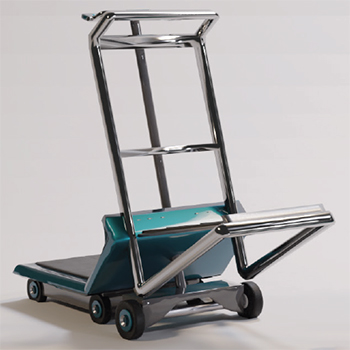
Designing a Mobility for Travellers at Train Stations
by Prerit Sonare
by Prerit Sonare
India’s vast railway network supports millions of daily passengers, yet mobility and accessibility challenges remain significant across many train stations. Inadequate physical infrastructure—including the absence of usable luggage trolleys, ramps, elevators, clear signage, traversable flooring, and platform guidance—creates difficulties for travellers, especially those carrying heavy luggage or with reduced mobility. The lack of dedicated assistive services, such as functional trolleys, carts, adequate staff, and porters, further complicates navigation across long platforms and interconnecting junctions, disproportionately affecting elderly passengers, persons with disabilities, families, and first-time travellers. This report examines these issues and explores inclusive design and technological interventions inspired by global best practices to improve mobility, accessibility, and information clarity in Indian railway stations. Its goal is to propose practical, user-centred solutions that enhance independence, reduce physical strain, and promote a universally accessible railway environment that ensures a seamless, dignified travel experience for all.
Details >>
Mobility for Hearing Impaired
by Prerit Sonare
by Prerit Sonare
This project addresses the largely overlooked needs of individuals with hearing impairment, a community whose mobility-related challenges have not been adequately studied or addressed through design. Many users with hearing impairment do not openly express the difficulties they face while interacting with their environment, making it essential to understand their experiences, aspirations, and adaptive behaviours—particularly in the context of driving and personal mobility. The project focuses on developing a concept vehicle tailored to the requirements of hearing-impaired users, recognising that varying degrees and types of hearing loss call for adaptable solutions. By establishing a common foundational design that can be refined through user feedback, the aim is to create a mobility system that integrates supportive technologies, modern aesthetics, and user-centric features. Drawing from research, experimentation, and existing assistive practices, the project aspires to significantly enhance the safety, confidence, and overall mobility experience of hearing-impaired individuals.
Details >>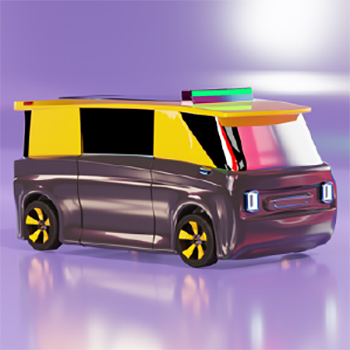
Mumbai Kaali-peeli taxi for 2040
by Sai Krishna K
by Sai Krishna K
This paper documents the design exploration of a future-speculative concept for the Mumbai Kaali Peeli taxi envisioned for the year 2040. The project employs an iterative process that departs from conventional user-interview-based research, instead using an observational photo documentary to understand current user behaviours and aspirations, which were then extrapolated into possible future needs. Global taxi services were benchmarked to identify emerging directions in mobility, and a custom methodology was developed to study trends and derive core values shaping future transportation. These insights informed the creation of multiple future scenarios, which were evaluated using the Futures Cone model to determine preferred futures, forming the contextual foundation for the 2040 Kaali Peeli concept. The vehicle was then designed through a standard automotive design process, including mood boards, theme boards, iterative ideation, and 3D modelling, before being visualised within the defined future scenario. The report aims to examine questions related to the evolving identity of the Kaali Peeli, its cultural significance in Mumbai, and the aspirations influencing future mobility, while encouraging reflection on how taxi services may transform in the coming decades.
Details >>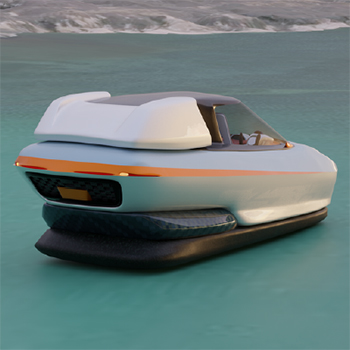
Designing an adventure hovercraft for multi-terrains
by Sai Krishna K
by Sai Krishna K
This thesis investigates the potential of hovercraft technology to transform personal mobility and adventure sports, inspired by science-fiction concepts such as the “Star Wars” landspeeder. Despite decades of technological stagnation, emerging advances in materials, propulsion, and design offer renewed opportunities for innovation. Through research into the adventure mobility aspirations of young adults aged 18–35, the study developed three concepts—a midsize rescue/combat hovercraft, an adventure hovercraft, and a DIY model—with the adventure hovercraft ultimately selected for its ability to overcome the limitations of conventional road vehicles. The work examines core engineering principles, focusing on lightweight materials like aluminium and Kevlar, transitional diesel-electric and future electric powertrains, enhanced steering, reverse thrust mechanisms, and advanced skirt designs. Environmental sustainability plays a central role, emphasising the hovercraft’s minimal surface impact and suitability for varied terrains while exploring pathways toward fully electric systems. The final outcome, BREATHE: The Adventure Hovercraft, represents a high-performance, eco-conscious mobility solution that advances hovercraft design and offers new possibilities for versatile, sustainable, and exhilarating transportation in the future.
Details >>
Ferry for gateway of India to Elephanta
by Sangeeth Sivan M
by Sangeeth Sivan M
This project focuses on the conceptualisation and design of a modern ferry service to enhance transportation between the iconic Gateway of India and the historically significant Elephanta Caves. The proposed ferry aims to provide a seamless, safe, and enjoyable maritime experience for tourists and locals alike. The design process encompasses several key considerations, including vessel specifications and exterior visual appearance around the Gateway of India and the Taj Hotel. The vessel design also prioritises accessibility and comfort, ensuring a pleasant journey for passengers of all ages and abilities.
Details >>
Modern Expedition Vehicle for Family Exploration
by Sangeeth Sivan M
by Sangeeth Sivan M
This project introduces a new type of compact vehicle designed for family adventures: the Modern Expedition Vehicle for Family Exploration. It combines innovative ideas and a focus on strengthening family connections through travel. The goal is to go beyond traditional travel methods by designing a vehicle that is not just for getting from one place to another but a capable and versatile mobile home that meets the varied needs of today's travelling journey.
Details >>
Designing an All Terrain Vehicle for Armed Forces of India
by Shubham
by Shubham
All-Terrain Vehicles (ATVs) are robust off-road machines designed for diverse landscapes, typically featuring large low-pressure tyres, a straddle-style seat, and a sturdy chassis, with four-wheel models preferred for their stability and control. A major subcategory is Side-by-Sides or Utility Terrain Vehicles (UTVs), which differ from conventional ATVs by offering side-by-side seating, increased cargo capacity, roll cages, and steering wheels, making them suitable for both recreational and utility purposes. Powered by engines ranging from 150 cc to over 1000 cc, ATVs and side-by-sides navigate terrains such as dirt, sand, mud, rocks, and steep inclines, supporting activities like trail riding, racing, hunting, agriculture, forestry, land maintenance, search and rescue, and industrial tasks. Their agility, compact size, and terrain adaptability also make them vital in military operations worldwide, where they are deployed for reconnaissance, surveillance, patrolling, rapid response, and transport of personnel and supplies in environments inaccessible to traditional vehicles. Their versatility and multifunctionality significantly enhance mobility and operational efficiency across challenging contexts.
Details >>
Compact Urban Mobility Solution for Generation-Z
by Shubham
by Shubham
The Microcar project targets Gen Z, a generation characterised by their expressiveness, individuality, and influential perspectives. Designed for urban commuting, the MicroCar offers customisable features, eco-friendly options, and advanced connectivity to align with Gen Z’s values and lifestyle. As this generation emerges as the largest consumer group with significant market influence, the MicroCar meets their demand for authentic, sustainable, and technologically advanced solutions. This project underscores the importance of understanding Gen Z’s unique characteristics and preferences, positioning the MicroCar as the ideal urban mobility solution for a forward-thinking, environmentally conscious generation.
Details >>
Designing a Mobility Solution for Small and Marginal farmers of India
by Sudhanshu Ranjan
by Sudhanshu Ranjan
Agriculture is the backbone of the Indian economy, with small and marginal farmers constituting a significant portion of the farming community. Despite their vital role in food production, these farmers face numerous challenges that hinder their productivity and economic stability. Limited access to resources, high transportation costs, and inadequate infrastructure are among the key issues that restrict their ability to efficiently manage and market their produce. This project, "Mobility Solution for Small and Marginal Farmers", aims to address these challenges by developing an innovative, cost-effective, and user-friendly mobility solution tailored to the needs of smallholder farmers. By leveraging technology and local resources, the proposed solution seeks to improve the accessibility and efficiency of transportation, reduce costs, and ultimately enhance the livelihoods of small and marginal farmers. The primary objective of this research is to design a mobility framework that not only facilitates better access to markets but also ensures that farmers can transport their produce in a timely and efficient manner. Through this, the project aspires to contribute to the sustainable development of rural communities and the overall growth of the agricultural sector in India.
Details >>
Exploring handicraft in designing interiors of autonomous luxury vehicles
by Sudhanshu Ranjan
by Sudhanshu Ranjan
This project explores the integration of Indian handicrafts into the interiors of luxury autonomous cars, combining traditional artistry with advanced automotive design. As technology reshapes the future of mobility, the initiative seeks to preserve and highlight India’s rich cultural heritage by incorporating intricate handcrafted elements into modern vehicle interiors. The aim is to redefine luxury as an experience that goes beyond comfort and innovation, offering passengers a meaningful connection to heritage and craftsmanship. Through this fusion of tradition and futuristic design, the project envisions a new direction in automotive interiors where each journey reflects India’s artistic legacy within the evolving landscape of autonomous mobility.
Details >>