Product Design
Batch
(16 items)
Product DesignBatch
(16 items)
(16 items)

Shenoy Innovation Studio (SIS) | Z-Line Petrol Pump | Open Design School (MHRD) | Window Mounted Solar | Low Cost Vein Tracer for blood extraction
by Prof. B. K. Chakravarthy
by Prof. B. K. Chakravarthy
B.K. Chakravarthy's Shenoy Innovation Studio project's attention is directed towards disruptive as well as sustaining innovation for the development of new and futuristic products and services that will delight users. The methodologies developed in the studio apply to large industries in both the private and public sectors, as well as small-scale industries, the government sector, and the craft sector. It intervenes in the education system with the industry in a mutually beneficial collaboration. This helps to increase levels of excellence and relevance in learning, teaching, and research. Another creative project by B.K. Chakravarthy was the Z-Line petrol pump. The bulky lower half, combined with a slender top portion, ensured minimal damage of the kind to which earlier designs of fuel dispensers had been vulnerable. The hydraulics were housed in the lower half, while the electronics were housed in the upper half. High accuracy in manufacturing and a notable reduction in cost ensured that the Z-line quickly bested its competitors. The modular design with a card slot system was designed to be maintenance-friendly. As the electronics were placed above the stipulated minimum of 1.2 metres, the Z-line dispenser did not require a flame-proof junction box. Dynamic and forward-looking in appearance and gesturing towards a future of radical innovation, the Z-line became a key icon of Indian roadways in those times. The Open Design Schools (MHRD) project's objective is to extend the reach of Design Innovation education through a combination of online courses and blended learning. Hence, it is a combination of MOOCS and workshop practice. The aims of the Open Design School are to bring design education to a large number of aspirants and to provide them with hands-on training in workshops all over the country under expert mentors. This experiential learning is the key to Design Innovation Pedagogy. The Window Mounted Solar Project was a thorough understanding of the specific challenges faced by users, which proved to be a turning point in this case. A window-mounted solar oven with a deceptively simple design that eliminates the need for a conventional oven. Some of its benefits are: it preserves nutrition; slow cooking means tastier food; it is cheaper than the costly LPG fuel; it minimises danger; no electricity or flame needed and it saves fuel. The Low Cost Vein Tracer for Blood Extraction has been designed as a simple, light-weight device that humanises a simple technology (NIR Spectroscopy), helping medical practitioners easily identify the veins during vein-puncture procedures, reducing patients' trauma. Difficulty locating veins, especially in children, obese people, and people with darker skin, results in several needle pricks that cause trauma, discomfort, and injury. NIR Spectroscopy is an existing technology that can easily be applied to solve the problem, in particular. This technology can actually be used by the masses— in busy and frugally run blood camps, blood banks, small and medium sized hospitals.
Details >>
Sigma III foil sealing machine | Forklift Truck for Voltas India Ltd
by Prof. Vijay Bapat
by Prof. Vijay Bapat
The Sigma III foil sealing machine was the project of Prof. Vijay Bapat. Sigma III Touch Cap Seal’ is a Pacmachine Award (2012) winning project where the challenge was to redesign the form of the new generation of foil sealers launched by Electronic Devices,Mumbai. The old sealing machine form was susceptible to being misused for keeping sundry things, making it prone to accidents. The sloping forward sealer body improved the aesthetic appeal by making it look dynamic. The whole assembled machine was packed in wooden crates, resulting in expensive packaging for export to other countries. A modular design approach was taken to shift to paper corrugated box packaging. Due to this design approach, we could achieve a substantial weight reduction from 140 kg to 80 kg and freight costs reduced to $300 from $1250 as the packing and transportation have become simple. Showing how form can improve function and reduce costs, Sigma III has been appreciated even at international design platforms like the IF exhibition. Another important project by Prof. Vijay Bapat was the forklift truck for Voltas India Ltd. Due to heavy competition from Korean and Japanese fork-lift trucks, the forklift truck division of Voltas was losing its leadership position in the diesel fork-lift market. The challenge was to achieve an international aesthetic look without changing the internal components. The major design contribution is a footboard visible from the top level that improves the operator’s comfort in climbing down. The red model shows the design improvements with half a tonnes of weight savings, achieved due to a 150 mm lower west-line. With improved fuel efficiency and increased speed, the company could position the product as a premier truck. The improved aesthetics and user comfort without changing the basic chassis, helped the company recapture local as well as foreign markets. This design is going strong in the market even today.
Details >>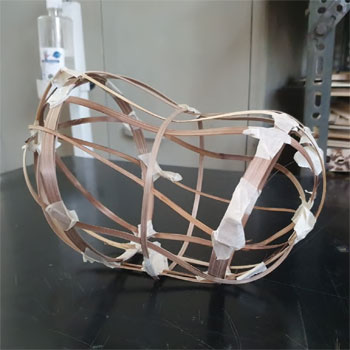
Manuplating Bamboo by the Application of Heat
by Tarun Karthick
by Tarun Karthick
The aim of the project was to explore the bending property of bamboo. The explorations led to the creation of the bamboo bending jig.
Details >>
Vases Inspired by Tamil letterforms
by Tarun Karthick
by Tarun Karthick
The aim of the project was to create ceramic vases taking inspiration from Tamil letter forms. Looked at various aspects of Tamil culture before choosing the letter forms. The vases were slip cast and slab built. Most time was spent. Vases because they are a product with a lot of freedom for exploration, but at the same time I wanted a finished product at the end of the project. Learning to slip cast was the secondary objective. It allows for more freedom in terms of the form, and it is repeatable. Early inspirations were the works of Valentine Schlegal, Jerilyn Virden, and Ettore Sottsass.
Details >>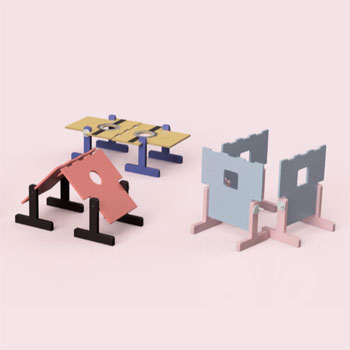
Designing Play Furniture
by Tarun Karthick
by Tarun Karthick
The aim of the project was to create an object that combined play with furniture for kids of kindergarten age. The object would play an active part in the kids' imaginative play. It would be used independently by the child without the adult having to intervene. I wanted to make a piece of furniture for my P! but chose to work with ceramics instead as we were not certain as to when we’d be back on campus and have access to the studios. With hindsight, it would’ve turned out alright if I’d gone with it, as we made it back pretty early on into our P1s. So, I was very much determined to make one for my second project.
Details >>
Human Demands of Sustainable Aviation
by Vishnu Priyan
by Vishnu Priyan
The first phase of the project, which lasted from October 2020 to May 2021, comprised an analysis of the approaches and tools that are used by the engineers within the SE 2A research cluster. A main aim was to reveal tacit assumptions, which guide the work of the engineering projects, and to investigate parameters and metrics that are applied within these projects. Here, the focus was on the engineers’ understanding of sustainability as well as their underlying assumptions of passengers’ and airport residents’ needs and demands with respect to sustainable, low-noise, safe, and reliable aviation.
Details >>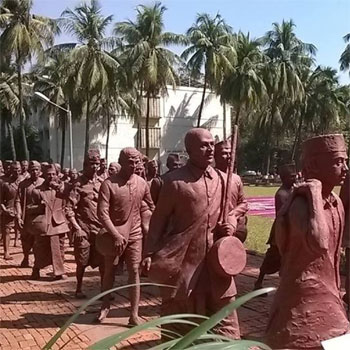
National Salt Satyagraha Memorial at Dandi
by Prof. Kriti Trivedi, Prof. Raja Mohanty, Prof. B. K. Chakravarthy & Prof. Shilpa Ranade
by Prof. Kriti Trivedi, Prof. Raja Mohanty, Prof. B. K. Chakravarthy & Prof. Shilpa Ranade
The National Salt Satyagraha Memorial at Dandi, Gujarat, was created to commemorate Mahatma Gandhi's iconic Salt March of 1930. Several faculty members from IDC IIT Bombay—Prof. Kriti Trivedi, Prof. Raja Mohanty, Prof. B. K. Chakravarthy, and Prof. Shilpa Ranade—played significant roles in the conceptualisation and design of this memorial. Their collective efforts aimed to create a space that not only honours the historical event but also offers an immersive experience to visitors through the integration of art, storytelling, and technology.
Details >>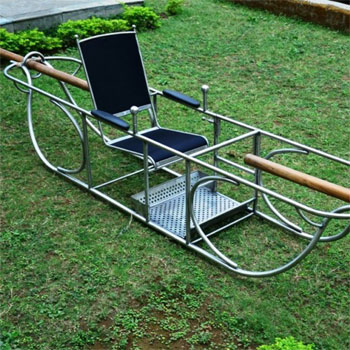
Lightweight palanquine for Vaishno Devi
by Prof. B. K. Chakravarthy
by Prof. B. K. Chakravarthy
One of the most well-known pilgrimage destinations in India, Vaishno Devi, is the target audience for an inventive lightweight palanquin that was created by Prof. B. K. Chakravarthy of IDC IIT Bombay, especially for the pilgrims. The design's main goal was to provide a lightweight, safe, and ergonomic substitute for conventional aeroplanes, which are frequently unwieldy and uncomfortable for both passengers and bearers. The pallet is far easier to carry than conventional wooden allets because it was made with lightweight, strong materials like aluminium or composites. The palanquin's ergonomic shape guarantees the comfort of both the bearers and the pilgrim being carried.
Details >>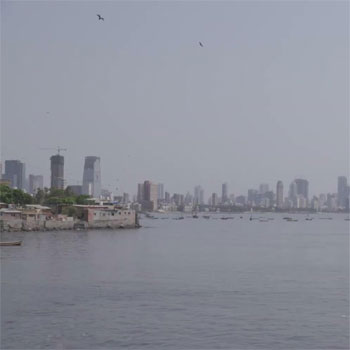
Success story of Navi Mumbai, Film for Asian Development Bank Institute, Tokyo
by Prof. Mazhar Kamran
by Prof. Mazhar Kamran
Prof. Mazhar Kamran of IDC IIT Bombay directed the film Success Story of Navi Mumbai, which was made for the Asian Development Bank Institute (ADBI) in Tokyo. The film highlights Navi Mumbai's planned development and expansion, a satellite metropolis built to relieve Mumbai's traffic and urban strains. It demonstrates how Navi Mumbai was envisioned and created as a planned metropolis with areas that were carefully designed for business, industry, and residential use. The movie highlights the initiatives taken to guarantee sustainable urban growth, emphasising public facilities, environmental concerns, and transit systems.
Details >>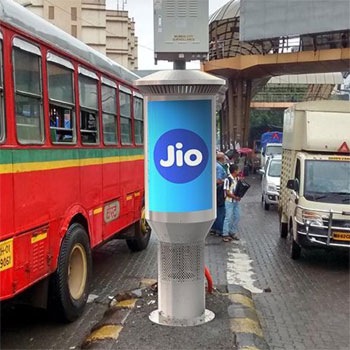
Air purifier for NEERI
by Prof. Nishant Sharma
by Prof. Nishant Sharma
Prof. Nishant Sharma from IDC IIT Bombay developed an air purifier in collaboration with the National Environmental Engineering Research Institute (NEERI). The project focusses on creating an efficient, cost-effective solution for improving air quality in both indoor and outdoor environments. The purifier uses advanced filtration methods to remove harmful particulates, pollutants, and toxins from the air. This technology ensures high purification efficiency while maintaining low energy consumption. It is designed with eco-friendly materials; the purifier aims to minimise its environmental impact. It is also built for durability and ease of maintenance.
Details >>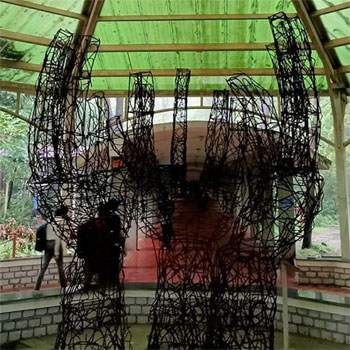
Sculpture at IIT Bombay
by Prof. Raja Mohanty
by Prof. Raja Mohanty
The sculpture at IIT Bombay designed by Prof. Raja Mohanty from the Industrial Design Centre (IDC) is a notable artwork that reflects his deep engagement with storytelling, visual language, and artistic exploration. Prof. Mohanty, known for his expertise in illustration, book design, and the use of traditional Indian art forms, likely incorporated these influences into the sculpture's design.
Details >>
Voice-based netbanking for the elderly, with Bank of Baroda
by Prof. Anirudha Joshi
by Prof. Anirudha Joshi
The Voice-based Netbanking for the Elderly project, led by Prof. Anirudha Joshi, IDC IITB, in collaboration with Bank of Baroda, aims to make digital banking more accessible to senior citizens. Recognising that many elderly users face challenges with conventional online banking interfaces due to difficulties with technology, the project seeks to offer a more intuitive and user-friendly solution through voice interaction. The banking system is designed to be navigated via voice commands, making it easier for elderly users who may not be comfortable with traditional touchscreen or text-based inputs. Common banking tasks like checking balances, transferring money, or paying bills can be accomplished through simple, guided voice interactions.
Details >>
Uniform Design for BSF Mahila Motorcycle Riders for the Republic Day Parade
by Prof. Kanika Jolly
by Prof. Kanika Jolly
The Uniform Design for BSF Mahila Motorcycle Riders for the Republic Day Parade by Prof. Kanika Jolly was a specialised design project aimed at enhancing both functionality and aesthetics for the Border Security Force (BSF) women riders. The design considered the rigorous physical demands of the motorcycle stunt performances while incorporating cultural and symbolic elements reflective of national pride. The uniform was crafted to balance safety, mobility, and comfort, ensuring that the riders could perform with ease during the high-profile event. Prof. Jolly's work focused on integrating modern design with traditional values, making the riders stand out during the Republic Day Parade.
Details >>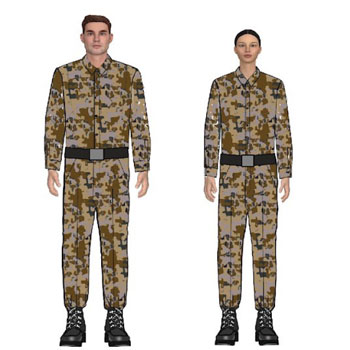
New Sansad Bhawan Security Officers’ Uniforms
by Prof. Kanika Jolly
by Prof. Kanika Jolly
The New Sansad Bhawan Security Officers’ Uniforms designed by Prof. Kanika Jolly aimed to create a modern and functional aesthetic for security personnel at the Indian Parliament. The design focused on comfort, durability, and professional appearance, incorporating materials suitable for varied weather conditions and demanding physical tasks. The uniforms likely featured distinct elements that reflected the authority and responsibility of the security officers while also promoting a sense of national pride. Prof. Jolly's approach would have emphasised both practicality and visual impact, ensuring the uniforms met the needs of the officers while presenting a polished image to the public.
Details >>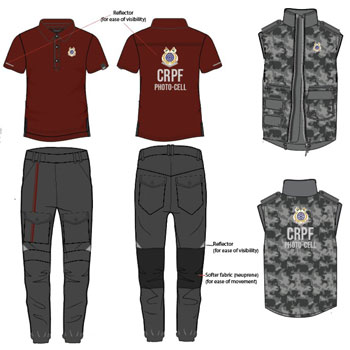
Uniform design for Central Reserve Police Force (CRPF) – PRO cell
by Prof. Kanika Jolly
by Prof. Kanika Jolly
The Uniform Design for the Central Reserve Police Force (CRPF) PRO Cell by Prof. Kanika Jolly was focused on creating a distinctive and functional uniform tailored specifically for the Public Relations Officers within the CRPF. The uniform was designed to convey authority and professionalism, making the PROs easily recognisable in public engagements. Emphasis was placed on selecting materials that provide comfort for long hours of wear while allowing ease of movement, particularly during interactions with the public and media. The design likely included strategically placed pockets for carrying communication devices, documents, and other essential tools required for their role. Incorporating elements that reflect the values and traditions of the CRPF fosters a sense of pride among the officers.
Details >>
Story Books
by Prof. Raja Moahnty
by Prof. Raja Moahnty
Prof. Raja Mohanty, known for his work in storytelling, illustration, and bookmaking, has authored and illustrated several storybooks that often blend traditional Indian folklore with contemporary themes. His storybooks are notable for their artistic approach, merging rich illustrations with compelling narratives. His stories often draw from Indian folklore, mythology, and cultural traditions, bringing ancient tales to life in modern contexts. As an artist and illustrator, Prof. Mohanty's books are visually rich, using illustrations to enhance the storytelling experience and engage readers of all ages.
Details >>