Product Design
Batch 2008-2010
(26 items)
Product DesignBatch 2008-2010
(26 items)
(26 items)

Introduction to E V Future
by Kamlesh Sawant
by Kamlesh Sawant
E V Future was established in 2007, in the international township of Auroville, located in the South Eastern state of Tamil Nadu, India. Auroville is well known throughout India and the world for its extensive research in the fields of renewable energy and other green initiatives. E V Future’s primary focus is on designing electric eco-friendly 2-wheeler solutions primarily for the Indian market and its existing road conditions. E V Future is the brain child of two young and dynamic Aurovilians, Aurosukrit and Akash Heimlich, who over the years have been actively involved in innovation and research into alternative energy and transportation. Over the past 2 years, E V Future has developed a prototype electric two-wheeler which is unique to all other electric two-wheelers available in the Indian market – the Hum-V, a rugged multi-purpose utility "moped". Over 15 prototype versions of the Hum-V have been successfully tested over the past year within Auroville. Over this period, every vehicle delivered was modified and improved upon based on customer feedback.
Details >>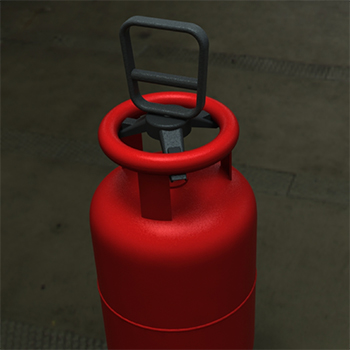
Gas cylinder transfer system for a gas cylinder delivery person
by Kamlesh Sawant
by Kamlesh Sawant
LPG gas cylinders have evolved as an important source of fuel for cooking needs in India. Apart from the projected increase in demand, LPG gas cylinders have always been in the news, sometimes for rises in cost or shortage or for illegal uses. But, all this time, nothing has been talked about the amazing system which works behind it, to keep the circulation going. This project investigates the working of the system to find out how the LPG cylinders weighing up to 40 kg are handled on a daily basis. The analysis of the study is synthesised to find out the areas where there is scope as well as a need for design intervention. Insights from the people involved in gas cylinder delivery and observations made while studying the system were helpful in formulating the design brief. The mock-up models were also used for validating and refining the concepts at every step. The proposed solution needs to be a feasible solution within the boundaries marked by the concerned authorities. Keeping this in mind, after concept evaluation, the final concept was further developed to meet the needs suggested by the earlier study.
Details >>
Amphibious vehicle
by Kamlesh Sawant
by Kamlesh Sawant
As the roads are getting flooded with automobiles, the supporting infrastructure is under constant pressure. Other modes of transportation, such as water and air, will soon gain importance for daily travel. With the ability to travel in more than one medium, an amphibious vehicle would be an ideal solution. An amphibious vehicle with land and water surface as modes of travel is considered within the scope of this project. The aim of this project is to design a motorised amphibious two-wheeler for youth. The evolution of technology and formal treatment were also noted while studying developments in amphibious vehicles over the years. Initial ideation was focused towards making a 2 wheeler afloat on water & results were grouped into categories. The group of inflatable pontoons was chosen on the basis of its feasibility. A configuration with pivoted flaps for housing inflatable pontoons on either side of a two-wheeler was chosen after evaluating other possible configurations. The dimensions of pontoons in inflated mode and in deflated storage mode were calculated before finalising the layout. The contemporary motorised two-wheeler was taken as reference for structural and ergonomic issues for deciding the layout. The targeted segment of user youth was expressed with lifestyle boards and mind maps. An expression of fearlessness was chosen for the formal treatment of the proposed vehicle, which was decoded by analysing visuals with that expression. Scaled mock-ups and sketches were used to get the concepts evaluated by potential users. Aside from youth, the proposed amphibious vehicle can also be used as a police patrol vehicle, a flood relief vehicle, and a personal mode of transportation in inland water bodies.
Details >>
Studying the bio mechanical characteristics in elderly
by Pragati Kapur
by Pragati Kapur
The purpose of this survey was to study the biomechanical characteristics of the elderly over 60 years of age. A sample of 27 elderly people, 11 males and 17 females, in the age range of 60 years to 88 years, from elderly homes in Delhi and Mumbai were tested using standardised instruments. Various biomechanical characteristics were studied and recorded. India is in a phase of demographic transition. As per the 1991 census, the population of the elderly in India was 57 million, as compared with 20 million in 1951. There has been a sharp increase in the number of elderly people between 1991 and 2001, and it has been projected that by the year 2050, the number of elderly people will rise to about 324 million. Over the past decades, India’s health programmes and policies have been focusing on issues like population stabilization, maternal and child health, and disease control. However, current statistics for the elderly in India give a prelude to a new set of medical, social, and economic problems that could arise if a timely initiative in this direction is not taken by the programme managers and policy makers. There is a need to highlight the medical and socio-economic problems that are being faced by the elderly people in India, and strategies for bringing about an improvement in their quality of life also need to be explored.
Details >>
Set of picture frames for Magppie Retail Limited
by Pragati Kapur
by Pragati Kapur
The purpose of this survey was to study the biomechanical characteristics of the elderly over 60 years of age. A sample of 27 elderly people, 11 males and 17 females, in the age range of 60 years to 88 years, from elderly homes in Delhi and Mumbai were tested using standardised instruments. Various biomechanical characteristics were studied and recorded. India is in a phase of demographic transition. As per the 1991 census, the number of elderly people in India was 57 million, as compared with 20 million in 1951. There has been a sharp increase in the number of elderly people between 1991 and 2001, and it has been projected that by the year 2050, the number of elderly people will rise to about 324 million. Over the past decades, India’s health programmes and policies have been focusing on issues like population stabilization, maternal and child health, and disease control. However, current statistics for the elderly in India give a prelude to a new set of medical, social, and economic problems that could arise if a timely initiative in this direction is not taken by the programme managers and policy makers. There is a need to highlight the medical and socio-economic problems that are being faced by the elderly people in India, and strategies for bringing about an improvement in their quality of life also need to be explored.
Details >>
Furniture for students in home environment
by Pragati Kapur
by Pragati Kapur
In the present day scenario, where homes are getting smaller and the needs of each member of the family are increasing, it is very important to look into the needs of all and, at the same time, make the place enjoyable. In each house, there are on average 2 children, and this gives an opportunity for the design of furniture for students. The project is an attempt to understand and correlate the three main aspects of the furniture system: product, user, and environment. This was achieved by case studies of homes; feedback through questionnaires; and dimensional specifications of different components. The concept is to integrate the informality and comfort of home with the exciting environment required by students for studying. The conceptualisation borrows clues from the study done and thereby formalises the product, taking into consideration all the aspects of the system. The aim is to create an organised work space to make studying at home a comfortable and enjoyable experience for the children.
Details >>
Walking aid for the elderly
by Pragati Kapur
by Pragati Kapur
The rapid increase in the elderly population in India and all over the world provides several opportunities to design for this segment of society. For the project, initiated by the Department of Science and Technology of India, I chose to work on mobility as the basic premise, as it is the second largest cause of disability in India. The project, titled "Mobility Aid for the Elderly", is aimed at better: -Functionality-Aesthetics The project necessitated an understanding of the various stages of walking with a cane, as well as insights for building design solutions. The project inspired me to look for shortcomings in the current walking aid designs and look for possible design solutions to the same to help the elderly walk better. The final product must be a full-scale working prototype of the walking aid that is applicable to Indian conditions.
Details >>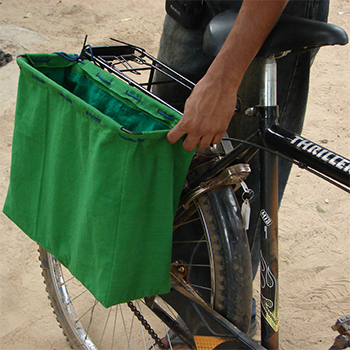
Bicycle scapes workshop
by Priyanka Marawar
by Priyanka Marawar
The bicycle-friendly area design workshop was conducted in the city of Auroville, Tamil Nadu for design, architecture students and young professionals. 16 students, 10 mentors, sponsors, and hundreds of Aurovillens came together to improve the bicycling experience in Auroville. The project of Auroville, located approximately 12 kilometres north of Puducherry in south India, was formally inaugurated on February 28th, 1968 with the aim of becoming a universal township dedicated to the realisation of the ideal of human unity. The founder of Auroville, a French lady born Mira Alfassa in Paris, who later became known as the Mother after being given charge of the Sri Aurobindo ashram in Pondicherry, followed its development until her demise in 1973. Since the time of its inception, Auroville has been an eco-city in the making. It offers good-willed people the opportunity to experiment and develop their expertise. The city is physically radial in nature. The matrimandir (meditation centre) is the centre of the city. The city’s geographical premise is 5 km in diameter. It is divided into four zones as follows: the cultural zone, the international zone, the industrial zone, and the residential zone. The first 2.5 km is the city area, while the next 2.5 kms is the green belt area. The current population of Auroville is around 2000 people, while the city is being built to eventually accommodate a population of 50,000 people.
Details >>
Sustainability awareness kit for children in an Indian urban environment
by Priyanka Marawar
by Priyanka Marawar
The choices one makes in life are most often based on experiences from one's past life. In the last couple of years, I have developed an interest in the worldwide spoken subject called "sustainability". This interest took me to Auroville, "a universal city in the making", which was one of the best experiences in the 23 years of my life. It was one of those experiences that one calls "life-changing." Totally inspired by this new way of life, I came back to my mundane urban life. Then I wondered what I could do to translate those ways of living into this urban scenario. This thought lingered on. The intention to find these ways that could make urban ways of living more sustainable and happier was reason enough for me to choose my Project 2 topic as "Healthy and Sustainable Ways of Living". It was much later, after I explored the meaning of health and sustainability, that I found potential for my design intervention by designing a tool to make sustainability a value system in children. This report shows that it is an enjoyable yet tough journey where my design capability finds a purpose.
Details >>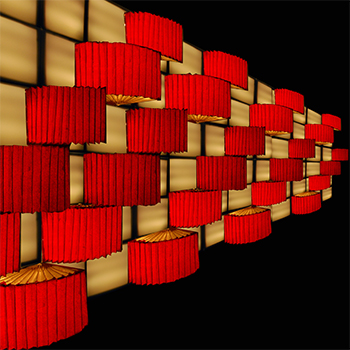
Lighting for variable moods in a restaurant
by Priyanka Marawar
by Priyanka Marawar
Lighting has always been my area of interest and something that always amazes me. I always wondered about its ability to touch one's senses to such an extent that it could alter one's frame of mind. This report is a glimpse into the journey that explores this ability of light. Hence the topic "lighting for variable moods in a restaurant." The project is primarily in 3 phases: Implementation: Understand, Explore and Experiment. The first phase entails understanding light and its components; the role of light in creating different moods by studying photographs, movies, and existing products; the role of light in creating different atmospheres in the theatre as a case study; the role of colour and coloured light; and the restaurant as a user scenario. Secondly, explore and experiment with various aspects of light to understand its relationship with materials, surfaces, and its potential to create moods. Playing with light in this phase also proved to be a constant creative stimulus. Thirdly , implement this understanding and experimentation to realise an actual product, which is a lighted modular wall which can transform to create different moods as per need. The second and third stages were cyclic processes until the desired effect was rendered. Various aspects of industrial design were also taken into account in this phase of actualization.
Details >>
Design means Business
by Roshan Lawrence Valder
by Roshan Lawrence Valder
There are many ways to sell a product. During project 2, the product was conceived purely with the user in mind and the current manufacturing possibilities ( see figure below) But to sell the product to a company, it must fit into the company’s portfolio. It may have to be part of the company’s range of products, be viable using the production methods of that company and fit into their philosophy of selling products. Another way of selling the product is to create a business model and start a business around it. This project focuses on the commercial viability of the product and on designing the product to fit a company’s product portfolio.
Details >>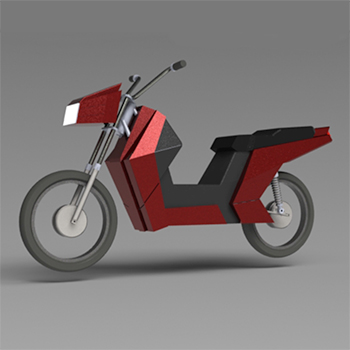
Electric Motorcycle Styling
by Roshan Lawrence Valder
by Roshan Lawrence Valder
EVfutures is India's largest electric vehicle portal with extensive information about electric bikes, electric scooters, and electric cars. An electric vehicle (EV) is a vehicle with one or more electric motors for propulsion. An electric vehicle consists of batteries which are used as the source of energy. They could be lead-acid, lithium ion based batteries, The controller is a logic control to control the DC motor by user input, i.e., accelerator, and transfer the required energy from the battery to the motor and electric motor, a DC motor to propel the vehicle, attached at the wheel or through a drive train. The redesign of the HumVee retained most of the components of the current HumVee. The frame suited its purpose and so was retained The position of the footrests was found to be comfortable from testing and so retained Rear shocks were customizable but there was a need to cover the positioning slots Other components were easily available as bike parts and hence retained. The styling was restricted to mostly the frame and headlights.
Details >>
Transformable Furniture
by Roshan Lawrence Valder
by Roshan Lawrence Valder
With a growing population and the influx of people into the cities, urban India has had a constraint on living space. In a city like Mumbai, even entire families live in single-room apartments. So there is a lot of emphasis on space in such homes. All basic activities happen in the living room, which also doubles up as a dining area, TV viewing area, study room for kids and a bedroom. An ideal piece of furniture would be one that elegantly addresses all these activities. Transforming furniture is not a new concept. The standard sofa bed is an example of a piece of transforming furniture. Recently, however, different variants have been popularised with an emphasis on style. Sofas that transform into bunk beds or a bed that transforms into a cabinet are modern examples of transformable furniture. Throughout this report, the terms "transformer" and "transformable furniture" will be used interchangeably to mean the same thing.
Details >>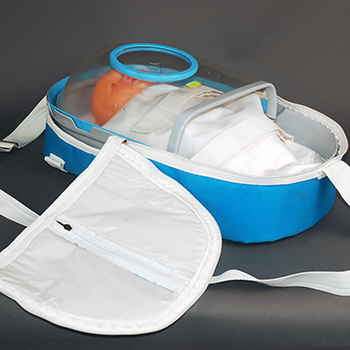
Transport Warmer for Infants
by Roshan Lawrence Valder
by Roshan Lawrence Valder
Neonatal care for preterm infants remains one of the most basic needs in India that is difficult to access. Special wards known as Neonatal intensive care units exist only in tertiary hospitals owing to the specialist equipment and staff required to run them. This project owes its beginnings to observing the general condition of neonatal care in the country. There were reports of babies being baked in incubators and equipment failing. Some news excerpts are given below. This was the trigger point in the whole investigation into looking at infant incubators. Over the course of the research, other issues rose apart from the glaring problems with incubators mentioned above. These were issues of crowding of the incubators with multiple infants, lack of space, issues of transport, sheer lack of incubators, and cost of equipment. Apart from the scarcity of equipment, there is a scarcity of staff and supporting structure. It was realised that neonatal care needed a system-level intervention and not just a product-level intervention. Though the issues were many and some out of the scope of a design project, the focus was given to the transport of the preterm infants. The safe and secure travel of these infants is as necessary as being in an incubator in a NICU.
Details >>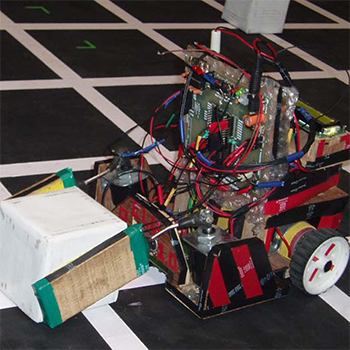
Jugaad - a Study in Indian Vernacular Design
by Sanjay Nair
by Sanjay Nair
There are situations when solving a problem may not be easy or possible by conventional means or in a formal way. It may be due to a lack of resources or due to a time constraint. At such times, overlooking the problem or waiting for the perfect solution to arrive may not be the answer. It has to be done by any means, calling for out-of-the-box thinking and going beyond the existing way of doing things. These kinds of situations happen more often in our country. The way we solve such problems is known as "Jugaad". Jugaad is essentially a colloquial word in Hindi, meaning an eclectic assembly that somehow works. What does Jugaad exactly mean? How are jugaad and design related? Is Jugaad an innovation? Is Jugaad a healthy culture? Can jugaad be classified into different types? Can there be guidelines for different types of Jugaad? The objective of my study was to find an answer to these questions.
Details >>
Summer Internship at Silpa- Sadan
by Sanjay Nair
by Sanjay Nair
Silpa Sadana (SS)is a crafts institute located 3 km away from Santiniketan in Sriniketan(SN). The object of Sriniketan is to bring back life in its completeness to the villages, making them self-reliant and self-respectful, acquainted with the cultural tradition of their own country, and competent to make efficient use of modern resources for the improvement of their physical, intellectual, and economic condition. Tagore, Rabindranath, 1928. Sriniketan today comprises the following departments within its broad ambit: Palli Siksha Bhavana (Agricultural Science Institute) Palli Sangathana Vibhaga (Rural Extension Centre) Department of Social Work Palli Charcha Kendra (i) Silpa Sadan. Silpa Sadana commenced work in 1922. It is aimed at revitalising decaying crafts as well as innovating craft-related activities to introduce them to local artisans. It has, broadly, a training aspect, a production arm (marketing) aspect, and a development aspect. In its training aspect, SS (Crafts Centre) offers a 3-year diploma course in nine different specialisations to about 80 regular students. Most of the products of the SS are sold at its Sales Emporium in SN and through counters put up at the Pous Mela, Magh Mela, and the Rathindra Shilpa Mela held once a year. Predictably, the SS has become the provider of bric-a-brac to Visva Bharti, in terms of its convocation scarves, uniforms, dress materials, parchments for certificates, files, bookbinding materials, and some furniture, as per the needs of the university. Apart from this, four traditional village weavers, enlisted from nearby villages, produce handloom fabrics on a piece-rated basis upon receiving raw materials from SS.
Details >>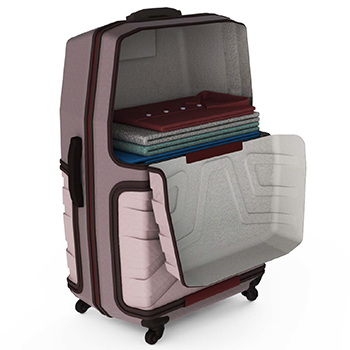
Luggage Design for a Middle Class Family
by Sanjay Nair
by Sanjay Nair
Small families travelling longer distances by train generally use multiple luggage of a smaller size (less than 22"). This has advantages like ease of handling and separate space for each individual. Large-sized luggage (between 28" and 32") is mostly used for air travel due to restrictions on the total weight of individual luggage and the number of bags an individual can carry. Family trips generally tend to be of short duration (4–7 days) due to the fact that the packed items are not completely removed from the luggage during the trip. Luggage is accessed intermittently during this period whenever something needs to be taken out. Organizing and accessing items becomes difficult when many members of a family use common large luggage. Business travellers hopping from one place to the other face a similar situation. They literally have to "Live Out of the Box". Many innovations are taking place in luggage design with respect to the materials, colours, textures, and wheels. But even today, luggage continues to have one or two major compartments into which we pack our belongings. This project aims at designing luggage for a small family of 3–4 members travelling by air (for 4–7 days), which will allow individual members to organise and access their luggage contents easily during travel.
Details >>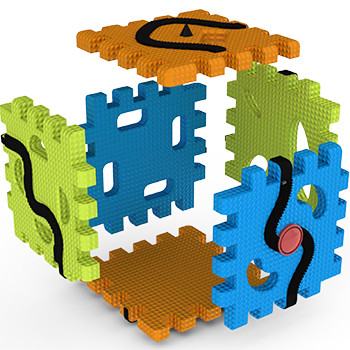
Playing kit for Visually Impaired children
by Sanjay Nair
by Sanjay Nair
Try imagining the world by closing your eyes as if you have never seen it. One's perception of the world is drastically altered when one interprets it through the other senses. Vision is an integral part of our learning process and helps in perceiving the world around us. Children with an absence or lack of vision need motivation to explore the world around them. It becomes important for them to engage their other senses more effectively for learning. Many things that sighted children learn by playing or observing have to be taught to visually impaired children. My project involved understanding the world of visually impaired children by looking at existing systems that encouraged exploratory behaviour, researching early childhood education, and interacting with individuals linked to the blind community. The research led to prototypes aimed at engaging visually impaired children in play. The objective of the design is to create a play kit that gives them the opportunity to learn through play and exploration while building their various physical, cognitive, and social skills.
Details >>
Alternative Fuel Vehicles
by Suhrid Kiran Palsule
by Suhrid Kiran Palsule
The automobile: considered among the greatest influences of the 20th century, it has today reached iconic status and is now an irrefutable part of our lives. Over 600,000,000 passenger cars travel the streets and roads of the world today. There is no doubt that mankind has greatly benefited from the use of this technology, but that progress has come at a price. Vehicles have had a huge impact on us and our environment, and most of it is not good. Every school-age child today is familiar with terms like "air/noise pollution," "global warming," "ozone depletion," and so on. We now see vehicles as a prime issue to be dealt with as our lives get more dependent on them each day. This is an indicator of the magnitude and urgency of the problem at hand. Steps are being taken to slow down the negative impact caused by automobiles on the environment. This report documents the ‘clean car‘ race and its significance.
Details >>
Summer Training at Ranvik Exports Pvt. Ltd.
by Suhrid Kiran Palsule
by Suhrid Kiran Palsule
Ranvik Exports Pvt. Ltd. is located in an industrial area in Manesar, Haryana. The company has been involved in exporting leather products for the last 14 years. Recently, they have launched a retail brand under the name "threesixtydegrees. My interest in the company rose out of the desire to work in the so-called lifestyle sector, the commercial, more "liberated" side of product design. Ranvik and Three sixty-degree are involved in providing home and office solutions to clients in up-market Gurgaon. The company produces a wide variety of products. Almost all are clad in leather (cladding being the prime activity in the unit). They offer custom-made products to people. The chance to be able to interact with clients and get hands-on experience in the production process was a very good opportunity in the area of my choice.
Details >>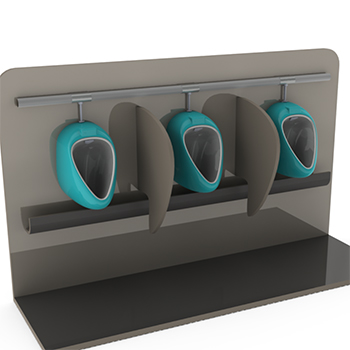
Redesign of School Amenities: Sanitation
by Suhrid Kiran Palsule
by Suhrid Kiran Palsule
Schools in India, especially the mid-segment ones, such as the Kendriya Vidyalayas, operate under tough conditions. Large numbers of students, limited resources, and tight budgets are a few of the issues that many schools have to deal with. Under such circumstances, where completion of the academic curriculum is, in itself, a challenging task, things like the provision of proper school amenities like furniture, lab equipment, sanitation and hygiene tend to get less priority. The project is an attempt to understand the importance of good sanitation in schools and aims at designing sanitaryware for the same.
Details >>
Gym Equipment for Home
by Suhrid Kiran Palsule
by Suhrid Kiran Palsule
The project deals with the design of fitness equipment. "Fitness" in itself is a very broad term, which brings to mind a plethora of images and thoughts. This project, however, deals with a certain kind of fitness equipment, widely known as "gym equipment’ (although its technical name would be "strength or resistance training equipment"), keeping in mind a specified objective and user profile, which shall be explained later on. This project was born out of the desire to provide people (namely young men and women) the necessary equipment that they would need to perform "strength training exercises" at home.
Details >>
Special Project on vehicle aerodynamics
by Vinish Janardhanan
by Vinish Janardhanan
Aerodynamics is a highly refined science that vies for position with other key vehicle design considerations such as styling and ergonomics. Its importance with respect to the operating efficiencies of a vehicle is undisputed, but manufacturers must steer a balanced path between the push and pull of the many other aspects of a car necessary to sell it to the consumer. A study of various aspects of aerodynamics was studied to see how vehicles have evolved over the years. From the designers' point of view, how the form of the vehicles can be maintained while keeping in mind the aerodynamics involved was looked upon. The word comes from two Greek words: aerios, concerning the air, and dynamics, which means force. Aerodynamics is a branch of dynamics concerned with studying the motion of air, particularly when it interacts with a moving object. Aerodynamics is important in a number of applications other than aerospace engineering. It is a significant factor in any type of vehicle design, including automobiles. It is important in the pre[1]diction of forces and moments in sailing. It is used in the design of large components such as hard drive heads. Structural engineers also use aerodynamics, and particularly aeroelasticity, to calculate wind loads in the design of large buildings and bridges. Urban aerodynamics seeks to help town planners and designers improve comfort in outdoor spaces, create urban microclimates, and reduce the effects of urban pollution. The field of environmental aerodynamics studies the ways atmospheric circulation and flight mechanics affect ecosystems. The aerodynamics of internal passages is important in heating and ventilation, gas piping, and in automotive engines where de[1]tailed flow patterns strongly affect the performance of the engine.
Details >>
Designing furniture for school at Infiniti Modules Pvt. Ltd. Goa
by Vinish Janardhanan
by Vinish Janardhanan
The internship was an opportunity to put into practise all that was studied and to get first-hand experience of what actually happens in a company. The factors that influence designing a product in a real-world scenario The project involved firstly understanding the company departments, their contributions to the system, and how all of them work together. The project task was to develop a new set of school furniture—a table and chair. The furniture set was taken from the drawing board to production, finally bringing it into the market. The company offers contemporary, ergonomic, and high-quality furniture products in India for the office and school. Strategic alliances with world leaders offer a complete suite of products. The company uses the best raw materials and processes under stringent quality control standards to ensure superior products. Infiniti also supplies high volume OEM components like shutters, drawers, etc . Successful office and school projects have been executed across the country, and the company has substantial exports as well.
Details >>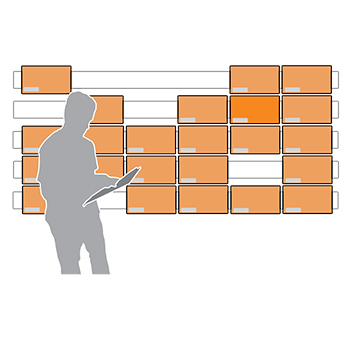
Designing a letter sorting device for mirakle couriers
by Vinish Janardhanan
by Vinish Janardhanan
A courier is a person or company employed to deliver messages, packages, and mail. Couriers are distinguished from ordinary mail services by features such as speed, security, tracking, signature, specialisation and individualization of services, and committed delivery times, which are optional for most everyday mail services. A courier company’s main aim is to provide the highest level of customer service possible through a fast and efficient delivery system. There is an increasing need for accurate and fast sorting work to compete with other similar service providers. It all starts with the mailing system. No matter the size of the organization, a well-engineered system can increase productivity, maximise efficiency, and streamline the workflow. Large chunks of mail have to be delivered every day, from magazines, bills, personal mail, etc., of various sizes. By providing an organised method of handling the mail, it ensures fast and efficient work. Mirakle Couriers is a newly established courier company located in south Mumbai. They are unique in that they only hire deaf adults.Since they are deaf, the scenario of the working conditions changes. My goal in this project is to provide compact sorting furniture that is ideal for limited space and easy adaptability to ensure efficient mail processing.and customise it for the special needs of Mirakle Couriers.
Details >>
Redesigning of industrial vehicle electric forklift
by Vinish Janardhanan
by Vinish Janardhanan
A courier is a person or company employed to deliver messages, packages, and mail. Couriers are distinguished from ordinary mail services by features such as speed, security, tracking, signature, specialisation and individualization of services, and committed delivery times, which are optional for most everyday mail services. A courier company’s main aim is to provide the highest level of customer service possible through a fast and efficient delivery system. There is an increasing need for accurate and fast sorting work to compete with other similar service providers. It all starts with the mailing system. No matter the size of the organization, a well-engineered system can increase productivity, maximise efficiency, and streamline the workflow. Large chunks of mail have to be delivered every day, from magazines, bills, personal mail, etc., of various sizes. By providing an organised method of handling the mail, it ensures fast and efficient work. Mirakle Couriers is a newly established courier company located in south Mumbai. They are unique in that they only hire deaf adults.Since they are deaf, the scenario of the working conditions changes. My goal in this project is to provide compact sorting furniture that is ideal for limited space and easy adaptability to ensure efficient mail processing.and customise it for the special needs of Mirakle Couriers.
Details >>