Product Design
Batch 2012-2014
(49 items)
Product DesignBatch 2012-2014
(49 items)
(49 items)
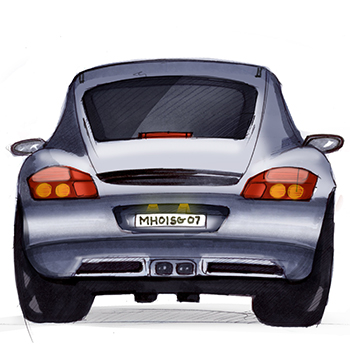
Signature Tail Lights
by Amol Pakhale
by Amol Pakhale
The objective of this research project was to document the people’s feelings and understand the inclusion and connectedness in signature tail lights of a vehicle using some case studies as a medium within the constraints of the project description. A concept of signature tail lights has been already developed in the history of automotive industry to add a brand value to the company. Through this process report, the author will explain the documentation for the project, analyzing some example through case studies, existing concepts and forms of selfexpression as a designer. The journey will then take you through the process of how the concept of signature tail lights evolved through generations and the concrete nature of which came into being through academic research, thought and analyses. The report explains all the relevant aspects of this subject. Details and insights on the research methodology results will be found in this report.
Details >>
Hands on science & Core of economics
by Amol Pakhale
by Amol Pakhale
Since the last three decades and more, Eklavya has been striving to translate this dream into a lived reality for all children. Working towards the goal of social change through meaningful education, it conducts researches and evolves curricular models at the micro level and attempts to implement them in the mainstream system to bring about change in the school education system in India. Since my childhood I had touch with this organization through my schools and here in IDC I got to know more about this organization from Prof. Raja Mohanty. So my past willingness to work with this organization becomes true through this internship programme. Eklavya was set up in 1982 as a non-government registered society. From the onset, it took up the academic responsibilities of the landmark Hoshangabad Science Teaching Programme (HSTP), then being jointly run by the state government and two voluntary organizations, Kishore Bharati and Friends Rural Centre. Alongside, it developed and implemented the innovative Social Science Teaching Programme and the Primary Education Programme (PRASHIKA) in the government schools of Madhya Pradesh. More recently it worked with the National Council of Educational Research and Internship (NCERT) in developing the National Curriculum Framework (NCF) 2005 and the syllabuses and textbooks based on the NCF. Eklavya continues to actively seed and develop academic programmes for curricular change in elementary education, at the micro level, and mainstream them through government and non-government agencies. It has now initiated work in curricular research and material development in language and math in the primary stages and science and social sciences in the high school stages. This work of curricular critique, research and material development fuels its ongoing engagements with the State Councils of Educational Research and Internship (SCERTs) of Bihar, Chhattisgarh, Rajasthan, Kerala and Andhra Pradesh in providing them academic resource support in developing curricula and textbooks in various subject areas. Teacher professional development is another area that Eklavya is engaged with through research, material development and conducting teacher capacity building workshops. Eklavya also works with the community in about 100 villages in five districts of Madhya Pradesh to run learning centres (Shiksha Protsahan Kendras) for first generation school-goers. This attempt to enhance community involvement in education and build linkages with the government schools to demand quality and efficiency. In addition, 70 libraries in government middle schools spread over 6 districts in Madhya Pradesh try to entrust the ownership and management of the libraries in the hands of children. Regular reading-writing activities in the libraries are also positively impact the learning of language and other subjects in children. (Eklavya introduction n.d.)
Details >>
Mass manufacturing building components for affordable housing
by Amol Pakhale
by Amol Pakhale
Now a day’s houses are not affordable due to high land value and lack of mass production in building components. Mass production not only reduces the price of component but it also provides high quality surface finish at very less period of time.The idea is to design and develop mass producible building components like door – window, balcony, staircase, plumbing and electrical systems etc, which can help us to reduce the overall cost and time during construction, which would help us to make houses affordable for lower middle class people.Many cost effective and time saving alternatives are explored prior to implementation of mass manufacturing components for housing during this
program and that could be implemented with high time and high technological research. Some of these alternatives may be discarded after little study; some
appear immediately attractive; and others must be studied at some length before their attractiveness can be evaluated.This project identifies the need of a faster system of housing delivery and attempts to determine the appropriate form, process and techniques for industrialized
housing, which can cater the need, in Indian context.
Details >>
Accommodation system seat/berth layout for force ventilated air cooled coaches of Indian Railways
by Amol Pakhale
by Amol Pakhale
The objective of this design project is to explore ways of increasing people’s comfort and connectedness in a public and private space using a good accommodation system concept as a medium within the constraints of the
project description as per the Indian Railway scenario.
The interior design, sleeper comfort and manufacture efficient design for reduced energy consumption are the three essential factors for a successful operation in the competitive world. Scientific design of sleepers for increased comfort of the passengers is seldom seen.
The overall aim of this project was to design a ‘Force ventilated air cooled sleeper coach’ with enhanced interior, reduced mismanagement in accommodation and increased comfort for the passengers. Design of passenger coaches must combine the state-of-the-art technology and the best of aesthetics with an Indian touch. Through this process report, the author will explain
the design process for the project, analyzing for example existing design of self-expression in public spaces. The journey will then take you through the process of how the concept came into being through rigorous academic
research, user study, thought and analyses. The report explains all the relevant aspects of these processes.
Details of and insights on the research methodology results will be found in the final design of the project.
Details >>
A Visual Ethnography on Cashew factory workers of Kerala
by Arun Raj R S
by Arun Raj R S
Kollam in Kerala is known as ‘The cashew capital of India’. It holds a major share in the total cashew produced and exported. With around a hundred cashew processing factories both managed by the government and private groups, the cashew sector gives employment to more than 40,000 workers. Surprisingly, 95% of them are women. These people have been working in the factories throughout their life and it is carried over by the next generations. The KSCDC Elampalloor factory is around 300 metres from my home and I never got any chance to see what is happening in the factory even though I see lot of women going to the factory for the work. This project is a study on the culture, behaviour and life of the working population in cashew factories.
Details >>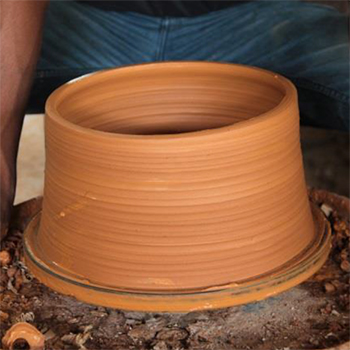
Explorations in potter’s wheel and design of a tea-set
by Arun Raj R S
by Arun Raj R S
Visva-Bharati University is one of India's major Central Govt. funded autonomous university located in Santiniketan,West Bengal. It was founded by Rabindranath Tagore who called it Visva Bharati, which means the communion of the world with India. Silpa-sadana is the one of the department coming under Visva –bharati university, which is founded by Rathindranath Tagore in 1921.He is the youngest son of Rabindranath Tagore. Silpa-Sadana is a pioneering institute in India in developing cottage and small scale industries. It has two units: Training and Extension Wing. Shantiniketan one of the renowned place in India for art and crafts being an engineer turned design student, I would like to expose myself in crafts and craft based design for a holistic design approach. which would introduce me to a new perspective of product design. Also from my two experience in Industry and from the discussion and suggestions from Prof.Rao, Prof.Sandesh and Prof.Kumar Esan the idea of doing the internship in Santhinikethan seems convincing . As a product design student I am very keen to work with lighting design, and from the facilities of shantinikethan pottery is one of the suitable medium to pursue my interest. Hence I choose ceramics as my area of internship
Details >>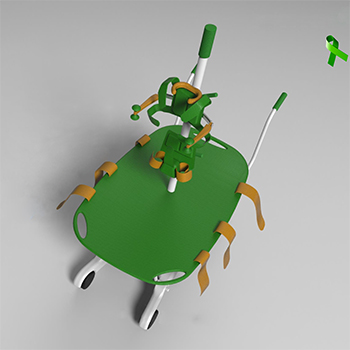
Redesign of a Vestibulator for the children with Cerebral Palsy
by Arun Raj R S
by Arun Raj R S
The aim of this project is to redesign a therapeutic equipment for treating children with Cerebral Palsy. CP or Cerebral (brain) Palsy (malfunctioning) is a birth related disorder in children which damages specific parts of the brain which controls their posture, muscle movement and co-ordination. An organ called the vestibular organ behind our ear gives the sense of balance, posture and co-ordination in us. This organ malfunctions in the children with CP. So, these children may not be able to sit, stand or walk depending on the severity of their CP. Hence, we need to assist these children. They can be brought to a better life by treating them with therapeutic exercises that can externally stimulate the vestibular organ. This product stimulates the vestibular organ of the CP affected children in three different axes through linear, gravitational, rotational and tilting motions in different combinations of postures like sitting, standing, kneeling, prone, supine and quadruped. The ‘redesign’ is developed by bench marking the vestibulator designed by Dr. Sayyed Ali Hosseini (as part of his P.hD programme at Industrial Design Centre, IIT Bombay, 2007). Also, the parallel products in the market were also studied. The redesign is suited for physiotherapeutic centre scenario for treating children with 2-6 years of age. Betterment of the CP children are the primary concern.
Details >>
Design of a platform safety system for passengers in Indian Railways
by Arun Raj R S
by Arun Raj R S
Indian Railways are one of the largest networks in the world which carries millions of people day by day from place to place. Such a big network is very difficult to handle. It has to address all the needs of the travelling population. So from these needs, what should be in the top priority? When we travel from place to place our prime need is to reach safely. So it is the main problem that has to be addressed in an area which is dealing with lot of people’s life. So when we travel in the train, these questions come to our mind. Are we safe in the train? Do the authorities take any measures to make us safe in the travel? If not, what can be done to make that train travel safe? All these questions directed towards the need for a system of safety in the railways. To figure out where the problem lies and how can we solve the problem through design thinking. So this project is aimed at a high level of safety for the Passengers in Indian Railways. And in the journey, the project was focussed into the passenger safety in Mumbai sub-urban rail. Mumbai sub-urban stations, trains, its passengers and their behaviour were studied to focus on a main problem. The gap between the train and the platform was identified as a major problem in the design. A platform gap filler was designed to give maximum safety and to prevent the commuters falling into the gap between the train and the platform while boarding and alighting the trains.
Details >>
Design Management: Analysis & Recommendations for Design and Degree Show
by Avinash Jayakumar
by Avinash Jayakumar
This document presents a concise overview of the learning and recommendations from Design and Degree Show 2014. It is meant to act as a broad guide for future Design and Degree Shows to be organised by IDC. It is assumed that the current trend of organising a degree show exhibition combined with a conference will be continued, however the format of the same has not been commented upon in order to maintain a guideline that is applicable broadly. It’s recommendations and guidelines are drawn from my pesonal experiences as one of the Overall Coordinators of Design and Degree Show 2014. The report presents an overview of the all the teams involved in organising the Design and Degree Show at IDC and their essential functions, along with suggesting prudent ways to plan and execute schedules. The main recommendations are that the show should be combined and organised as the flagship show of IDC and held annually. The document also recommends that students start planning the event and contacting speakers and sponsors around mid-September. The event should also be held only in VMCC, IIT Bombay and the Nehru Centre phase should be scrappedfor future shows due to logistical troubles and increased participation of public and industry at the IIT Bombay event in recent years.
Details >>
Waste Management Solutions for Mumbai
by Avinash Jayakumar
by Avinash Jayakumar
Solid Waste management is a global issue requiring urgent attention. It is a particularly severe problem in Indian cities like Mumbai as the overwhelming population and continuous growth combined with poor management strategies by local government leads to visible garbage pile-up almost everywhere, causing reduction in quality of life for citizens. Existing ‘pick-up and dump strategies’ are ineffective due to the lack of space, and negative environmental side effects of landfills. There is an urgent need to reduce the quantity of waste being sent to landfills. The study undertaken by this project has shown that littering is also common because existing dustbin solutions are not user-friendly, have no visibility and are poorly deployed. This project studies the context of the current problem and offers implementable design solutions to allow more effective solid waste management through increased segregation to reduce landfill waste, proper disposal of solid waste by citizens through higher bin visibility, and improving civic sense through education.
Details >>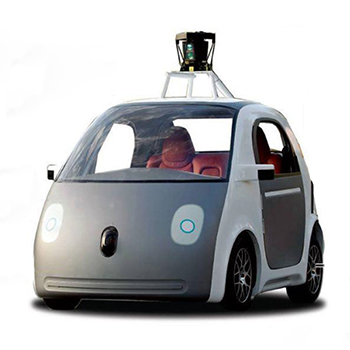
Study of communication systems Used in new generation personal Car
by Avinash Prabhune
by Avinash Prabhune
When human discovered wheel and its applications; since then his progress takes a fast track. Today Personal mobility became very important part of our day to day life; although the fuel shortage and global worming going to became big issues in next coming decade. The new revolution in the automobile technology is on the door step, very efficient electric batteries and advance computing technology making automobile very efficient. The companies like “google” taking interest in the driverless car technology. Very soon we are going to see the smart vehicles which ensuring the safety and fast transportation In the near future car can predict the traffic density and plan your trip accordingly. The real time data about road, city, car health condition, will be processed by inbuilt computer and helping us to manage efficient transport system. Smart phones allow us to connect anybody in the world, imagine what if your car able to communicate with you and give status updates about maintenance schedule of itself? Isn't it great!
Details >>
Summer Internship at Integral Enterprises Auroville
by Avinash Prabhune
by Avinash Prabhune
Auroville (City of Dawn) is situated along the coast of Tamil Nadu and was founded in 1968 by Mirra Alfassa, a disciple of Shri Aurobindo Ghosh. The township was designed by architect Roger Anger. Auroville has a number of small scale industries that are heavily based on traditional arts & crafts. Units associated with theAuroville foundation design, manufacture and distribute products such as scented candles, incense sticks, soaps and naturalcosmetics, pottery and ceramic ware, gemstone jewellery, wooden furniture, food products such as cheese and baked goods, etc. There is also a presence in the leather products industry, with a major brand such as Hidesign being based close to Auroville.
Details >>
Solar Cooker For High Rise Buildings
by Avinash Prabhune
by Avinash Prabhune
The LPG price hikes every month triggered the thought on Solar Energy which could be a clean and abundant source of energy. There are many types of solar cookers available in the market, but they are not that efficient. Each one has its own pros and cons. In a rapidly urbanizing India, the user segment this product is targeted towards are the people who live in high rise buildings because they don’t have space to use solar cooker and the old solar cookers fail to match their fast-paced life style. For using present type of solar cookers, the users need to have open space where they will get continuous sun light and the users need to track the sun all day. All these usability issues are the reason why urban users are not willing to consider this as an alternative to conventional cooking methods. This new kind of solar cooker will be mountable in the window or wall like a window AC, while facing towards south where sun is available all year round. Thus the accessibility becomes very easy from inside the house itself and the users need not go out. The cylindrical form provides uniform sunlight all day long. The ‘Dabba’ perception about the box-type of solar cooker has been broken by this new design. The efficiency has been improved and the time taken for cooking is drastically reduced, as compared to any other kind of solar cooker.
Details >>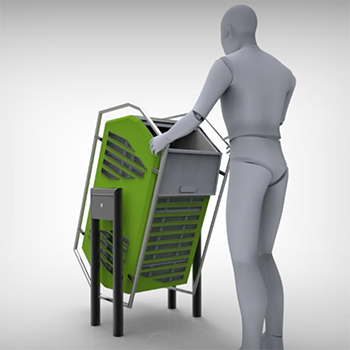
Design a Vermicompost Unit For Housing Society
by Avinash Prabhune
by Avinash Prabhune
The global view of waste management is disturbing. As the world's population has increased and become more urban and affluent, the production of waste has heightened by alarming rates - which in turn is a major cause of concern since it is an evidence of overuse of natural resources. Discarded materials, the byproduct of excessive consumption, are being produced faster than other environmental pollutants or harmful gases. Today, solid-waste management is one of the highest expenses to municipal financial plan. Waste problem is more grave in emerging cities rather than in rural areas. Unless we tackle this serious issue adeptly, the planet will have to bear the brunt of increasing waste burden. The tonnes of rubbish clearly reflect that the present disposal and processing capacity is probably not sufficient to deal with the rising growth of waste. Ironically, all these facts essentially point to one concern and it is perhaps of a greater consequence than anything else -the Basic Human Attitude. The seeds of this potential problem were sown quite early by our outlook towards waste and our ignorance in handling it. The importance of segregation of waste into wet and dry units is till now quite unknown to our society. That waste can be a source of value if handled efficiently is still unbeknownst to us. The aim of this project is therefore to motivate and educate the society to look at waste in a different perspective-in turn making each one of us responsible to understand – that recycling waste can be rewarding in terms of the output and give a sense of satisfaction in improving the health of our planet. This is achieved by looking at waste as a resource to obtain soil/compost of the finest fertilizing qualityby recycling the wet waste after segregation at a house-hold level through vermicomposting. The idea is to have a unit with the necessary components installed within the premises of a housing society to create a byproduct (vermicompost) for the residents which may eventually be marketable
Details >>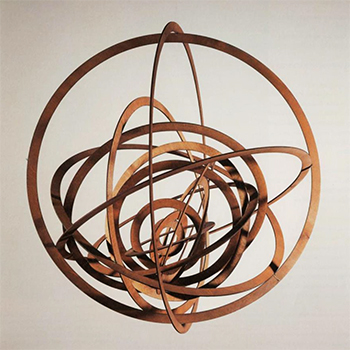
Study Of Kinetic Art
by Deepanwita Ghosh
by Deepanwita Ghosh
The topic for the Design Research Seminar is Study of Kinetic Art. This field of art caught my interest when I was previously working on an immersive light experience project for my curriculum. The works of U-Ram Choe, a kinetic artist from South Korea was very fascinating and inspiring. Thus it got me curious to go ahead with this project. The origin and developments in art and how kinetic art was formed was studied. The various ways in which movement was interpreted was noted and how the works of the artists in that era were influenced by ‘movement’ was studied. The works from the era of 1860 till today was researched and it was noted that the innovators in plastic arts have worked with a lot of different materials and technology as eras have passed transforming the image of movement in art into a genuine art of movement.
Details >>
Summer Internship at Integral Enterprises Auroville
by Deepanwita Ghosh
by Deepanwita Ghosh
Auroville (City of Dawn) is situated along the coast of Tamil Nadu and was founded in 1968 by Mirra Alfassa, a disciple of Shri Aurobindo Ghosh. The township was designed by architect Roger Anger. Auroville has a number of small scale industries that are heavily based on traditional arts & crafts. Units associated with theAuroville foundation design, manufacture and distribute products such as scented candles, incense sticks, soaps and naturalcosmetics, pottery and ceramic ware, gemstone jewellery, wooden furniture, food products such as cheese and baked goods, etc. There is also a presence in the leather products industry, with a major brand such as Hidesign being based close to Auroville.
Details >>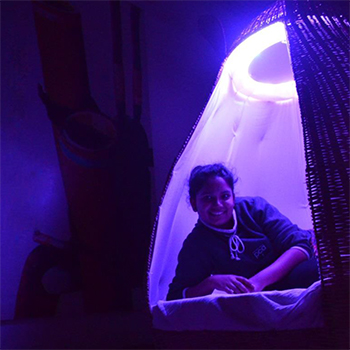
Immersive Light Experience
by Deepanwita Ghosh
by Deepanwita Ghosh
The idea of this project was to bring in the visual attributes of natural light (colour, illuminance and perception of motion) to create an immersive experience that helps a person to relax. So how can these visual attributes translate into relaxing a person? Relevant data was collected on light, relaxation, colour - for example - studies have revealed that colours have an effect on our cognitive responses and certain wavelengths help in calming the mind, a theory on which Chromatherapy is also based. Relaxing can be even more enjoyable if the light is soft. Information on immersiveness and its significance in any experience was also obtained during user studies and interviews. Finally all the research study was combined to get a comprehensive knowledge to bring out the Immersive Light Experience. The project brief and user details was then defined. Ideas were generated from which concepts were detailed and tested to simulate the desired effects to reach the final concept level.
Details >>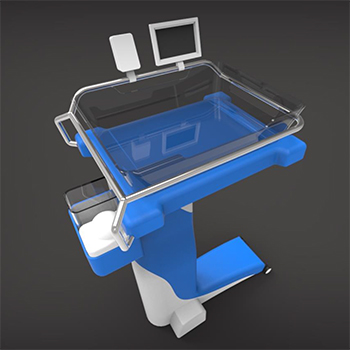
Redesign of CPAP Device
by Deepanwita Ghosh
by Deepanwita Ghosh
Recent studies and medical surveys on neonatal mortality have shown that India accounts for the maximum percentage of deaths among newborns worldwide, which is 28%. These newborn infants pass away primarily due to either of the following causes: infections due to prematurity, asphyxia, low birth weight, or pneumonia—complications that hospitals with low-end facilities cannot handle. Even if these infants stabilise and get discharged from the hospitals, they are susceptible to frequent chest respiratory infections and may have problems with asthma or other problems caused by the environment they go back to. The first 20–25 weeks after birth are a period of viability in which the infants are susceptible to acquiring infections if proper care is not taken. Three main reasons why, despite India’s growth, neonatal mortality rates remain high are: (i) socio-economic factors ii) a lack of infrastructure; iii) insufficient specialised staff for prenatal, postnatal, and post-natal care. Continuous Positive Airway Pressure (CPAP) equipment is a recent break-through innovation in the field of neonatology that is efficiently life-saving. The CPAP device is used in most developed countries to cure the causes of infant deaths mentioned previously. In spite of being a great boon, this equipment has some issues and problems associated with it that have been identified after studies and discussions with doctors. The objective of this project is therefore to facilitate the use of a CPAP device by making it compact, portable, easy to use, and easy to maintain. Use of the CPAP device in multiple directions was thought of, like during transit (emergency vans), in local clinics, where the accessibility of the people to obstetric care is much easier, and in hospitals, wherever its use is relevant and such that infant lives could be saved. The final concept arose from insights gained while considering the direction for establishing a local clinic.
Details >>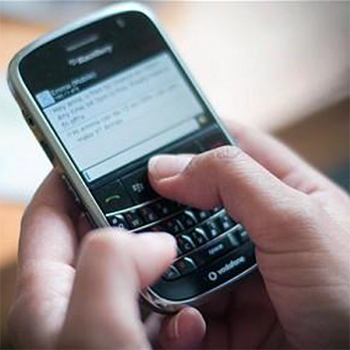
Muscular skeletal disorders associated with Micro Workstations
by Edu Mohan
by Edu Mohan
Telecommunication has taken a major leap since radio was invented and the first radio signals were transmitted in the 1901 . Ever since man has been trying to reduce size of the telecommunication devices and it has come to an era where every common man can afford a mobile telecommunication device . These devices also incorporated various other value additions like music players and cameras . This emerging trend has been serving man a great advantage as he can have everything he wants in his pocket . The shrinkage in dimensions has given an adverse effect to the humans because the human dimensions doesn’t change according to the new device coming in market . Hence the mismatch causes various musculoskeletal health issues along with other issues . This project aims to study and document a few of such musculoskeletal disorders caused by mobile telecommunication devices .
Details >>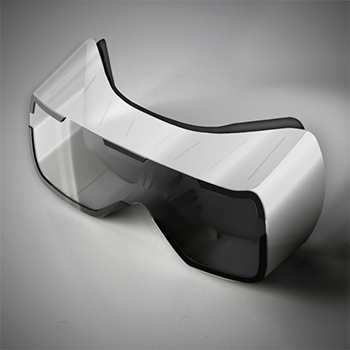
Summer Internship at UT-Darmstadt
by Edu Mohan
by Edu Mohan
ALARP is a consortium of companies and universities
from 5 European countries: Italy, Germany, Great Britain,
Austria and Israel.
This topic concentrates on conceptual models for
warning / alerting signals and devices with ergonomic
man-machine-interfaces (HMI). Safety of railway workers is a serious concern of most industrialized countries. Surface transport workers are facing very high risks since they often operate without service interruptions. The railway situation is even more peculiar, since vehicles are constrained to tracks and therefore drivers have much less margins to react in case of emergencies and therefore workers are much more
exposed to injuries and fatalities. This vision is supported
by many analyses and published reports
- Most staff fatalities and serious injuries continue to be as
a result of being hit by a train;
- Most staff member deaths occurred in open line
accidents, whereas most serious injuries to staff members
were incurred in accidents in stations.
Therefore safety requirements for railway trackside
workers are very strict and necessary.
In Germany today stationary railway automatic track
warning systems (ATWS) are being used at railway
construction sites. ALARP (A railway automatic track
warning system based on distributed personal mobile
terminals) is project partially funded by the European
Commission whose goal is the study, design and
development of a safety-critical Automatic Track Warning
System (ATWS) for railway track-side workers
Details >>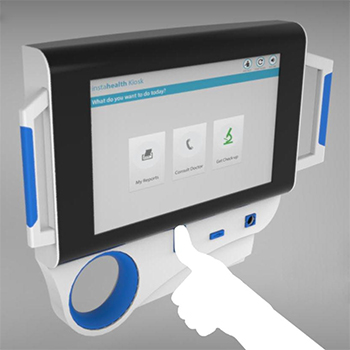
Designing of a primary health check up kiosk for HealthATM group
by Edu Mohan
by Edu Mohan
Health care has always been a primary concern for man. Health is not just mere absence of illness or diseases. It is a state of complete physical, mental, and social well-being (WHO, 1946). Due to the changing lifestyle of the population and with the growth in modernization, people are forced to lead a hurried day and maintain an unhealthy diet, thus leading to various health issues. The nature of these health problems are such that they affect both genders equally and in early ages leading to health deterioration. The major problem is that often initial discomfort is ignored. The visible symptoms appear too late to take a precautionary measure thus leading to a chronic condition. Hence awareness and frequent health checkups are necessary for remaining on the safer side of life. Providing easier means to take control of the health is the solution this project is proposing. The idea is to create an automated self-service health kiosk so that the consumer can have quick, convenient and affordable access to the knowledge of his state of wellness and avail primary and preventive services on time. The kiosk can be installed in high traffic areas such as malls, gyms and corporate lounges. People can take five to ten minutes out of their busy schedules to get a comprehensive primary health report. This report can be used as a baseline for future consultations if necessary. Thus people can take charge of their health condition and well being can be ensured.
Details >>
Creative engagement for the Autistic: A design approach
by Edu Mohan
by Edu Mohan
Autism Spectral Disorders(ASDs) are a range of neuropsychological disorders which affects an individual. One is born autistic due to various genetic, environmental and psychological conditions before, during and after birth. ASDs are non curable. The severity can be controlled by timely identification and appropriate therapeutic measures. In Indian context alone, the numbers go as high as one out of 88 children. ‘Shraddha’ is a non profit NGO, based at Mumbai, which is working towards the betterment of the situation of young autistic adults. The institution provides them with vocational training and involves their abilities creatively for making small products. These products are sold and the Shraddha students are given back a small incentive. The aim of my project was to work in close collaboration with Shraddha and come up with a range of products and also design the process through which these products can be created by the people at Shraddha, keeping in mind their abilities and disabilities.
Details >>
Nature and Form
by Nikhil Das K.V
by Nikhil Das K.V
Design research seminar project is a part of final semester at IDC, IITB. I have opted `Nature and Form’ for my area of project because of the tremendous interest in bio-mimicry. The main objective of this project is to study one organism in-depth and identify specific characteristics or parts of it and find a design application for the characteristic. Nature has solution for all kind of human needs. It is possible to solve all these needs by observing nature and how plants and animals tackle challenges of their environment. The word Biomimicry is very relevant in this present world technology and researches because nature is the best teacher who has gained experience through many years of evolution. The creative solution which inspired from the nature can be much more sustainable than others. The discipline of Biomimicry takes its name from the Greek words ‘bios’ which means life and ‘mimesis’ which means to imitate. As its name might suggest, Biomimicry involves the study of nature’s designs and mimicking them to solve human challenges. Janine Benyus, one of biomimicry’s pioneers defines it as ‘innovation inspired by nature’
Details >>
Exploration in Ceramics and development of flower pot cum lighting product
by Nikhil Das K.V
by Nikhil Das K.V
Visva-Bharati University is one of India's major Central Govt. funded autonomous university located in Santiniketan,West Bengal. It was founded by Rabindranath Tagore who called it Visva Bharati, which means the communion of the world with India. Silpa-sadana is the one of the department coming under Visva –bharati university, which is founded by Rathindranath Tagore in 1921.He is the youngest son of Rabindranath Tagore. Silpa-Sadana is a pioneering institute in India in developing cottage and small scale industries. It has two units: Training and Extension Wing. Shantiniketan one of the renowned place in India for art and crafts being an engineer turned design student, I would like to expose myself in crafts and craft based design for a holistic design approach. which would introduce me to a new perspective of product design. Also from my two experience in Industry and from the discussion and suggestions from Prof.Rao, Prof.Sandesh and Prof.Kumar Esan the idea of doing the internship in Santhinikethan seems convincing . As a product design student I am very keen to work with lighting design, and from the facilities of shantinikethan pottery is one of the suitable medium to pursue my interest. Hence I choose ceramics as my area of internship
Details >>
Household Aquaponics system
by Nikhil Das K.V
by Nikhil Das K.V
The project is aimed at studying aquaponics, implementing it in urban context and promoting the technology through this urban home product. The urban population has less access and opportunity to farming due to space, resources and time constraints. The Aquaponics technology has been in existence for over the last 3 decades, yet it is not so common to the masses. In a developing country like India, where the balance between the rural and urban population, is rapidly shifting towards the latter, issues like food insecurity becomes a major concern. Urban farming is the one answer to solve this problem and it takes conscious effort for that. The product could be used as a serious farming as well as a hobby/destressing element in the urban homes.
Details >>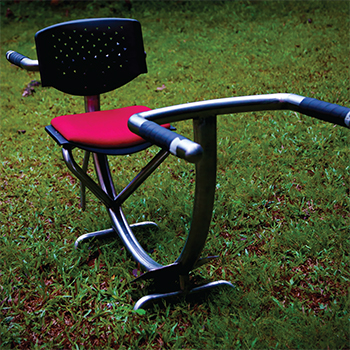
Barrier Free Ajanta: Resign of Palanquin System
by Nikhil Das K.V
by Nikhil Das K.V
‘Barrier free Ajanta’ is aimed to design and develop an accessible system which will resolve the existing accessibility issues of Ajanta caves, a world famous historic monument at Fardapur in Aurangabad District of Maharashtra. The Ajanta caves are a complex of 30 rock-cut Buddhist caves containing paintings and sculptures which is a perfect example of Indian art and tradition, especially Buddhist religious art. Ajanta Caves have been a UNESCO World Heritage Site since 1983. Because of these reasons, thousands of pilgrims, foreign and domestic tourists visit this site every year. The visitors also include a large number of elderly and physically challenged people. For some, visiting Ajanta caves is akin to making a pilgrimage. But for the elderly and handicapped people, the rough terrain, steep inclinations and large number of steps makes this an arduous task. Just like other people, they also have equal rights to visit and enjoy these places. In this project, I have tried to conduct a detailed research on present accessibility systems and barriers in the existing scenario. My research and study is based on some design considerations. Primarily, the design should enhance accessibility of the elderly and people with disabilities. The new systems should not destroy the current livelihood of the porters and designed system should also keep Ajanta’s heritage value. The design should further reduce the porter’s efforts, and be part of a system that provides more safety and comfort to visitors. The palanquin system is the existing answer to these accessibility issues. The role of palanquin in Ajanta is tremendous. The existing palanquin is made from wood or bamboo by local carpenters or the porter himself and is carried by four male porters. The palanquin is the only accessible system for elderly and physically challenged people. Introducing a new system to this context will be difficult and impractical, so I focused on ‘redesign of palanquin system’ for the scope of my project.
Details >>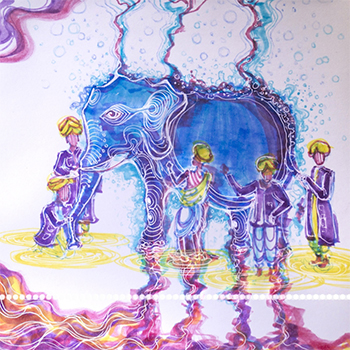
WAYs of Seeing
by Rahul Anand
by Rahul Anand
The project “WAYs of Seeing” by Rahul Anand (IDC, batch 2012–2014), supervised by Prof. Alka Hingorani, is a design research inquiry that experiments with flow and reinterprets modes of seeing, drawing from foundational visual culture writings by Susan Sontag and John Berger. The work sits in the product design/design research domain and seeks to explore how perception, narrative frames, and visual logic can be transformed into design artefacts or interventions.
Details >>
Summer Internship at LEDeG
by Rahul Anand
by Rahul Anand
In 1978, four years after Ladakh was opened to tourism, Helna Norbreg Hodge, Started the 'Ladakh Project' over the concern that the winds of change might prove too strong for the fragile roots of a culture that had developed tenaciously over the millennia in an equally fragile environment and change would need to be carefully guided. LEDeG has a Rural Building centre about 16 kms from its main office. The centre has various facilities to manufacture building materials ranging from CSEB blocks to Ferro cement roof vaults. It supplies these building materials to local construction sites. The rural building centre at Leh, has been trying to achieve quality CSEB blocks for quite some time (around two years).
Details >>
Designing Interactive Exhibits/Installations for Information Access
by Rahul Anand
by Rahul Anand
Exhibitions are spaces where emotional connections and experiences happen. As a child, I was fascinated with exhibitions, and science museums, because these were the spaces where information was experienced through moving, and getting involved with the objects. The joy of watching little turbines generating electricity in a dam model was unparalleled. These experiences and information was not available anywhere. A lot has changed since then. Information technology has made information and experiences available in the virtual world. Slick animations, websites and apps make all rich information accessible at your fingertips.
Details >>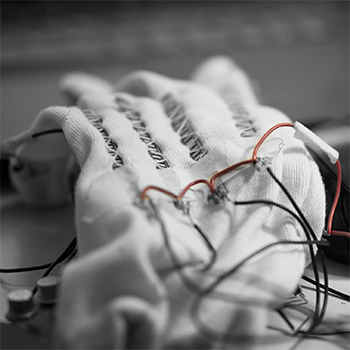
Understanding Wearable Computing Devices
by Rahul Anand
by Rahul Anand
What if you can have more than five senses to experience the world ? What if your direct perception of the world can be altered ? With Wearable computing devices this true augmentation of human capabilities is becoming ever more possible. These devices are changing the way we see, we perceive and do things. In recent years there has been an exponential rise in development of wearable products and it is considered as the next breakthrough technology in computing. It is important to understand the potential that wearables have to offer. Almost every day, a new wearable device sees the light of the day, but a majority of them have failed to make an impact over the people. What is the reason behind this failure? This research based project tries to understand why wearable computing is important and most importantly it raises questions , finds out the problems that wearables suffer from, currently. It tries to answer how these pitfalls can be avoided to create the next generation of successful wearable computing devices. A comprehensive literature study was done to understand
the history and development of wearable computers, the
visions proposed and what is the state of wearable as of
now. An analysis of over 500 devices, with focus on 20
different devices helped in assimilating the overall picture
of the current generation devices, their functions, target
areas and shortcomings. Over the course of project, the
author used four of the class leading wearable devices to
understand the benefits, and faults in them. To gauge the
importance of wear-ability, fashion, individual choices and
role of technology in our lives, a user survey involving 250+
users was conducted.
The findings of the research brought out the fact that when
computers are wearable, they become a part of our identity and become much more than just products. This calls
for a collaboration of product design, interaction. User experience design, fashion design and hardware engineers to
conceive and build devices together, to be able to cater to
each individual’s needs, choices and usage pattern. Moving beyond fitness trackers and phone repeaters, wearables
need to make use of breakthrough technology to change
the way we interact with information, data and execute
tasks using computers. Based on the inferences and understanding gained during research, a suitable use case scenario is identified and an experimental wearable product is devised responding to the scenario. A music creation glove which allows musicians to create, save, learn and share music on the fly was proposed and discussed with a set of music makers and possible users. The device was prototyped and during a survey, it was received well in its second version itself. Wearable devices have definitely come a long way, and with hardware becoming ever smaller and smarter, they are putting ever more power onto our bodies. Getting these devices right might be the key to solving a multitude of specific problems that people suffer from, ranging from algorithm assisted artificial limbs to replacing the screens and their limited size to consume and create information.
Details >>
Stereotypical Character Design in Indian Context
by Shashank N. Sawant
by Shashank N. Sawant
Stereotyping is defined as an "oversimplified attitude people hold toward those outside one's own experience who are different.” Stereotypes arise as a result of incomplete or distorted information accepted as fact without question. A stereotype is simply a widely held belief that an individual is a member of a certain group based on characteristics. Due to the process of over-generalization within social perception, stereotyping leads to a great deal of inaccuracy in social perception. Sex, race, age, sexual orientation, religion and physical ability are various categories which exist in stereotyping. The most prevalent and controversial forms are sex and race. Racial studies have found that descriptions such as Jews are shrewd and ambitious, African-Americans have special musical and athletic ability and Germans are methodical and efficient, are commonly used to label these ethnic groups. Slowly, society has been making a slight transition away from stereotyping. Unfortunately it is a difficult process, especially since we rely on second-hand sources for our information for the majority of our knowledge. The main outlet of second-hand information is the mass media. As a result of depending largely on the second-hand source of mass media, mass media in turn plays a major role in determining the content of our culture. Stereotyping is a product of culture, therefore, mass media have a strong influence in supporting and tearing down stereotypical characteristics.
Details >>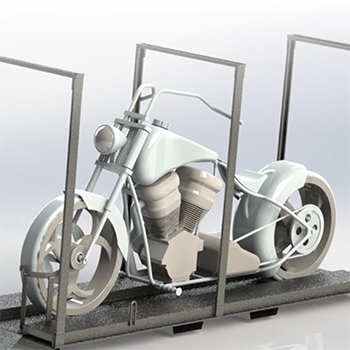
Summer Internship at Wings44
by Shashank N. Sawant
by Shashank N. Sawant
Wings 44 is an Industrial design firm that operates from Shiroli MIDC, outside Kolhapur city. It was founded by Amey R Ghatge, an IDC alumnus. Wings 44 specialises in Material handling and storage, Industrial furniture and automation. It strives to keep 'man' as the main element around which the design process revolves including machine, environment, manufacturability and economics.
Details >>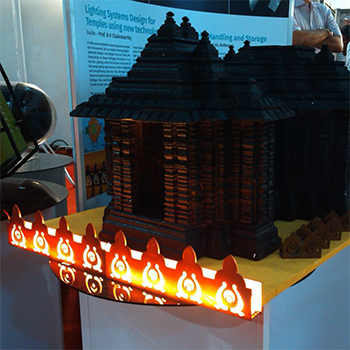
Lighting Systems Design for Temples using New Technologies
by Shashank N. Sawant
by Shashank N. Sawant
History fascinates all of us. It speaks to us in various forms, through ruins, scrolls, stories and memories. In India, we are blessed to have temples and other monuments which weave the seamless tapestry of our existence since times immemorial. But as the footsteps of time approach louder, and modern technologies penetrate deeper and deeper into our lives, the insensitivity to these heritage structures is on the rise. Lighting which forms the crucial part of the temple-going experience is often neglected and thoughtlessly laid out. This is seen in terms of the entire system. Any damage to the structure results in permanent loss of our cultural heritage. The project was conceived and executed keeping this ?pain? in mind. Within the scope of the project, it has been tried to address all issues related to lighting within the context of heritage temples. The issues that fall within this gamut include light sources, fixtures, wire management, switches and power supplies to some extent. Accordingly, we worked within the context of Ambernath temple. The temple is a classical structure built circa 900 A.D., and is in need of urgent attention. Referring to books and in consultation with scholars, the temple was separated into zones and the lighting need for each zone was identified. The possible places where lights could be mounted were also identified. These included blank lintels and pillars. The crowd movement patterns through the temple were observed. The present power supply, switches and light sources were also listed. Various luminaires and design directions were explored. Since the brief was to remain unobtrusive within the temple space, the luminaire was a simple channel designed to house the LED lights with temple motifs engraved on it. The module ensures protection, repeatability and variations in motifs across locations.The lights were then fabricated under collaboration with VinLED. Various luminaires and design directions were explored. Since the
brief was to remain unobtrusive within the temple space, the
luminaire was a simple channel designed to house the LED lights with temple motifs engraved on it. The module ensures
protection, repeatability and variations in motifs across locations.The lights were then fabricated under collaboration with VinLED and were installed in the temple for pilot purposes after obtaining necessary permissions from the Archaeological Survey of India.The design was further scaled down and copper cut-pieces were fabricated in Kumbharwada, Mumbai.Throughout the project, enough attention has been paid to keep the proposed systems culturally sensitive and unobtrusive within the sacred space that is the Indian Temple.
Details >>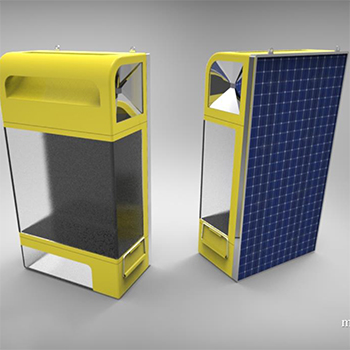
Lighting for Rural India
by Shashank N. Sawant
by Shashank N. Sawant
According to the 2011 census, 68% of our population still lives in rural areas. Despite all the development schemes and incentives that the government provides, a large chunk of our population is still oppressed, socially and economically. Absence of light, or darkness, is a very powerful metaphor of this divide. The project set out to remedy this hardship. Over the course of the project, more emphasis was laid on user and usability issues of the product. To observe the daily tasks and identify the needs and of people in rural India, field studies were carried out. The initial field study was to understand the people, the social structure, the activities, tasks and hardships in rural India. This helped gain an idea of rural psychographics, the attitudes, interests and opinions of rural people. A second field study was carried out in which rural folks were given a solar lamp to handle and usage patterns were observed. Important insights were gained from both the excursions, which helped shaped the functionalities and usability of the product. Based on these insights, opportunity areas were looked into which had scope for lighting. They included possible interventions in night schools, community gatherings, medical emergencies, dedicated task lighting for rural occupations, etc. Simultaneously, ideations were carried out to give a form to possible solutions. Initial explorations included ideas like flexible neck lamps, disc lights, simple cubical clustered lamps, light cylinders, value lights, triangular lights and others. Amongst these, the concept of value lights was found to be more beneficial than others. The idea was a product that could be split into three light components that could be used for three disparate tasks. The lights come together to form a single product whose combined value is more than the sum of its individual. The lights provided include: • A focussed light for outdoor excursions in dark, wayfinding • A diffused light for general indoor purposes • A secondary low power light for auxiliary activities.The selection of these tasks was done on basis of needs identified in the
user studies. The components are stacked vertically providing a sense of
hierarchy and separation of purpose. The uppermost component is a
torch, with high power beam of cold light with illumination of around
150 lumens and a beam angle of up to maximum 30 degrees. The central
component provides warm ambient light for general activities with an
illumination between 250-300 lumens. The lower light is a secondary
light of 150 lumens meant for auxiliary tasks like short trips to the
washroom, the cattle shed or to be hung outside in the verandah.
Further, by incorporating solar technology, we free them from
dependence on unreliable power grids and take them back to the purest
source of energy: the sun. The solar panel doubles up as docking panel on
which the lights are docked. The lights can be detached from the panel
and hung on the wall, while the panel can be placed outdoors for
charging. The primary battery pack in the solar panel gets charged thus
and then discharges into each of the lights’ individual batteries when the
lights are again docked onto it indoors. The central light is the main hub
to stack the components and to connect electrically with the docking
panel. The focus was to formally integrate the three distinct lights with
emphasis on stacking the components. Efforts have been directed to
make the product maintenance free and keep the assembly as easy as
possible.
The proposed strategy for marketing could either be a Government
scheme, with participation from NGOs or a corporate venture as a part of
social responsibility. Else, it could be manufactured under a social
entrepreneurship venture with nominal profits. The product is designed
to fit seamlessly in a rural household. It aims to assist more than one
rural activity in night time. The result is not a mere artefact that is just
one more addition to the market, it is a product that is sensitive to the
needs of rural India and addressing the disparate needs of this diverse
rural sector.
Details >>
Courtroom Drama
by Siddhartha Mukherjee
by Siddhartha Mukherjee
Clay is so directly linked with life it is so natural. Like life it is full of surprises. I was always fascinated to know how people transfer lump of clay into useful products. To me it always gives a sense of excitement with every single piece which we make, because every time result is different and the unpredictable feature makes it much more fun. The beauty of its rebirth again & again, gives you a childlike feeling, it tells you that it is ‘OK’ to be wrong and you can mend the mistakes. Pleasure of doing it all, from scratch to end, makes you the sole owner of your creations.
Details >>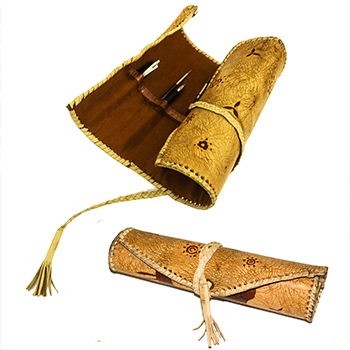
Leathercrafts at Shantiniketan
by Siddhartha Mukherjee
by Siddhartha Mukherjee
A unique & beautiful tradition of craft, commonly referred to as Santiniketan Leather Products, has over the course of more than three quarters of a century carved out a distinct identity on the world stage. Its appeal is both popular and artistic, its charm both exotic and future embrasing. Its delicate aesthetics is informed by a singular artistic tradition (the artistic heritage of santiniketan) and its innate aesthetic affiliation to an organic world. Like the discrete charm of the place itself, Santiniketan and its surroundings, this craft of leather products too owe its origins to the many-sided meditations of the poet, artist and thinker Rabindranath Tagore, more commonly known to the world as the famous poet laurate of the east and the winner of the nobel prize for literature in 1913. A process that started with the poet's father, Debendranath Tagore, and carried forward by the poet himself, the santiniketan's journey from a barren land to a thriving cultural microcosm cradle in a rich natural environment is an amazing story, and one of the more unique offshoots of this grand meditations in the grand tradition in leather crafts. The artistic heritage of santiniketan has a rich and engaging history. From its inception to date, santiniketan and its culture has been a pioneering force in the world of art & culture, and a leading aesthetic conscience of the region. Its unique aesthetic tradition is shaped by its innate affiliation to the organic environment and nature. As a result a remarkable aspect of this tradition has been its responsive interpretation of nature and the environment, a feature that lends its nuances heavily upon the crafts of this place, and none more so ever than on the leather crafts tradition. Thus the decorative style of the traditional leather crafts of santiniketan traces its roots back to the creative and ornamental interpretation of nature, a style which is at once inimitable and sighlty. Over the years, informed by the creative inputs of the master artists of santiniketan and ingenious solutions by the local artisans, Santiniketan leather craft has become a force in the world of crafts, appreciated by the craft lovers all over the world.
Details >>
Design of Low Cost Alternative Fuel Chulha
by Siddhartha Mukherjee
by Siddhartha Mukherjee
The project aims at improving the rural cooking scenario in India for the people who are dependant on firewood as the sole source of fuel for their daily cooking. The idea initially was considered for the dwellers of the Sunderban region who apart from being firewoood users are inhabitants where transportation of coal and other fuels difficult due to absence of well organised roads. Apart from using some alternative fuel (crop refuse in this case), it is emphasised that the design be flexible enough so that it can be manufactured locally with availble materials and existing technologies. Its not just about making the product and selling it to them, its about incorporating it into their daily lifestyle. Replacing the hearth from someone's house is more than a design challenge. It calls for making the technology availble and more importantly comprehendible so that it becomes adapted to a certain cooking culture. Also it needs to accomplish by a device that is affordable to those living below the poverty line.
Details >>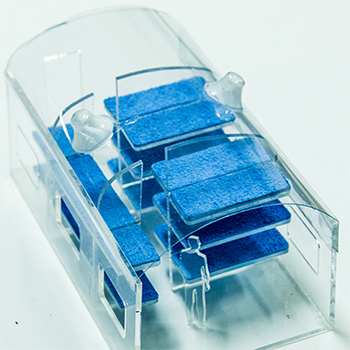
Design of a forced air ventilation system in Sleeper coaches for Indian railways
by Siddhartha Mukherjee
by Siddhartha Mukherjee
Indian Railway sleeper coaches have always been dependent on the windows for natural ventilation. Be it hot or cold or rainig outside, closing the windows was never a feasible option. It only meant sacrificing on the passengers comfort and the proper ventilation. The open windows also invites in loads of dust at high speeds and passengers are often prone to theft of their belongings due to open windows. The project thus is carried out from a proposal by the Indian railways for developing a forced air ventilation system for a sleeper coach thus eliminating the need for openable windows, and depending on them for ventilation. The project also aims to improve the overall hygiene and cleanliness of the coach.
Details >>
Color by interaction
by Sugandha Jain
by Sugandha Jain
In our day-to-day life we are surrounded with colors. Color is in everything that we touch or see, but then also we overlook the visual interaction of colors and how it is affected by different parameters like form, intensity and placement. This report discusses the various factors, which affect the visual perception of color. It briefly describes the various components of colors and its typ
Details >>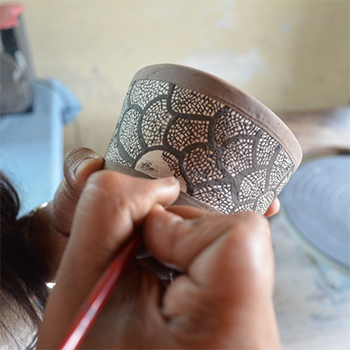
Pottery Internship Report
by Sugandha Jain
by Sugandha Jain
The project looked at inputs from industrial point of view for the small community based pottery industry with a view to offer better salability, novelty in products and modern outlook. This project involves study of different methods and techniques used in pottery along with study of contemporary and traditional products in ceramics. A detailed study of different techniques used in making of terracotta and ceramic products, which are available in the market was undertaken. The aim of the project was to identify the area of scope, and then develop a new range of products. To decide what range of products should be worked, on a mind map was created and the decision was made on the basis a considerable buyer segment available for the product, need of the product in the market and scope for possible range of explorations. Terracotta mood lighting was chosen as the final product range to design. Reason behind choosing lighting product thus that it plays a major role in ambience of any surrounding and it provides scope for variety of exploration, and the reason for selecting terracotta is that it is more ecofriendly than the glazed ceramic and it is easier to produce by potter’s community. Infrastructure required for making the final range of products are minimal, since non glaze work requires low firing temperatures. A wide range of explorations was done, starting from drawing inspiration from nature to bringing ‘Indian-ness’ in lighting experience. Explorations were also done keeping in mind traditional art and craft of India. The final concept has been put forward keeping in mind material and process optimization; easy do-ability, stack ability, simplicity and yet a new lighting experience. Patterns, which are used for the final concepts, are kept simple and easily doable drawing inspiration from basic geometric shapes and nature. The product can be used in the interior spaces of domestic environment, theme based restaurants and resorts.
Details >>
Ceramic products for traditional pottery community
by Sugandha Jain
by Sugandha Jain
The project looked at inputs from industrial point of view for the small community based pottery industry with a view to offer better salability, novelty in products and modern outlook. This project involves study of different methods and techniques used in pottery along with study of contemporary and traditional products in ceramics. A detailed study of different techniques used in making of terracotta and ceramic products, which are available in the market was undertaken. The aim of the project was to identify the area of scope, and then develop a new range of products. To decide what range of products should be worked, on a mind map was created and the decision was made on the basis a considerable buyer segment available for the product, need of the product in the market and scope for possible range of explorations. Terracotta mood lighting was chosen as the final product range to design. Reason behind choosing lighting product thus that it plays a major role in ambience of any surrounding and it provides scope for variety of exploration, and the reason for selecting terracotta is that it is more ecofriendly than the glazed ceramic and it is easier to produce by potter’s community. Infrastructure required for making the final range of products are minimal, since non glaze work requires low firing temperatures. A wide range of explorations was done, starting from drawing inspiration from nature to bringing ‘Indian-ness’ in lighting experience. Explorations were also done keeping in mind traditional art and craft of India. The final concept has been put forward keeping in mind material and process optimization; easy do-ability, stack ability, simplicity and yet a new lighting experience. Patterns, which are used for the final concepts, are kept simple and easily doable drawing inspiration from basic geometric shapes and nature. The product can be used in the interior spaces of domestic environment, theme based restaurants and resorts.
Details >>
Exhibition Design for DDS 2014
by Sugandha Jain
by Sugandha Jain
Exhibition is a process of exhibiting exhibits in a way that could appeal and be understood by people who comes to view it. Exhibition design is about designing the space in which products or exhibits are exhibited. It is a continuously evolving field, with the requirement of coming up with lots of creative and practical solutions. It’s about a challenge of developing communicative environments that ‘tell a story’ in a three-dimensional space. Industrial Design Centre is a premier design school in India, established in 1969, by the Government of India at the campus of Indian Institute of Technology, Mumbai (IIT Bombay).There are currently 5 disciplines in IDC compromising of Industrial Design, Visual Communication, Animation Design, Interaction Design & Mobility and Vehicle Design. Design and Degree Show (DDS) 2014 is the annual design conference and showcase of design & works by the passing out batch of IDC from 5 disciplines. DDS is a very important event for IDC and it is only through this medium that the work which happens in IDC can be shown to people outside IDC, which includes designers from the industry, students, aspirant designers, layman etc. DDS exhibition should also reflect upon the design methodology and teaching of one’s learning in two years of IDC
Details >>
Form, Function and Structure studies in Nature and Architecture Design Research Seminar
by Tu’umay Allene Negash
by Tu’umay Allene Negash
The essence of architecture is articulation of spaces to serve speciic functions in a speciic way. Form is the result of how the physical elements such as walls, loors, roof etc are articulated through construction and material with the help of structural system. This manifests in the form which also articulate the meaning.The FUNCTION here also includes aesthetic function. A building must look interesting and convey a meaning. Ever since man set his foot on the planet he has been encountering nature. NATURE in this context is all the phenomena and products of nature animate, inanimate as well as phenomenon such as climate, wind, sunlight, rain, storm etc this encounters has taught man. Through analogies from nature, man’s problem can be solved optimally. Architects study art, science, and religion in order to understand the basic workings of nature, and then applied what they learned to solve the problems of the day. Over time the quantity and complexity of accumulated knowledge led to increased specialization among Architects, and breadth of knowledge has increasingly
traded for depth of knowledge. This trend continues today. An Architect interested in learning about other areas of specialization like biology, art science,
agriculture, mathematics, physics and so on in order to have clear knowledge how to solve problems of the current day. In short ‘Architecture is something about everything’. This implies Architects would have to study
the following challenges.
1. Contexts from many different disciplines and determine the contexts in each discipline
2. Specialization on the terminologies of the contexts of the disciplines.
These all needs effort and extended beyond the brief and
excursions into unfamiliar areas to research speciic problems.
Details >>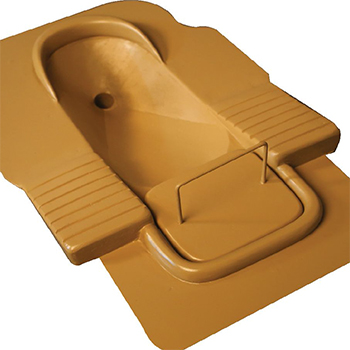
Low Cost Toilet for Rural Household
by Tu’umay Allene Negash
by Tu’umay Allene Negash
According to the 2011 Indian census 68.84% of the population are living in rural and 31.16% are urban dwellers. If we change the lifestyle of the 68.84% of the population obviously the urban areas will be positively affected, because the urban life is depending on rural resources. But majority of the people in rural area particularly in developing countries use an open field as "every man for himself" latrine. This is because most of the people in rural areas do not have knowledge on the negative impacts of defecting on open field. Misunderstaing of toilet use and poor disposal of waste material in rural areas leads to affect major health problems such as cholera, dysentry, diarroea, typhoid and stomach complications. This problem is a serious issue especially in developing countries and it needs to be improved from the base. It starts from changing the lifestyle of rural areas using clean and controlled sanitisation system in a safe and clean way by providing an affordable toilet for each household. This project solves some problems related to toilet in rural areas in particular developing countries like indian using the designed toilet pan which diverts solid waste from liquid wastes and providing sustainable sanitisation, which is focused on closed-loop management of excetra and saving of other resources such as water. This is achieved by narrowing down to the toilet pan and the waste management system in the chambers to use as a compost making.
Details >>
Street Furniture for Powai Special Focus on Lake Front Road
by Tu’umay Allene Negash
by Tu’umay Allene Negash
Public spaces are crucial components of the city in terms of the physical as well as social function they serve. These spaces not only form the image of the city and the way it perceived but also become places where people interact under collective identity. Public places are more than street, parks, maidans, beaches, play grounds, they also include waterfronts stations, markets and other places designed or designated for public uses. The basis of this project was to design a set of Street furniture for ’Powai’ lake front road which stretches 2.2 kms from Indian Institute of Technology, Bombay, main gate to Larsen & Tourbo ly over. The main goal of this project is to create clean ’Powai’ lake side and maintain it as a recreational area. This has been achieved by creating good urban open spaces for users and erect/build an iconic street furniture where it is needed. These furniture has been selected after the case study held to identify the problems faced around ’Powai’ lake front. Since maintenance is a big deal for street furniture, it has taken in to consideration that the maintenance cost would be at net zero cost by using limited advertising price displayed on the furniture. In this project more than seven furniture have been developed for ’Powai’ lake front namely Benches, Bus stops, Vending kiosk, Litter bin, Public convenience, Light poles, Ballads and Information boards. These products have same family look by form, shape, color, material used for all the furniture, and the concept used to relect the Powia-ness of the products which are derived from the design elements in the place, ‘Powai’. These are repetition of elements, combination of lines and arcs, free low of forms and shapes and the nature in Powai lake are some of the elements. Finally Bus stop with vending kiosk is detailed as a inal output
Details >>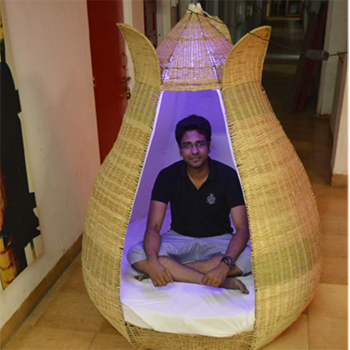
Emotion Based on Light and Color
by Vinoth VV
by Vinoth VV
Initial idea of the project was to understand the emotions based on light and colour using some wearable device, which will help the designer and the lay man to set the mood and to take the informed decisions. But due to the time constrain the project this had to be converted to a research project where the said things are understood and proved using experiments. The whole process of the experiment introduced me to the research process starting from the literature review, designing questionnaire & experiment, defining protocol, Analysing the data, both qualitative and quantitative, descriptive statistics, box plot, finding co-relation and so on. From the understanding from the literature, there had been lot of work done around the colour and emotion, but less is been explored on the different saturation level of coloured lights. Due to time constrain the research if restrained to only two colours and analysis based on descriptive statistics and box plot.
Details >>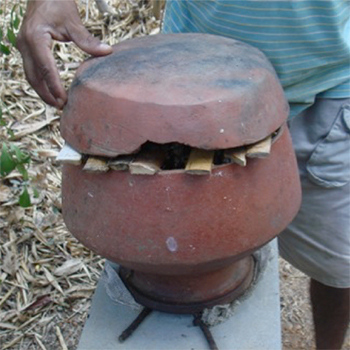
Increasing Biodiversity In the forest & Design for Sustainable lifestyle
by Vinoth VV
by Vinoth VV
Sadhana Forest started its ecological revival and sustainable living work on December 19th 2003. The vision of its founders, Yorit and Aviram Rozin, is to transform 70 acres of severely eroded, arid land on the outskirts of Auroville. In a spirit of human unity, their aim is to introduce a growing number of people to sustainable living and veganism. Their energy and resources are focused on the creation of a vibrant, indigenous Tropical Dry Evergreen Forest (TDEF). The main activities of Sadhana Forest: Planting the indigenous plants that constitute TDEF, an ecosystem unique to this region, and one that is currently endangered and to support the local rural villages: By retaining water and filling the aquifer, Environmental education for all. We include as many children and young people in the process of ecological revival and sustainable living as we can. Our aim is to encourage them to share and propagate our vision of an ecologically responsible and sustainable way of living, and for them to help take urgent actions that are necessary for the future of their environment.
Details >>
Cold storage without external power
by Vinoth VV
by Vinoth VV
In a tropical country like India, with about 70% of population of India is engaged in agriculture, the importance of refrigeration can hardly be over-emphasized. Nearly 30 per cent of the country’s fruits and vegetables perish due to lack of cold-storage facilities. The estimation of growing need for household refrigeration products reflects upon the scope of the market of the product. But the fact that the refrigeration is the highest consumer of power only next to lighting, leads to the selection of natural ways of cooling and refrigeration. In the past around 4000 years from now, people in India and Egypt are known to produce ice by keeping water in the porous pots outside the home during the night period by radiative cooling or nocturnal cooling technique. On a clear night the water would lose heat by radiation upwards. Provided the air was calm and not too far above freezing, heat gain from the surrounding air by convection would be low enough to allow the water to freeze by dawn. Night sky radiant cooling has in modern times been forgotten due to widespread use of modern mechanical cooling systems and refrigerants. However, this type of cooling has roots in many ancient civilizations across the globe. The idea is to use the ancient technique to solve the current day problem of cold storage and without external power which will satisfy the need of the rural household and enhance their lively hood. Inference for the design is taken from the experiments conducted with the prototypes made for testing. The usability is given prime importance in the design. The device is designed with double walls with insulator inside to avoid conduction and mouth wide opened Abstract to increase radiation. Handling, locking mechanism, manufacturing were given importance considering the context and affordance of the home products. Device can be used for ice making regularly with the suitable atmosphere and storage of food. This enables the storage of freshly grown vegetables to last much longer than usual in a hot climate. Some enterprise can also use this as a business opportunity and make ice and sell. It is also great for using at a picnic or outdoor trekking where there is no electricity outside, but food or drinks need to be kept cool The disadvantage is the process of ice making is highly dependent on the atmospheric weather and need for a person to religiously engage in the process of ice making from keeping it in a proper place to taking it back at the right time.
Details >>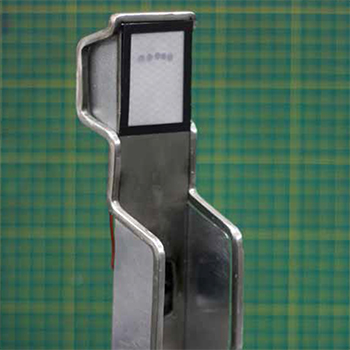
Hybrid Sourced Lighting
by Vinoth VV
by Vinoth VV
Lighting is a major issue during a long power outage in an energy-scarce country like India. Though there are alternate ways of generating power, they are highly seasonal, not very cost-effective, or require human effort, which leads to hybrid options. And the most viable solution lies in energy harvesting methods. The project evolved in two stages, with the first focusing on general research into alternate power and lighting as well as experimentation with a few techniques. With the inferences from the first phase, the second phase of the project was highly focused on the power production using the thermoelectric generator (TEG) and the scenarios in which it could be used. Initial ideation covers the possible chances of producing power using TEG in the house scenario without doing much labour. After a series of studies, the context of the kitchen, which is one of the most sought-after places and requires adequate lighting at any time of the day, is chosen for power generation as there is heat generation happening at least twice a day. During cooking, almost two-thirds of the heat is wasted in the surrounding air. The idea of the project is to harvest that energy using a thermoelectric generator and produce power that could be used for lighting and charging low-power gadgets. Thus, the project aims at developing a reliable secondary source of light and power and increasing the overall efficiency of energy utilisation in the house. Based on that, a user study and market study are conducted to understand the scenario and the possible applications of TEG. Experiments are carried out using an actual thermoelectric generator, and various levels of heat exchange possibilities are understood and concepts are generated as a result. The structural design of the product is chosen for its simplicity in manufacturing and ease of maintenance. The product will act as a secondary source of task lighting during load shedding and can support the charging of low-power gadgets.
Details >>