Interaction Design
Batch 2022-2024
(26 items)
Interaction DesignBatch 2022-2024
(26 items)
(26 items)
Redesigning of IDC Website
by Anjanesh Indranil
by Anjanesh Indranil
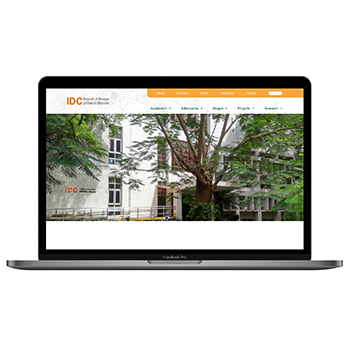
The "Redesign of IDC Website" project focuses on the transformation and enhancement of the website of the Industrial Design Centre (IDC) at IIT Bombay. This website is an important place for IDC students, faculty, staff, and visitors to connect. Originally developed, the website currently lacks a cohesive design and effective organization of content, resulting in a suboptimal user experience. It became evident that a redesign was essential to address content prioritization issues and optimize user interactions. Moreover, the existing design templates did not align with the content, leading to usability challenges. The project involved a comprehensive case study that involved an in-depth exploration of the current website's design, a reevaluation of the information architecture, and interviews with key stakeholders. This research identified numerous areas of concern related to the existing design, user interaction, navigation, iconography, and more. The redesigned IDC website aims to resolve these issues while introducing a fresh branding identity and a new visual language that aligns seamlessly with the values and goals of IDC. The objective is to imbue the website with a distinctive personality, creating an engaging and intuitive experience for its users. The project encompasses the rectification of existing problems, the infusion of a revitalized brand identity, and the provision of an improved user experience.
Details >>
Interactive Installation for Zoological Spaces
by Anjanesh Indranil
by Anjanesh Indranil
This project focuses on creating a fun, interactive installation for zoological spaces. The main goal is to educate visitors about animals that are difficult to see or learn about in their natural habitats. By engaging with this installation, people can learn fascinating facts and stories about various species, emphasizing the importance of leaving wildlife in their natural surroundings. The inspiration for this project came from visiting many zoos, where I saw what works well and what's missing in current educational efforts. The process started with gathering information directly from these zoological spaces. Afterward, all the findings were carefully analyzed to design a solution that fills in the gaps left by existing installations. This project builds on previous efforts in the field by addressing overlooked aspects and proposing a more engaging and informative approach. It aims to create an enjoyable experience that shares fascinating stories about birds and their lifestyles, making learning feel like an adventure. Ultimately, the project not only aims to enhance visitors' understanding and appreciation of wildlife but also to encourage a deeper respect for animals' natural environments. Through this interactive installation, I hope to inspire a change in how people view and interact with the natural world, fostering a more conservation-minded public.
Details >>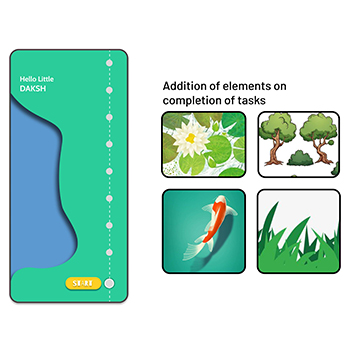
Nurturing Young Minds in their foundation years through Experiential Learning in the Digital Age
by Amruta Bailke
by Amruta Bailke
This project aims to promote meaningful interaction between children and the natural environment through a series of engaging and educational tasks. Recognizing the growing concern of children’s disconnection from nature, the project focuses on cultivating curiosity, observation skills, and a genuine appreciation for the outdoors. The curated set of Nature Exploration Tasks is designed to be accessible, adaptable, and enjoyable for children, encouraging hands-on experiences that foster a deeper connection with the natural world. This project is driven by the belief that fostering a connection with nature during childhood lays the foundation for a lifelong appreciation of the environment. These tasks provide a holistic approach to nature exploration, encouraging children to use all their senses and fostering a sense of wonder and curiosity. Through these interactive and enjoyable activities, the project aims to contribute to the holistic development of the younger generation while instilling a sense of environmental stewardship from an early age.
Details >>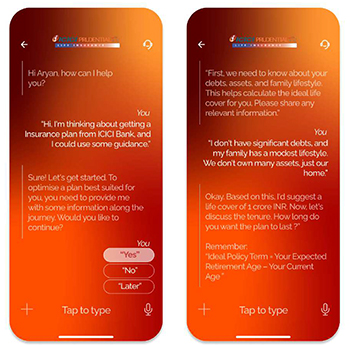
Probing Chatbot for ICICI Prudential Life Insurance
by June Sardar
by June Sardar
This project focuses on developing a conversational chatbot designed to support complex decision-making in the insurance sector, using ICICI Prudential Life Insurance as a case study. The chatbot employs probing techniques to engage users in natural, informative dialogues that uncover their preferences and requirements, enabling personalized and accurate recommendations. By streamlining the decision-making process, it enhances user engagement, trust, and satisfaction. Developed in collaboration with ICICI Prudential, the chatbot adheres to industry standards and compliance norms while reflecting the company’s user-centric approach. The project aims to create a sophisticated tool that improves the efficiency of insurance decision-making and contributes valuable insights to the broader field of conversational AI.
Details >>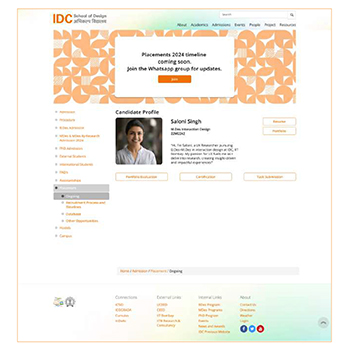
Designing the IDC Placement portal for an ‘efficient’ and ‘transparent’ hiring process
by June Sardar
by June Sardar
This project focuses on designing an efficient and transparent placement portal to strengthen the hiring process at IDC, IIT Bombay. Recognizing that effective recruitment and selection strategies are vital for better organizational outcomes across industries, the project emphasizes collaboration between educational institutions, industry partners, and policy bodies to nurture talent and foster an inclusive design ecosystem. By critically analyzing the existing recruitment practices and identifying key challenges, the project aims to streamline and enhance the design hiring process in alignment with IIT Bombay’s established placement framework. The proposed solution seeks to create additional channels and features that improve accessibility, clarity, and coordination—ultimately benefiting both students and recruiters while contributing to a more robust and equitable placement system at IDC.
Details >>
Interactions for Sketching in VR: Exploring interactions for sketching with one hand in Virtual Reality
by Karan Rajeshkumar Tanna
by Karan Rajeshkumar Tanna
This project investigates how VR technology can address accessibility challenges for individuals with locomotor disabilities, particularly those with single-handed mobility issues. It underscores the global need to cater to this demographic and explores transformative potential in enhancing accessibility of VR. The project involves designing and prototyping novel VR interactions for one-handed users on devices like Meta Quest 2 or Quest Pro, aiming to create inclusive experiences and advance digital equity. We tested existing interactions for sketching in VR, like Gravity Sketch, and evaluated them. Based on that, we conceptualized and designed hand-tracking interactions for one-handed sketching, moving away from dual-controller setups, with a focus on intuitive techniques for VR sketching. These include interactions for drawing, selecting tools, editing tools, and selecting colors. Later, these interactions were tested and validated but indicated the need for further enhancement as well.
Details >>
Designing -Based Exergames for Motor Skill Enhancement: For Children with Cerebral Palsy from Age 6 to 10
by Karan Rajeshkumar Tanna
by Karan Rajeshkumar Tanna
Cerebral palsy (CP) significantly impacts motor and cognitive skills in children, reducing their quality of life. Traditional therapies often lack engagement and effectiveness, hindering rehabilitation progress. This project aims to address these issues by developing task-based exergames specifically for children with CP. Through extensive research, we identified the limitations of current treatments and the need for innovative solutions. We created web-based games and ‘Pico’—a plug-and-play device named for “pixel” (pi) and “companion” (co)—which controls four exergames through actions based on traditional physiotherapy exercises. These games, customizable to individual needs, were tested with children with CP under supervision and were evaluated by experts. By integrating gamification into therapy sessions, we aim to make rehabilitation more enjoyable, motivating, and effective, ultimately enhancing the well-being and outcomes of children with CP.
Details >>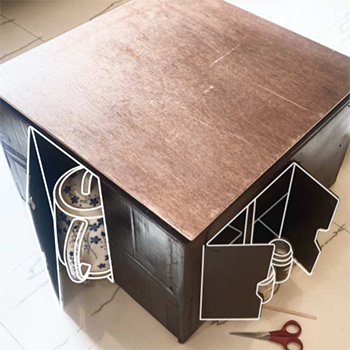
Designing cultural probes to create a space for dialogue around home chores
by Ketaki Kshirsagar
by Ketaki Kshirsagar
A considerable amount of emotional, physical, and mental labor is expended at work and home by members of a household. Though the effort spent at work is comparable, cultural studies and the National Survey Office data show a contrast in the time and effort spent on house chores and caregiving by working men and women. Even in households with both partners working, the domestic responsibilities, involvement in chores, expectations, and roles associated with each of them seem imbalanced. Participation patterns in home chores haven’t been able to keep up with the evolving participation in work. Scoped to urban Indian families with working partners, this work explores the role of design in creating a discursive space to dwell on the dynamics of a household. The project is a set of experimental artifacts, or cultural probes, designed to engage with a specific sociocultural group (which is an urban Indian household with working partners between 45 and 55 years of age) and allow members of the household to engage with their own domesticity through different mediums. The objective is to possibly seed thought and spark dialogue around domestic chores and, through the artefacts experience, alternate ways of looking at and performing them.
Details >>
Buy to Bye Bye
by Ketaki Kshirsagar
by Ketaki Kshirsagar
The rise of e-commerce, increase in purchasing power in different income groups, and prioritization of convenience over consciousness among the Indian residents have caused a change in people’s attitude towards acquiring and using goods. Irrespective of the intensity of one’s need and expected frequency of use, people choose to buy/own over borrow/access. This report discusses the design decisions, details, and deployment of a community event aimed at creating a positive association to the practice of sharing and responsible consumption among residents of an Indian urban housing society and therebyreinventing and encouraging the borrowing, exchanging, and reselling of goods within the society. The event was hosted in a society with more than 80 families and was also intended to act as an outreach for the deployment of other frameworks for facilitating the practice of sharing within the society.
Details >>
Likes, Comments and Self-Esteem
by Mansi Khedekar
by Mansi Khedekar
Research shows that the use of Instagram can result in a decline of self-esteem as it readily facilitates social comparison. The ensuing consequences—manifested as insecurities, self-criticism, and the fear of judgment—are recognized indicators of low self-esteem. Through a mixed-methods approach, we investigated the impact of Instagram use on self-esteem, particularly focusing on social comparison, identity curation, and rituals of disengagement. In this project we present an interactive story with a narrative that is designed to prompt self-reflection, bringing attention to the diverse ways in which readers engage with Instagram. The story peeks into the life of a girl named Madhuri. It uncovers nuanced instances of how self-esteem influences posting habits, like Madhuri's hesitation towards sharing her artwork, and upward social comparison, where Madhuri seeks inspiration on how to maintain an art account. Through relatable instances of decisions, we hope to resonate with readers, further their imagination, and encourage readers to explore their own experiences. As an introspective exercise, the story can act as a probing tool for future qualitative studies in the realms of psychology, sociology, and the ever-evolving landscape of digital interaction.
Details >>
Designing IIT Bombay’s Sports App
by Mansi Khedekar
by Mansi Khedekar
Sports is one of the many activities offered by IIT Bombay to foster the holistic development of its students. However, the issue of students missing out on activities, particularly new students and those engaged in multiple activities, has become a pressing concern. To tackle this, this project has been initiated by the institute sports council to develop an app that will efficiently streamline event updates and announcements and enhance user engagement through personalized content. The app will deliver real-time updates, personalized feeds, and seamless event registration to ensure that students are consistently well-informed about upcoming activities. Additional features will include complaint management for reporting issues, court bookings, and detailed player profiles displaying achievements and participation history for player recognition. The project followed a non-linear development process involving wireframing, prototyping, and iterative testing to refine the app's usability and ensure it effectively meets user needs. The app is poised to significantly enhance communication within the sports community and increase participation in sports activities.
Details >>
Introducing changes to Snapchat: Exploring, evaluating and designing features for existing users
by Vaishnavi Pabboju
by Vaishnavi Pabboju
This project critically examines Snapchat as a media and messaging platform that, through its design, encourages irresponsible digital behavior—such as data clutter, oversharing of intimate content, and lack of safety measures. Using heuristic evaluation, the study analyzes Snapchat’s visual language, features, and their impact on user culture. Based on these insights, new “cautious checkpoint” features were designed and tested through user studies and focus groups to promote responsible behavior without driving users away from the platform. The qualitative inquiry revealed that technological issues cannot be resolved solely through design changes; user behavior and emotional instincts must also be addressed. The project further highlighted gender-related biases influencing acceptance of new features and emphasized that awareness alone is insufficient—effective change requires intrinsic and extrinsic motivations beyond the technological realm.
Details >>
Persuasive powers of cuteness: Exploring cuteness in donation collection tools
by Vaishnavi Pabboju
by Vaishnavi Pabboju
This project explores cuteness as a design aesthetic beyond its commodified and infantilized image, examining its potential influence on prosocial behavior within an Indian cultural context. Using mixed-method research, visual traits associated with cuteness were identified through a typicality scale among university students, leading to the design of three donation boxes tested in student residential areas. Data analyzed through ANOVA, partial eta squared, and follow-up interviews revealed that cuteness positively affected the overall success of the donation drive. While it did not directly determine the decision to donate, evidence suggests its consequential influence on prosocial behavior by attracting attention, evoking approach motivation, and conveying a sense of helplessness. Donors’ decisions were also shaped by other factors, including convenience, impulsive purchasing patterns, trust in the drive, gender-related sympathy, and media influence—indicating that cuteness acted as a bridge between donors and the cause.
Details >>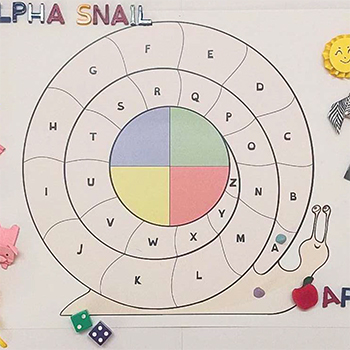
Unlocking Potential: Dyslexic Support Tools
by Pooja Kumari
by Pooja Kumari
This study investigates learning assistance technologies for individuals with dyslexia—a cognitive disorder that challenges conventional teaching methods. Combining secondary research with primary insights from observations in special schools and interviews with educators and parents, the project identifies key difficulties faced by dyslexic learners. Using affinity mapping to analyze collected data, recurring challenges such as time awareness, multisensory learning needs, focus maintenance, information retention, brain-hand coordination, and expressive communication were uncovered. Empathy mapping further informed the design process, shaping user-centered solutions. The study emphasizes innovative, inclusive design interventions tailored to the unique needs of dyslexic individuals, contributing to the evolving landscape of dyslexia support and setting the foundation for future research and improvement in learning technologies.
Details >>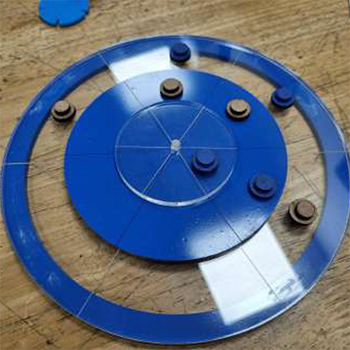
VisioCraft: Designing Activities to Boost Visual Thinking Skills in Students
by Pooja Kumari
by Pooja Kumari
Visual thinking is an essential skill that can help children become more creative and resourceful in navigating the challenges they encounter throughout their lives efficiently. Fostering visual thinking from a young age is important, as it lays down the foundation for skills and habits that are essential for success in various aspects of life. Evidence from earlier studies suggests that using a visual method to solve problems creates a positive mental model in our subconscious, which raises the likelihood of having insights, or "aha" moments. This implies that applying visual thinking strategies can improve one's capacity for creative problem-solving and speed up the process of coming up with novel ideas. In India, there hasn't been much emphasis placed on teaching visual thinking to students, despite the many advantages of including it in the curriculum. This project aims to address this gap by implementing an intervention designed to introduce visual thinking through engaging activities that utilize a variety of visual thinking strategies. This intervention aims to improve students' cognitive capacities, creativity, and problem-solving abilities by introducing visual thinking into the classroom. This will ultimately enrich their learning experience and prepare them for success in an increasingly visual world.
Details >>
Don't Scroll Instagram When Bored
by Rajdeep Sutradhar
by Rajdeep Sutradhar
A number of reports indicate that people are shifting their social life from real life to reel life. Reels are increasingly used as a prop for conversations. Due to which, they often end up doom scrolling. They not only experience paralysis but also have physical effects like bad posture. Existing efforts to engage with such problems are mostly screen-based. Such approaches often exacerbate the issues rather than mitigate them. We designed an interactive installation to instigate people to converse with each other/socialize in real life instead of reel life by providing them with virtual cues. Around 120 students interacted with the installation, and 15 of them were interviewed for post-engagement feedback, which was analyzed using the relational content analysis method. We observed high engagement with the installation, following up with questions inquiring about the artifact. The nature of provocation was effective due to two factors. Firstly, we brought a very private interaction (of scrolling) into a social space. Secondly, we transformed an oculo-centric and digital activity into a multi-sensorial and physical experience.
Details >>
A cloud Gaming Platform: Redesigning Desktop Application for VR Environment
by Rajdeep Sutradhar
by Rajdeep Sutradhar
This project explores the intersection between the domain of cloud gaming platform and its adaptation for the Virtual Reality environment. Cloud gaming offers the convenience of playing high end games without owning an expensive computer setup, players can stream the processing power from a service into whatever device they are using. In this project, we aim to explore extending this into the VRscape. Project was scheduled into a span of three months where the scope was to visualise, prototype and evaluate the most frequently used screens of the platform (Home page, Game library page, evidence page, game screen and In-game overlay).
Details >>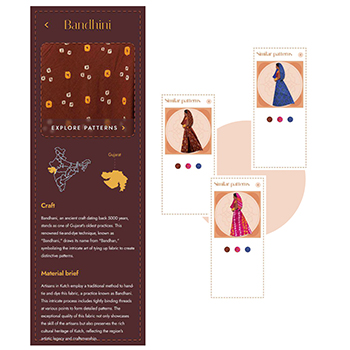
Designing an interactive installation to build awareness about Indian textile heritage
by Shivani Verma
by Shivani Verma
This project presents an interactive installation that showcases the vibrant world of Indian textile heritage, focusing on the artistry of embroidery. It aims to engage Generation Z through an immersive, sensorial experience that combines tradition with technology. By integrating tactile and interactive elements, the installation introduces various embroidery styles, their origins, and the craftsmanship behind them. Designed to bridge the gap between modern audiences and traditional practices, it fosters awareness, appreciation, and inspiration among the younger generation to value and preserve India’s rich textile legacy.
Details >>
Riveting Ganga: Unfolding India’s Sacred River
by Shivani Verma
by Shivani Verma
This project features an interactive accordion book that narrates the magnificent journey of the River Ganga—from its icy origins at the Gangotri Glacier to its confluence with the ocean—highlighting its cultural, spiritual, and ecological significance. Designed to educate and engage readers of all ages, the book combines storytelling with technology through augmented reality (AR), allowing users to experience the river’s sights, sounds, and stories in an immersive way. Each fold reveals aspects of the Ganga’s rich legacy—its sacred origins, diverse ecosystems, fertile plains, and thriving cities. A built-in game component with puzzles and quizzes further enhances learning, making the exploration both fun and meaningful. This innovative project celebrates the Ganga as a lifeline of India, inspiring awareness and appreciation for its enduring cultural and environmental importance.
Details >>
Balancing Graphical Pin-Based Passwords through Locally-Tailored Celebrity Recognition in Kanpur
by Sparsh Gupta
by Sparsh Gupta
This research explores a novel method to enhance the security of graphical PIN-based passwords by leveraging celebrity recognition within Kanpur, Uttar Pradesh. By using familiar celebrity faces instead of textual passwords, the study aims to address issues of weak password selection and susceptibility to attacks. A recognition-based interview protocol identifies widely known celebrities across domains like sports, entertainment, and music, ensuring diversity and balance. Popularity scores, derived from frequency and order of mention, are analysed using statistical measures such as mean, standard deviation, and entropy to create balanced celebrity grids. This locally informed approach enhances both security and usability, offering a scalable framework for developing more secure, user-friendly authentication systems across different regions.
Details >>
Designing an AI-Enabled Automation Tool for Doctors
by Sparsh Gupta
by Sparsh Gupta
This project explores the development of an AI-driven smart assistant for healthcare professionals, focusing on building trust and transparency in AI-powered tools. Through primary research involving interviews with doctors and observation of hospital workflows, key challenges and opportunities were identified. The research highlighted the need for a doctor-centric approach that prioritises explainability and user control while emphasising the AI’s role as a collaborative assistant rather than a replacement for human expertise. This project aims to create a desktop application that streamlines workflows, enhances clinical decision-making, and fosters trust through transparent AI interactions and customisable features. By addressing the “black box” problem and empowering doctors with control over their AI-powered tools, this project strives to contribute to the responsible and effective integration of AI in healthcare.
Details >>
Learning Aid to help teach Devanagari Script to Bharwad Children
by Vinay Kumar
by Vinay Kumar
This project focuses on empowering the semi-nomadic Bharwad community, known as 'Lal Gaay wale', by developing educational aids for learning the Devanagari script. Through participatory and non-participatory research, the study identified limited access to formal education among Bharwad children and leveraged the community’s artistic and craft skills to design interactive, script-based learning tools. These aids, tested within the community, fostered creativity, engagement, and a sense of ownership, inspiring members to create additional tools for numeracy and Hindi writing. The initiative not only enhanced literacy but also demonstrated how local crafts and resources can be effectively used to design contextualised, community-driven educational materials in resource-limited settings.
Details >>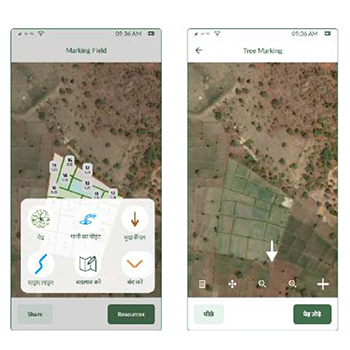
A Digital Tool for Farmers to Manage Farming Resources & Activities
by Vinay Kumar
by Vinay Kumar
This project focuses on improving traditional farming practices in Mundapar village, Seoni District, Madhya Pradesh, where paddy and wheat are the primary crops. Through field visits, interviews, and co-creation with farmers, the study identified challenges in resource management, scheduling, and soil data integration due to reliance on conventional methods. To address these issues, a farmer-centric mobile application was developed, enabling users to digitally map their fields, integrate soil health card data, plan activities, and manage resources efficiently. The participatory design process, conducted in three stages—research, prototyping, and testing—ensured that the application aligns with farmers’ needs, offering a practical and accessible digital tool to enhance productivity and sustainability in rural agriculture.
Details >>
Exploring Security and Usability Enhancements in Gesture-Based Passwords
by Yash Bharani
by Yash Bharani
In today's digital age, the intersection of user experience and security stands at the forefront of technological innovation. As devices become increasingly integral to our daily lives, the methods we employ to secure our personal information must not only be robust and highly secure but also intuitive and user-friendly. This project, situated within the ambit of the Interaction Design Masters Course, embarks on an exploration of gesture-based pattern graphical passwords, a prevalent authentication paradigm, especially in touchscreen devices.
Details >>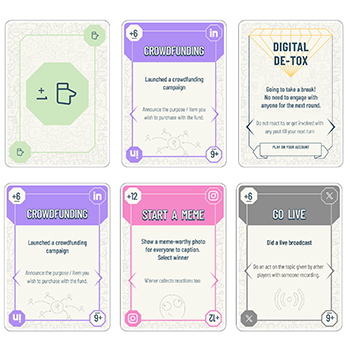
Social Showdown: A card game for the digital age attempting to curb social media addiction
by Yash Bharani
by Yash Bharani
This project explores the use of ludic design to address social media addiction and its effects on mental health and productivity through a game called Social Showdown. Developed through iterative design and user feedback, the game mirrors real-world social media dynamics, encouraging players to reflect on their digital behaviour. Featuring personality-based scoring, reaction cards, and task-orientated challenges, it promotes mindfulness and self-awareness about online engagement. Player interactions simulate validation-driven social experiences, prompting critical reflection on digital habits. Surveys revealed increased awareness and mindful usage among participants, demonstrating that game-based interventions can effectively foster healthier relationships with social media and contribute to research in interaction design and behavioural change.
Details >>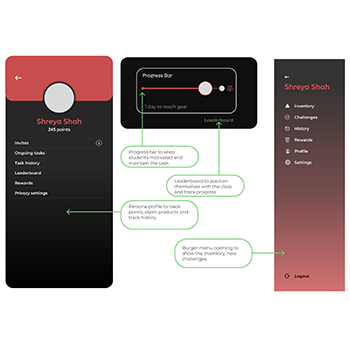
Interaction for behavioral change in IITB students promoting consistent working habits
by Amruta Bailke
by Amruta Bailke
This report presents the development of "League of IITB Legends," a comprehensive time management application tailored for the students of IIT Bombay. The project is motivated by widespread observations of students struggling with time management, leading to underperformance despite high motivation levels. The application integrates the principles of Fogg's Behavior Model and the Transtheoretical Model (TTM) to address various stages of behavioral change, from precontemplation to termination. The design process involved extensive primary and secondary research, including interviews and surveys with IIT Bombay students, which revealed common pain points such as procrastination, distractions, and ineffective traditional tools. Based on these insights, five strategic design interventions were developed: awareness posters with QR codes, seamless integration of academic data through LDAP login, personalized task scheduling, timely notifications, and a reward system with mentorship opportunities. Each intervention targets specific stages of behavioral change, ensuring a comprehensive approach to improving time management skills. The application aims to guide students through a journey of consistent improvement, providing the necessary support and motivation to adopt and maintain effective time management habits. The report details the theoretical foundation, design interventions, and anticipated outcomes of the "League of IITB Legends" application, positioning it as a crucial tool for enhancing academic performance and overall well-being among IIT Bombay students.
Details >>