M.Des Product Design
Batch
(12 items)
M.Des Product DesignBatch
(12 items)
(12 items)
Expressions of Aggression in Nature and Manmade World
by Arvind B. Joshi
Details >>
by Arvind B. Joshi
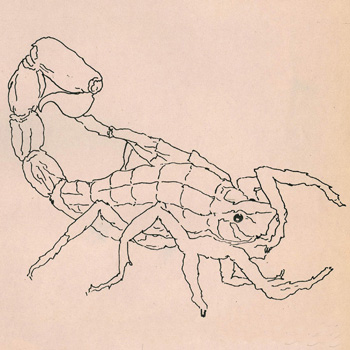
Aggression is not an easy concept to define, although some cases are clear-cut: single individuals or groups of humans may kill or injure other individuals, force others to do something against their will, or overtly thwart the expressed desires of other persons. Obviously, threatening another person with death, injury, or violence is also aggressive. Perhaps simply the conscious desire or intent to injure, kill, coerce, thwart, or threaten other human beings, even if these things are not actually carried out, could be considered aggressive. On a more subtle level, ridicule, sarcasm, hostile laughter, and attempts to embarrass or demean others almost certainly have an aggressive component. What all these phenomena have in common is the intended or actual imposition of a person's or group's wishes on other people against their will.
Superficial aggression appears to be the antithesis of the cooperative aspect of humanity. However, paradoxically, the very forces that promote harmonious relations within a group are also often the basis of aggressive actions. It is important to make the distinction between individual and group aggression. The nature of aggressive behavior, particularly the underlying motivating and emotional forces, may be enormously different in a one-on-one situation (a barroom brawl, a husband and wife fight) as opposed to tribal or national conflicts when discussing the biological bases of aggression; this fact is sometimes overlooked or not fully acknowledged.
Humans have the capacity to feel and identify the emotions of fear, anger, hatred, rage, jealousy, greed, and competitiveness, and to exercise them sometimes as one individual against another. These emotions and the behavioural responses they promote are often adaptive; as Karnard Loven 2 has noted, assisting an individual in attempts to acquire and defend limited resources (wives, food, space, material goods, and wealth) is competition with others. In addition, aggressive defence of relatives, especially children, is a fundamental and highly developed aspect of individual aggression.

Representation of Geographic Data on the Computer
by G. Nagarajan
Details >>
by G. Nagarajan
Geographically distributed parameters are easiest to interpret and understand when they are graphically represented (in the form of maps). When they are handled in terms of raw numbers, on the other hand, they are much more difficult to assimilate or comprehend.
Take, for example, the hypothetical distribution of mosquitoes in IIT, Bombay. The first thing that strikes one is that there are high, localised concentrations in some areas and a relatively low distribution elsewhere. Then one notices that the area bordering the lake has a high concentration, and this leads to the inference that the stagnant water there is the cause. The other high concentrations do not have obvious explanations, and further study may be needed to identify their causes. A few may turn out to be the result of open rubbish dumps; others may be due to a thick growth of bushes.
Thus maps, besides giving an idea of the nature of a distribution, can also give insight into the causes of various phenomena. This would not be possible (except for an expert) if the data were represented purely in the form of numbers and coordinates. Maps are therefore ideally suited for use as a decision-making tool, particularly in situations that involve the analysis or understanding of geographically distributed parameters.

Exploration in Flame Forms
by Girish V. Nalavade
Details >>
by Girish V. Nalavade
Since the ascent of man, fire has played a very important role in the development of human beings. Agni, the primary god on Earth, possessed both constructive and destructive fire powers. In mythological books, there are numerous stories about his origin and a description of his form. In the Rigveda (R 4.58.3), he has been described as a creature with two heads, three legs, four horns, and seven lungs. It is also said that he was born before all evil spirits and therefore has to perform the prime role in all religious ceremonies.
Dasbodha says that it dwells in all the elements on earth, either in visible or invisible form. Its visible form is flame, which also has different forms. Each of which is strongly associated with the specific purpose or use and thus easily predictable in terms of meaning. As we are associated with fire and flame from childhood and with its presence in our daily lives, we neglect its visual richness, which we feel is obvious.
Recognition of Coins
by Gomes Aloysius Lincoln
Details >>
by Gomes Aloysius Lincoln
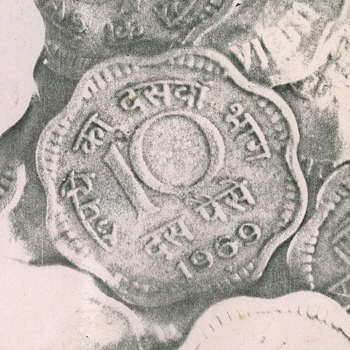
In order to understand how people can recognise the denomination of different coins in a fraction of a second, it becomes necessary to understand the whole process of how the mind works.
Among the most spectacular of our perceptual talents is the ability to recognise familiar patterns of sensory information. This talent allows us to recognise an old friend in a sea of faces or identify a coin among many others at a glance.
How do we recognise a Rs. 1-coin? Do we have a "RS.1/-" coin template that epitomises the Rs.1/- coin but will still allow us to recognise the coin when there is a change in graphics? Or do we perform a quick scan of the coin's features and compare each item to a master feature list for Rs. 1-coin coins: round, metallic, reeded edge, Lions on the obverse, approximate size, and so on? (If this represents a list of features and attributes, it could be a Rs. 1-coin, but it also might be a Rs. 2-coin.)
If the mind had to store a model of each coin and all its identifiable features, that would mean having to store millions of pieces of information. And each time a person wants to identify the coin, this is definitely not what goes on in the mind, considering the fraction of a second that it takes to identify a coin.
One possible explanation is based on template matching, i.e., pattern recognition occurs when a match is made between a perceived pattern and an abstract or idealised mental pattern. Some kind of abstraction of patterns is stored in long-term memory (LTM), and this abstraction serves as a prototype. A pattern would then be checked against the prototype, and if a resemblance were found, the pattern would be recognized. This prototypical matching hypothesis in humans seems to be compatible with neurological economy and memory research processes and allows for the recognition of patterns that are unusual but in some way related to the prototype.

Statistical and Mathematical Methods Used in Product Design
by K. P. Chandran
by K. P. Chandran
There are numerous statistical and mathematical methods for designing and assisting in design. They are:
-Designing using one’s own dimensions
-Designing using Percentile values
-Design methodologies using statistics
-Paired comparisons tests
-INDSCAL
-Computer Aided Design
Details >>-Designing using one’s own dimensions
-Designing using Percentile values
-Design methodologies using statistics
-Paired comparisons tests
-INDSCAL
-Computer Aided Design

Strength in Forms (Exploration & Analysis)
by Milind R. Tamhane
Details >>
by Milind R. Tamhane
The purpose of this seminar is to foster an understanding of formative processes that will lead the designer of the built environment towards solutions that are consistent with the first principle of nature, i.e., those solutions that are energetically conservative, adaptive, and functional. The creation of arbitrary form, that is, form created without regard to its fit with natural phenomena, is often a source of inefficient and ineffective use of material, energy, and human resources.
To minimise the arbitrariness of form in the built environment is to maximise its performance. To maximise performance, one must accomplish objectives in the most effective manner while minimising the use of energy and material resources.
The fulfilment of performance requirements is at the root of all natural structures. If an organism does not fulfil its function or does not perform efficiently, it does not succeed. Fitness is determined by effectiveness, and effectiveness is determined by low-energy efficiency.

Communication Through Form in Search of Sources of Meaning Recognition Clues in Architectural Typology
by V. Mohan Chandra
by V. Mohan Chandra
-To take photographs of six to ten buildings of different categories.
-Cut photographs into small parts.
-Ask a naive subject to guess which parts belong to which building types.
-Identify recognition clues
Details >>-Cut photographs into small parts.
-Ask a naive subject to guess which parts belong to which building types.
-Identify recognition clues

Insect Architecture
by Pradip Save
Details >>
by Pradip Save
The enormous diversity of insect-built buildings demonstrates how various insects have evolved to tackle the ecological issues in their particular habitats. Insects construct a wide range of buildings from different materials. These buildings have a variety of functions, from aiding in prey acquisition to housing the entire colony. For example, social ants build colonies with layers growing outward. There are numerous chambers within this structure that are linked to one another. The layers are made of small wood fibres and some binding material. This structure is a shelter for the whole colony. Canopies protect the openings from rain and the sun. Some insects work alone, but others work in groups to construct enormously intricate structures. The fundamental architectural and design concepts have been refined over millions of years to endure a wide range of environmental disturbances; they provide valuable lessons for structures constructed by humans.
Exploration of Water Forms
by Rajan Vernekar
Details >>
by Rajan Vernekar
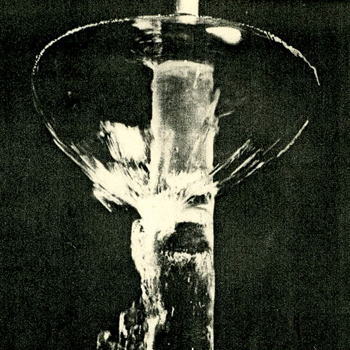
It seems a bit strange when one says "Water forms" because water has neither colour nor a fixed shape like metal, plastic, or wood.
But still, water can express itself in many ways. It can be as silent as a dew drop or as restless as the turbulent seas. Though it has no color, water can borrow from its surroundings and make its presence felt. By reflecting, water can add a whole new dimension to the environment.
Since ancient times, water has played an important role in a man's life. From a utility point of view, man has used water for drinking, washing, irrigation, power generation, etc. On the aesthetic side, he has used water in things like fountains.
The Japanese seem to have a high level of understanding of water, which is reflected in their gardens. Mine is an attempt to make an organised study of water forms and to classify them. This study is by no means exhaustive and is open for further exploration. As a designer, my aim here was not to make an in-depth study of individual forms, but to open up doors for anybody in search of new possibilities in this field.
Distortion of Form on Computer (PDP 11)
by Ravindra Rajhans
Details >>
by Ravindra Rajhans
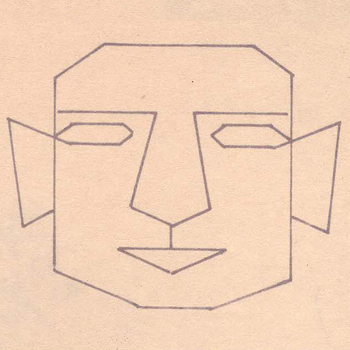
It is extremely difficult to define "form." In general, the shape of an object can be explained or described using common language. But this ends by defining it in the precise language of mathematics, and one method tends to follow the other in strict scientific order and historical continuity.
Mathematical definitions are too strict and rigid for common use, but their rigour is combined with all but endless freedom.
The precise definition of an "ellipse" introduces all the ellipses in the world. Through this controlled and regulated freedom, anybody can reach synthesis through mathematical analysis.
The details in which the figure differs from its mathematical prototype are more important and interesting than the features in which it agrees. Even the peculiar aesthetic pleasure with which common men regard a living object somehow ties up with the departure from mathematical regularity that it manifests as a peculiar attribute of life. In the morphology of living things, the use of mathematics' methods and symbols has made slow progress.
According to "Louis Sullivan, Form Followers Function," but form is not dependent only on function; it also responds to forces acting on it, which may be mathematical, environmental, or historical. There is an infinite variety in nature, often following some law or rule. Slight complexity exceeds a man's mental capacity to analyze. In living objects, this variation can be obtained by destroying the prototypical form of an object.

Use of Scaling Methods in Psychophysiological Assessment of Physical Fatigue
by Sunil C Kolhe
by Sunil C Kolhe
There are two ordinary things in a man’s life that make his heart beat faster.
-Walking up the stairs and
-Watching Pretty girls.
Details >>-Walking up the stairs and
-Watching Pretty girls.
The former reaction is mainly due to physical exertion, while the latter one is due to psychological stress. Our interest here, however, is solely focused on psychological factors in the study of physical work, such as problems concerning subjective estimates of force perception, exertion, and fatigue.
Before studying the use of scaling methods in psychophysiological fatigue, it was felt necessary to know the concept of fatigue.
Physiologists often consider fatigue simply as a decrease in physical performance. Physiologists try to consider it a condition affecting the mental process, including factors such as fatigue, motivation, and the resulting deterioration of performance. Ergonomists and physicians lay stress on the consequences of fatigue.

Use of INDSCAL for Product Design
by V. Mohan Chandra
Details >>
by V. Mohan Chandra
Product design is the process of finding optimal solutions to a defined set of problems in a given product or system, with a focus on aspects of user-product relationships such as ease of assembly, ease of maintenance, effective product understanding, visual aesthetics, and ease of use.
The product has in it various attributes like shape, colour, size, weight, cost, value, etc. that affect a buyer’s decisions. To understand the effects of these attributes in already available products or in a conceptual product, several evaluation methods are adopted by the designer. Some of them are paired comparison, cluster analysis, factor analysis, bi-polar matrix, and, lately, multi-dimensional scaling. INDSCAL is one of the techniques of MDS, performed with the help of a computer programme.