Faculty Project2019-onwards
(42 items)
(42 items)

Tea and coffe sets in Ceramic ware | “Tryst with Destiny” Education Ministry’s Pavilion at Asia 72
by Prof. A Gaffoor
by Prof. A Gaffoor
The tea and coffee sets in ceramic ware were one of the best projects done by Prof. Abdul Gaffoor. Ceramic design has mostly remained as a decorative art rather than a functional activity. The result is the highly decorative ceramic ware we see on the market today. The comfort aspects have hardly been improved. The tea or coffee pot with the small opening at the top remains uncomfortable for cleaning. The Iids continue to be vulnerable to breakage. The handles are difficult to handle and often break due to the weak joints with the main body. The sets are rarely stackable. Tea and coffee sets were developed to inject the idea of functionalism into the Indian ceramic market. The main features of the design are stackability, access to cleaning the spout and the introduction of a wooden lid to enhance the usage value of the set. "Tryst with Destiny" was a combined project done by Prof.S. Nadkarni, U.A. Athavankar, M. Chattopadhyay, A.G. Rao, Subodh Dhairyvan, Roby D’Solva, and Abdul Gaffoor. The Center was tasked with creating a pavilion on "Education" for the Third Asian International Trade Fair, known as Asia 72. The design efforts culminated in a presentation called "Tryst with Destiny," distinguished by its simplicity from the rest of the pavilions. The scheme depicted educational efforts at various levels in the transformation of India since Independence. The Pavilion conveyed the theme through murals, illuminated photographs, filmed interviews, a film, and a publicity programme of posters, folders, etc. Vaccum formed plastic units which could be transported easily and assembled in a short time were designed. Items like chairs, ash trays, and lamps were specially designed for the exhibition.
Details >>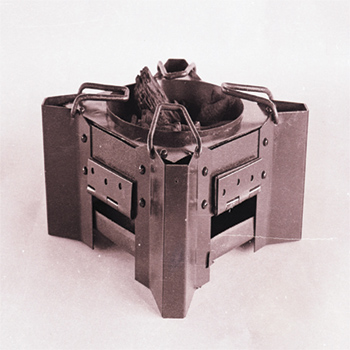
Simple Phone for C-Dot | “Tryst with Destiny” Education Ministry’s Pavilion at Asia 72
by Prof. A. G. Rao
by Prof. A. G. Rao
A Simple Phone for the C-Dot project was developed by Prof. A.G. Rao. C-Dot was an R & D company initiated by Dr. Sam Petroda. He had an ambitious plan for a "Telecom Revolution in India". He was well established as a technologist and entrepreneur in the U.S.A., with many patents to his credit in the telecom sector. His proposal in front of Prime Minister Smt. Indira Gandhi was for telecom technology development in 36 months with a budget of 36 crores. He said, "Give me this budget and in three years, I will transform the telecom sector with Indian tallent," and the project was sanctioned. C.Dot was an innovative idea in telephone exchange suitable for the rural sector in India. According to Dr. Pitke, "Simple Phone will be the simplest possible digital telephone which can be useful for all purposes." A STD phone and an executive phone also need to be designed. STD phones will be used in pan-shops, etc., as service phones. Executive phones will have multiple functions, like call forward, re-dial, teleconference, etc.," "Tryst with Destiny" was a combined project done by Prof.S. Nadkarni, U.A. Athavankar, M. Chattopadhyay, A.G. Rao, Subodh Dhairyvan, Roby D’Solva, and Abdul Gaffoor. The Center was tasked with creating a pavilion on "Education" for the Third Asian International Trade Fair, known as Asia 72. The design efforts culminated in a presentation called "Tryst with Destiny," distinguished by its simplicity from the rest of the pavilions. The scheme depicted educational efforts at various levels in the transformation of India since Independence. The Pavilion conveyed the theme through murals, illuminated photographs, filmed interviews, a film, and a publicity programme of posters, folders, etc. Vaccum formed plastic units which could be transported easily and assembled in a short time were designed. Items like chairs, ash trays, and lamps were specially designed for the exhibition. A. G. Rao, B. S. Jagdish, and M. S. G. Rajan collaborated on another project called Coal Chula. A portable coal stove (chula) is traditionally made with a bucket and thick cement or mud insulation. Coal India announced a competition for engineers and designers to delve into the fundamentals of the problem. Coal India announced a competition for engineers and designers to delve into the fundamentals of the problem in the design. The design arrived at is for semi-urban use. To avoid smoke formation, the fire pot has several holes that distribute air evenly throughout the coal. The ashes can be cleaned easily as the whole bottom plate is hinged on one side, and two ducts help in getting controlled burning. To increase stability, the 'chula' is kept low in height. The unit can be made by a small industry with very little skill.
Details >>
Shenoy Innovation Studio (SIS) | Z-Line Petrol Pump | Open Design School (MHRD) | Window Mounted Solar | Low Cost Vein Tracer for blood extraction
by Prof. B. K. Chakravarthy
by Prof. B. K. Chakravarthy
B.K. Chakravarthy's Shenoy Innovation Studio project's attention is directed towards disruptive as well as sustaining innovation for the development of new and futuristic products and services that will delight users. The methodologies developed in the studio apply to large industries in both the private and public sectors, as well as small-scale industries, the government sector, and the craft sector. It intervenes in the education system with the industry in a mutually beneficial collaboration. This helps to increase levels of excellence and relevance in learning, teaching, and research. Another creative project by B.K. Chakravarthy was the Z-Line petrol pump. The bulky lower half, combined with a slender top portion, ensured minimal damage of the kind to which earlier designs of fuel dispensers had been vulnerable. The hydraulics were housed in the lower half, while the electronics were housed in the upper half. High accuracy in manufacturing and a notable reduction in cost ensured that the Z-line quickly bested its competitors. The modular design with a card slot system was designed to be maintenance-friendly. As the electronics were placed above the stipulated minimum of 1.2 metres, the Z-line dispenser did not require a flame-proof junction box. Dynamic and forward-looking in appearance and gesturing towards a future of radical innovation, the Z-line became a key icon of Indian roadways in those times. The Open Design Schools (MHRD) project's objective is to extend the reach of Design Innovation education through a combination of online courses and blended learning. Hence, it is a combination of MOOCS and workshop practice. The aims of the Open Design School are to bring design education to a large number of aspirants and to provide them with hands-on training in workshops all over the country under expert mentors. This experiential learning is the key to Design Innovation Pedagogy. The Window Mounted Solar Project was a thorough understanding of the specific challenges faced by users, which proved to be a turning point in this case. A window-mounted solar oven with a deceptively simple design that eliminates the need for a conventional oven. Some of its benefits are: it preserves nutrition; slow cooking means tastier food; it is cheaper than the costly LPG fuel; it minimises danger; no electricity or flame needed and it saves fuel. The Low Cost Vein Tracer for Blood Extraction has been designed as a simple, light-weight device that humanises a simple technology (NIR Spectroscopy), helping medical practitioners easily identify the veins during vein-puncture procedures, reducing patients' trauma. Difficulty locating veins, especially in children, obese people, and people with darker skin, results in several needle pricks that cause trauma, discomfort, and injury. NIR Spectroscopy is an existing technology that can easily be applied to solve the problem, in particular. This technology can actually be used by the masses— in busy and frugally run blood camps, blood banks, small and medium sized hospitals.
Details >>
Project e-slate | Ergonomics Intervention in Traditional Brick Kiln activity
by Prof. G. G. Ray
by Prof. G. G. Ray
The Project e-slate was developed by Prof. G.G. Ray. The aim is to promote self-learning by having fun with a handheld computer for the daycare home of toddlers whose parents are working as migrant construction workers. The application will have five different sections: • Initial Preparation: This section covers pattern recognition, basic colour concepts, basic geometric forms, right/left, up/down, above/below, inside/outside, and so on. • Main alphabets: This section discusses Swarabarna and Banjanbarna pattern recognition, as well as their writing strokes. •'Barakhadi’ : This section deals with the use of ‘Matras’ (swarabarna) adjacent to the Banjanbarna. •'Anka’ (Mathematics) : This portion deals with the numerical characters and their meaning with suitable examples. • "Goshthi Katha": A section describing story telling based on Indian children's stories, including Ishap's. The Ergonomics Intervention in Traditional Brick Kiln Activity Project by Prof. G.G. Ray attempts to address the drudgery of the workers engaged in traditional brick kiln. There are all together six different stages in traditional brick making namely, 1) Soil preparation and mud making, 2) Brick moulding, 3) Transfer of raw bricks to the kiln, 4) Stacking of raw bricks for firing, 5) Firing of raw bricks, 6) Removal of fired (red) bricks from the kiln. The objective of the project is to improve human efficiency, safety, and occupational health by innovating new concepts in tools and methods. It is observed that to make a final red brick from raw earth, a male worker needs an average of 4 min and 7 kcal of human energy, while those for a female worker are about 5 min and 10 kcal, respectively.
Details >>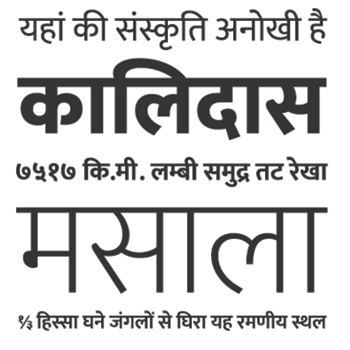
Ek Mukta | Jaini
by Prof. Girish Dalvi
by Prof. Girish Dalvi
Ek Mukta is a modern, versatile, and elegant typeface designed by Prof. Girish Dalvi, a faculty member at the Industrial Design Centre (IDC), IIT Bombay. The typeface is part of a larger family of fonts created to address the need for a contemporary, open-source Indian typeface that supports multiple Indian languages. The Ek Mukta typeface is notable for its readability, flexibility, and aesthetic appeal, making it widely used for both print and digital media. Ek Mukta is an open-source font, which means it is freely available for use by the public and can be modified and redistributed under the appropriate license. This has made it popular in both academic and professional settings. The typeface supports multiple Indian scripts, including Devanagari, Gurmukhi, and Gujarati, making it a valuable resource for a diverse range of languages and users. It provides consistency across scripts, helping users create harmonious multilingual documents and designs. Ek Mukta is a significant contribution by Prof. Girish Dalvi to the world of typography, providing a modern, accessible, and versatile typeface that supports the unique linguistic and cultural needs of India while also being a useful tool in global design contexts.
Details >>
Vapour Jet Boiler | "Tryst with Destiny” Education Ministry’s Pavilion at Asia 72
by Prof. M Chattopadhyay
by Prof. M Chattopadhyay
The Vapour Jet Project by Prof. M. Chattopadhyay, the unit used by big hotels and industries for cleaning utensils, etc., had the hang-over of the image of the boilers which the company manufactures. The main effort of the designer has been to create an image appropriate for the hotel's use. The sheet metal body incorporates all working elements, including plumbing and wiring inside. The unit is currently in production and is being exported to a number of countries."Tryst with Destiny" was a combined project done by Prof.S. Nadkarni, U.A. Athavankar, M. Chattopadhyay, A.G. Rao, Subodh Dhairyvan, Roby D’Solva, and Abdul Gaffoor. The Center was tasked with creating a pavilion on "Education" for the Third Asian International Trade Fair, known as Asia 72. The design efforts culminated in a presentation called "Tryst with Destiny," distinguished by its simplicity from the rest of the pavilions. The scheme depicted educational efforts at various levels in the transformation of India since Independence. The Pavilion conveyed the theme through murals, illuminated photographs, filmed interviews, a film, and a publicity programme of posters, folders, etc. Vaccum formed plastic units which could be transported easily and assembled in a short time were designed. Items like chairs, ash trays, and lamps were specially designed for the exhibition. The next project, called Light Weight Bus, is also a joint project by U.A. Athavankar, M. Chattopadhyay, S.S. Gurujee, M.S.G. Rajan. Weight of the bus can play a crucial role in the fuel consumption. The design of a light-weight bus body was taken up by a team of designers in response to a competition. Studies revealed interesting facts about the present design. The gusset-plates and screws weight as much as 30% of the structure in the present design. The new design employs FRP frames with aluminium coverings, which reduces weight by 500 kg. The luggage area is brought down to increase the stability. The project stands as a good inter-disciplinary project between structural engineers and industrial designers, displaying the potential of team work in an institute with various disciplines.
Details >>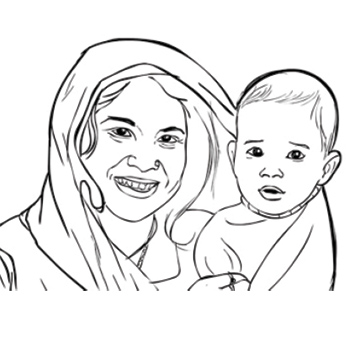
Redesign of Immunisation Card
by Prof. Mandar Rane
by Prof. Mandar Rane
Redesign of the immunisation card by Prof. Mandar Rane. The Universal Immunisation Programme (UIP), run by the Government of India, makes essential immunisation available for free to children between the ages of 0 to 5 years. The mother and child protection card that contains demographic and health information as well as the immunisation status of a child is an important part of UIP. For every child immunised under this program, there exists a home-based physical record as well as a clinic-side copy of the same. The language, content, and design of the immunisation card vary from state to state. Analysis of immunisation cards from three states—Bihar, Gujarat, and Maharashtra as well as contextual inquiries conducted at a primary healthcare centre in Mumbai revealed several issues faced by three types of stakeholders in the immunisation process: healthcare service providers, parents, and caregivers of the child. Surveyors and policy-makers also rely on information from such cards for gathering data about the population. The redesigned card addresses problems of comprehension, the needs of various stakeholders while entering and retrieving data, and practical issues such as the durability of the immunisation card.
Details >>
The Photographer The reality of imagination | Success story of Navi Mumbai Film on the sanitation project | Traditional Indian Art and Animation in India Exploring the roots for an Indian style
by Prof. Mazhar Kamran
by Prof. Mazhar Kamran
The Photographer and The Reality of Imagination projects were done by Prof. Mazhar Kamran. With the mystic poems of Rumi working as dialogues that the characters speak, "The Photographer" is a film that explores the realm of imagination and what it means to a person who, in order to create, lives much of the time on the boundary between the real and the imagined. The story is about a photographer who shoots a model one day, and it turns out she is visible only to him. He had walked into another time. "The Photographer" had its premiere on the Foundation Day of the Film and Television Institute of India, Pune. It was shown internationally at the Cannes Film Festival, Short Film Corner. The second project of Prof. Mazhar Kamran was the success story of Navy Mumbai Film on the Sanitation Project. Clean water and sanitation is a sustainable development goal of UN. To communicate the difference that modern sanitation methods can make to a city’s water and sanitation needs, the film presents the "success story" of Navi Mumbai in this context. Taking a cinematic approach, the film communicates without commentary or interviews, relying purely on visuals and sounds, with minimal text. The film was commissioned by the Asian Development Bank Institute, Tokyo. It will be used for advocacy and leadership-building programmes of ADBI. Another project of Prof. Mazhar Kamran was Traditional Indian Art and Animation in India Exploring the roots of an Indian style On the one hand, we have a rich heritage of traditional Indian art forms that are rooted in the different regions. They embody the culture of the people. The colours, the shapes and forms are distinct, and they tell equally rich stories of the people. On the other hand, we have a contemporary medium, Animation, born in modern times, it has roots in an industrial environment which is increasingly technology-driven. Between these two is a gulf, a rich space full of creative possibilities. What the research seeks to do is study this space systematically and formulate key concepts and ideas in this space. It seeks to articulate and codify all that is involved in the transformation of an art form from one tradition, one origin, into another, more contemporary form. The study will also reflect upon the issues—social, ethical, and aesthetic—that crop up when such a transformation happens.
Details >>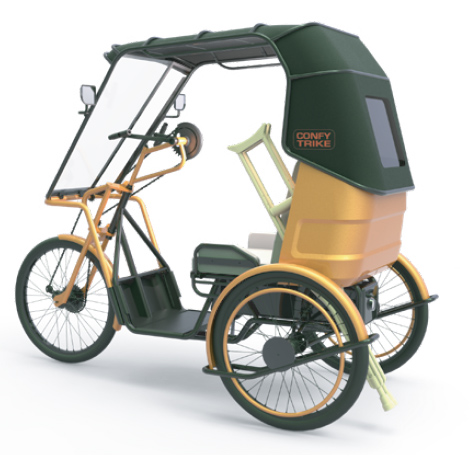
Tricycle for Paraplegics
by Prof. Nishant Sharma
by Prof. Nishant Sharma
The Tricycle for Paraplegics project was done by Prof. Nishant Sharma. In India, around ten million people are mobility disabled. They lead under privileged livelihood. This hand tricycle is the result of our efforts towards paraplegic population and provides them with an attractive and self- reliant mobility solution. We have designed this human-powered mobility vehicle which is Light Weight, Modular and Weatherproof. The tricycle offers dual handles for pedalling action to gain higher initial torque and has capability to climb up slopes and move in undulated terrains. Its ergonomic design makes it user friendly in terms of visibility, accessibility, peddling, gear shifting, braking etc. It has added features like seat-adjustability for reach, comfortable footrest with strapping, luggage box and seat belt. We have consciously worked on the image of the product and made it attractive so that the vehicle is not seen as a symbol of sympathy but as a symbol of confidence.
Details >>
Bamboo E-bike | Ragaaz | Lotus Bamboo Drone
by Prof. P Kumaresan
by Prof. P Kumaresan
The Bamboo E-bike project by P. Kumaresan is designed to incorporate the structural dynamicity of Bamboo. The primary structure is made of a hollow rectangular mild steel section with seating and other support structures made out of bamboo strips. A rear wheel hub motor is used along with essential components enclosed in a section of elephant bamboo under the frame. In the Ragaaz project, his focus was to have a simple flow and yet elegant form, which is honest yet edgy. Ragaaz is a bass guitar made entirely out of bamboo and wood. The body is made out of bamboo strips using coiling techniques, which gives it transparency in the design, also making it light in weight. The neck of the guitar is made of hollow bamboo and teak wood. Another successful project of his was the Lotus Bamboo Drone. India has a rich heritage of bamboo baskets. These baskets are used everywhere because of their versatility and low cost. Utilizing the qualities of such structures, the Lotus Bamboo drone is very flexible and increases the endurance of the drone from falls. Overall weight is also reduced due to the lightness of the material. And the next project was Comet-W87. Comet-W87 is a futuristic guitar design. It houses a 6mm output along with a 3.5mm output jack for "Silent Jamming Sessions". The ‘FAN Fret’ design is backed by an ergonomically designed neck and body to provide the musician with maximum comfort while playing. It is also capable of emitting music via an FM channel. The FM muddle comes in a variety of ranges according to your audience’s requirements.
Details >>
Art @IITB | National Salt Satyagraha Memorial Dandi | Learning from Nature and from the Indigenous Collaborative project with Bidyut Roy and Sandeep Manchekar | Understanding visual art traditions Collaborative projects with practitioners of indigenous art traditions
by Prof. Raja Mohanty
by Prof. Raja Mohanty
Prof. Raja Mohanty’s one of the best projects was Art @ IITB. IIT Bombay’s vision is to be a leading global technology university that provides a transformative educational experience to create leaders and innovators and generate new knowledge for society and industry". The arts enrich our aesthetic imagination and help to shape how we perceive ourselves and our surroundings. A visible display of works on the IIT Bombay campus that combine technical and artistic creativity could aid in the integration of education. This project envisaged a road-map for arts education at IIT Bombay that includes the creation of traditional and contemporary works of art on the campus; residencies, seminars, and talks by visiting artists; and mentorship to encourage students to develop an aesthetic sensibility. His other important project was the National Salt Satyagraha Memorial, Dandi. This memorial to the 80 marchers who accompanied Gandhi in upholding "Right against Might" was conceptualised by Prof. Kriti Trivedi. The beginning of an engagement with handloom weaving is an interesting "side effect" of this memorial. In 2019, Shivani Nayak, one of the graduating students from IDC School of Design, wove her own convocation scarf. The weaving initiative encourages more students to do the same. Learning from Nature and from the Indigenous Collaborative Project with Bidyut Roy and Sandeep Manchekkar project was a residency space for visiting faculty was created at Wighavali using local materials such as bamboo, mud, fired bricks, traditional terracotta tiles, and dried pipal leaves. This space is envisaged as an extension of classroom walls to spaces outside cities that enables students to come into contact with alternate realities and learn from indigenous ways of doing things and from nature. Raja Mohanty’s other important project was Understanding Visual Art Traditions. collaborative projects with practitioners of indigenous art traditions. The traditions studied included patachitra art from Orissa; Gond art from Madhya Pradesh; Madhubani from Bihar; and Pichhwai from Rajasthan. Collaborative projects took the shape of books for children and "grown-up" children! Ghanshyam Sharma from Nathdwara, Radhashyam Raut from Bhubaneswar, Durgabai, and Mansingh Vyam from Bhopal, and Sharwan Paswan from Mithila were the artists with whom the collaborative projects were done. "The Circle of Fate" published by Tara Books, Chennai, was shortlisted for the Anderson Prize, 2009. "The Enigma of Karma" was a sequel to this. "Machaan Masti", "On Inheritance", and "Cycle Ka Sapna" are some of the other learning materials for children that were created as the collaboration continued as a part of the Damroo Project, funded by the Navajbai Ratan Tata Trust.
Details >>
Hospital Graphics
by Prof. Ravi Poovaiah
by Prof. Ravi Poovaiah
Hospital Graphics project was designed by Prof. Ravi Poovaiah. The design of hospital graphics involved participatory involvement of the user group at every stage of the design process. The graphics were meant for public hospitals in India.
Details >>
Street Furniture for CIDCO | Trade Exhibition at Moscow | “Tryst with Destiny” Education Ministry’s Pavilion at Asia 72
by Prof. S Nadkarni
by Prof. S Nadkarni
The street furniture for the CIDCO project was developed by Prof. S. Nadkarni. Simple street furniture was designed for the New Bombay Programme of the City Indutrial Development Corporation. All the items designed have a simple construction with bold, clear graphic information. Another important project of Prof. S. Nadkarni was the Trade Exhibition in Moscow. The Indian Trade Exhibition at Mascow was undertaken for the Trade Fair Authority of India. The exhibition to be transported from Bombay in total had many challenging structural and organisational problems. The theme pavilion was designed to depict Indian cultural values. "Tryst with Destiny" was a combined project done by Prof.S. Nadkarni, U.A. Athavankar, M. Chattopadhyay, A.G. Rao, Subodh Dhairyvan, Roby D’Solva, and Abdul Gaffoor. The Center was tasked with creating a pavilion on "Education" for the Third Asian International Trade Fair, known as Asia 72. The design efforts culminated in a presentation called "Tryst with Destiny," distinguished by its simplicity from the rest of the pavilions. The scheme depicted educational efforts at various levels in the transformation of India since Independence. The Pavilion conveyed the theme through murals, illuminated photographs, filmed interviews, a film, and a publicity programme of posters, folders, etc. Vaccum formed plastic units which could be transported easily and assembled in a short time were designed. Items like chairs, ash trays, and lamps were specially designed for the exhibition.
Details >>
Boundaries of Memory
by Prof. Sudesh Balan
by Prof. Sudesh Balan
Prof. Sudesh Balan's project was The Boundaries of Memories. Boundaries of Memory is a short fictional film about an elderly person’s search for a son, whose name is resonating in his fading memory. This film is a part of academic research on making cost-effective films for delivering social messages without losing cinematic value. Unlike a traditional joint family, current nuclear families lack the much needed human infrastructure for nursing senior citizens at home. The movie is set in the southern state of Kerala, where many younger members of the family migrate abroad for better job prospects. The movie was selected in the Panorama Section at the 47th International Film Festival of India, Goa.
Details >>
VEMA Virtual Experiential Museum on Ajanta | The Climate Change Project
by Prof. Sumant Rao
by Prof. Sumant Rao
The VEMA Virtual Experiential Museum on Ajanta was the project of Prof. Sumant Rao. Digital technologies like VR,AR, touchscreen displays, 3D scanning, photogrammetry, multiproject audiovisuals, holography, smart devices, and HMDs offer phenomenal tools, creating the possibility of experiencing any heritage monument offsite. VEMA explores this potential with the Ajanta Caves. Using a tablet, in the Virtual Tourist Zone, one can fly like a bird around a 3D site and explore the caves. In the Art zone, you can learn about Ajanta art by watching the digitally restored Simhala Avadana on the large video wall, iconic images and material culture on the touch-interactive small video walls, and paintings come to life in the AR painting gallery. In the Architecture zone, head-mounted displays transport you to the caves and a holographic display showcases stupas, shrines, pillars etc. The explore zone has large kiosks with which you can explore the site, the caves, and the narrative paintings of Ajanta to a greater depth. The Climate Change Project was another important project of Prof. Sumant Rao. An interactive presentation on global warming for children, with a focus on the Indian context. An interactive presentation on climate change, where the presenter tells of his journey around India to understand the perplexing changes happening there. He is joined by a snow leopard cub from the Himalayas, a coastal village girl from Orissa, an orphan boy from Andhra Pradesh, a sea horse from Lakshadweep and a dog from Mumbai, and they figure out the reasons behind the melting glaciers, rising sea level, roughts, flooding, bleaching of corals and rise of certain diseases—increasing green house gases that each of them experienced. During the telling of the story, the presenter interacts with both his animated friends in the story as well as the young audience, creating a unique and interesting learning experience.
Details >>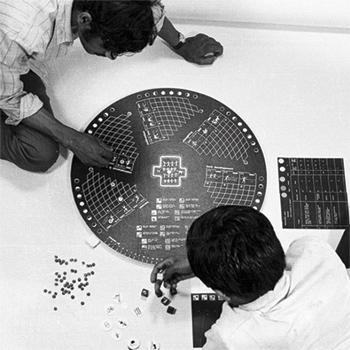
Edugame | “Tryst with Destiny” Education Ministry’s Pavilion at Asia 72
by Prof. U A Athavankar
by Prof. U A Athavankar
Edugame was the project of Prof. U.A. Athavankar. The teaching of agriculture discipline to the tribal people is the theme of the Edugame, which won an international award in the Edugame International competition held in Israel. The game gives the players a problem (like if you have a broken plough) and they have to solve it using the money provided by the bank. The importance of the agricultural cycle is stressed in the game. If a player does not finish sowing in 10 moves (1 day), a red signal will come to make him stay there till the next sowing season comes. 3 to 4 children can play it at a time. It would be ideal for teachers to use it as an aid. Another important project jointly done by Prof. U.A. Athavankar, M. Chattophadhay, S. S. Gurujee, and M. S. G. Rajan was the Light Weight Bus. The weight of the bus can play a crucial role in its fuel consumption. The design of a light-weight bus body was taken up by a team of designers in response to a competition. Studies revealed interesting facts about the present design. The gusset-plates and screws weigh as much as 30% of the structure in the present design. The new design employs FRP frames with aluminium coverings, which reduces weight by 500 kg. The luggage area is brought down to increase the stability. The project stands as a good inter-disciplinary project between structural engineers and industrial designers, displaying the potential of team work in an institute with various disciplines. "Tryst with Destiny" was a combined project done by Prof.S. Nadkarni, U.A. Athavankar, M. Chattopadhyay, A.G. Rao, Subodh Dhairyvan, Roby D’Solva, and Abdul Gaffoor. The Center was tasked with creating a pavilion on "Education" for the Third Asian International Trade Fair, known as Asia 72. The design efforts culminated in a presentation called "Tryst with Destiny," distinguished by its simplicity from the rest of the pavilions. The scheme depicted educational efforts at various levels in the transformation of India since Independence. The Pavilion conveyed the theme through murals, illuminated photographs, filmed interviews, a film, and a publicity programme of posters, folders, etc. Vaccum formed plastic units which could be transported easily and assembled in a short time were designed. Items like chairs, ash trays, and lamps were specially designed for the exhibition.
Details >>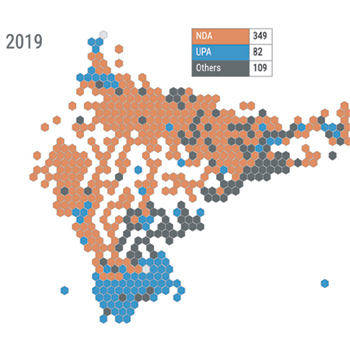
Interactive Data Visualization and Analysis of Election Results
by Prof. Venkatesh Rajamanickam
by Prof. Venkatesh Rajamanickam
Interactive Data Visualization and Analysis of Election Results was the project of Prof. Venkatesh Rajamanickam. Starting from 2016 to 2019, the project explored the presentation and analysis of election results through a series of interactive data visualizations. The objective was not only to explain phenomena through visual representation of information, but also to discover new insights and new meanings through visual exploration of information. Affordances of the medium, devices of delivery, data iteracy of audiences, use of regional languages, etc., were taken up for inquiry. Some of the visualisations were widely disseminated through popular publications and written up as academic papers.
Details >>
Sigma III foil sealing machine | Forklift Truck for Voltas India Ltd
by Prof. Vijay Bapat
by Prof. Vijay Bapat
The Sigma III foil sealing machine was the project of Prof. Vijay Bapat. Sigma III Touch Cap Seal’ is a Pacmachine Award (2012) winning project where the challenge was to redesign the form of the new generation of foil sealers launched by Electronic Devices,Mumbai. The old sealing machine form was susceptible to being misused for keeping sundry things, making it prone to accidents. The sloping forward sealer body improved the aesthetic appeal by making it look dynamic. The whole assembled machine was packed in wooden crates, resulting in expensive packaging for export to other countries. A modular design approach was taken to shift to paper corrugated box packaging. Due to this design approach, we could achieve a substantial weight reduction from 140 kg to 80 kg and freight costs reduced to $300 from $1250 as the packing and transportation have become simple. Showing how form can improve function and reduce costs, Sigma III has been appreciated even at international design platforms like the IF exhibition. Another important project by Prof. Vijay Bapat was the forklift truck for Voltas India Ltd. Due to heavy competition from Korean and Japanese fork-lift trucks, the forklift truck division of Voltas was losing its leadership position in the diesel fork-lift market. The challenge was to achieve an international aesthetic look without changing the internal components. The major design contribution is a footboard visible from the top level that improves the operator’s comfort in climbing down. The red model shows the design improvements with half a tonnes of weight savings, achieved due to a 150 mm lower west-line. With improved fuel efficiency and increased speed, the company could position the product as a premier truck. The improved aesthetics and user comfort without changing the basic chassis, helped the company recapture local as well as foreign markets. This design is going strong in the market even today.
Details >>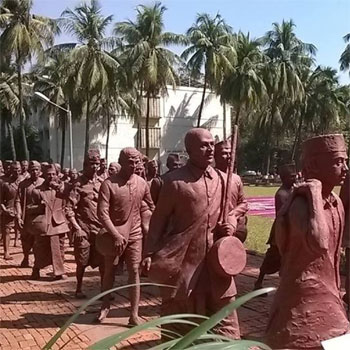
National Salt Satyagraha Memorial at Dandi
by Prof. Kriti Trivedi, Prof. Raja Mohanty, Prof. B. K. Chakravarthy & Prof. Shilpa Ranade
by Prof. Kriti Trivedi, Prof. Raja Mohanty, Prof. B. K. Chakravarthy & Prof. Shilpa Ranade
The National Salt Satyagraha Memorial at Dandi, Gujarat, was created to commemorate Mahatma Gandhi's iconic Salt March of 1930. Several faculty members from IDC IIT Bombay—Prof. Kriti Trivedi, Prof. Raja Mohanty, Prof. B. K. Chakravarthy, and Prof. Shilpa Ranade—played significant roles in the conceptualisation and design of this memorial. Their collective efforts aimed to create a space that not only honours the historical event but also offers an immersive experience to visitors through the integration of art, storytelling, and technology.
Details >>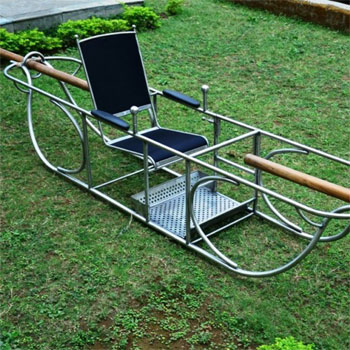
Lightweight palanquine for Vaishno Devi
by Prof. B. K. Chakravarthy
by Prof. B. K. Chakravarthy
One of the most well-known pilgrimage destinations in India, Vaishno Devi, is the target audience for an inventive lightweight palanquin that was created by Prof. B. K. Chakravarthy of IDC IIT Bombay, especially for the pilgrims. The design's main goal was to provide a lightweight, safe, and ergonomic substitute for conventional aeroplanes, which are frequently unwieldy and uncomfortable for both passengers and bearers. The pallet is far easier to carry than conventional wooden allets because it was made with lightweight, strong materials like aluminium or composites. The palanquin's ergonomic shape guarantees the comfort of both the bearers and the pilgrim being carried.
Details >>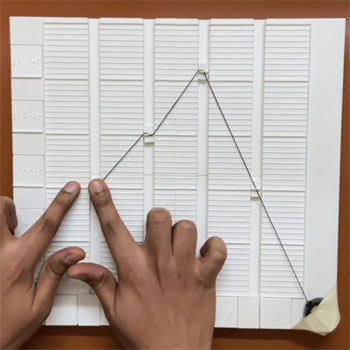
Inclusive interaction design patterns for visually impaired, with Tata Consultancy Services
by Prof. Anirudha Joshi
by Prof. Anirudha Joshi
The project on Inclusive Interaction Design patterns for the visually impaired by Prof. Anirudha Joshi from IDC IIT Bombay, in collaboration with Tata Consultancy Services (TCS), focusses on creating digital interfaces that are accessible and usable for people with visual impairments. The goal is to identify common patterns in the design of interfaces that cater to the needs of visually impaired users, ensuring inclusivity in technology.
Details >>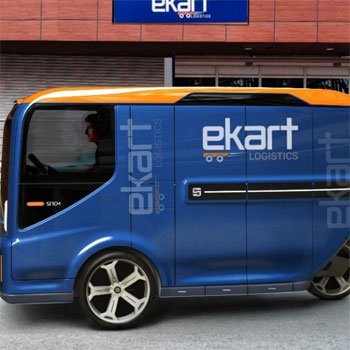
Three-wheeled electric delivery vehicle, with Strom Motors
by Prof. Sugandh Malhotra
by Prof. Sugandh Malhotra
The three-wheeled electric delivery vehicle, developed by Prof. Sugandh Malhotra from IDC IIT Bombay in collaboration with Strom Motors, is designed to cater to the growing demand for sustainable and efficient urban delivery solutions. This vehicle aims to address the needs of last-mile delivery while focussing on environmental sustainability and urban mobility challenges. The vehicle is powered by a battery-electric system, providing a zero-emission alternative to traditional delivery vehicles. The three-wheeled configuration allows for better manoeuvrability in congested urban environments, making it ideal for city deliveries. The vehicle is optimised for carrying light to moderate cargo, suited for e-commerce, groceries, and other urban delivery services.
Details >>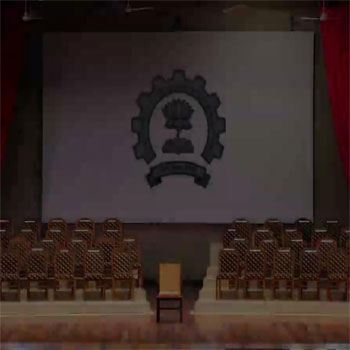
Live virtual convocation for IIT Bombay & Recreation of the ceremony and animations for around 2000 students with their avatars
by Prof. Sumant Rao
by Prof. Sumant Rao
The live virtual convocation for IIT Bombay, organised by Prof. Sumant Rao from IDC IITB, was an innovative solution to conduct the graduation ceremony during the COVID-19 pandemic. The project involved the recreation of the traditional convocation ceremony in a fully virtual environment, allowing around 2000 students to participate remotely. The ceremony included real-time animations of the avatars, with degrees being conferred in the same manner as in a traditional ceremony. The virtual convocation was a testament to the creative use of technology to maintain the tradition of graduation while adapting to the constraints of the pandemic.
Details >>
Success story of Navi Mumbai, Film for Asian Development Bank Institute, Tokyo
by Prof. Mazhar Kamran
by Prof. Mazhar Kamran
Prof. Mazhar Kamran of IDC IIT Bombay directed the film Success Story of Navi Mumbai, which was made for the Asian Development Bank Institute (ADBI) in Tokyo. The film highlights Navi Mumbai's planned development and expansion, a satellite metropolis built to relieve Mumbai's traffic and urban strains. It demonstrates how Navi Mumbai was envisioned and created as a planned metropolis with areas that were carefully designed for business, industry, and residential use. The movie highlights the initiatives taken to guarantee sustainable urban growth, emphasising public facilities, environmental concerns, and transit systems.
Details >>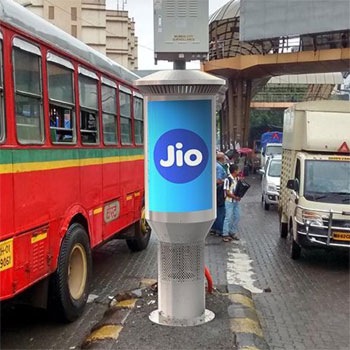
Air purifier for NEERI
by Prof. Nishant Sharma
by Prof. Nishant Sharma
Prof. Nishant Sharma from IDC IIT Bombay developed an air purifier in collaboration with the National Environmental Engineering Research Institute (NEERI). The project focusses on creating an efficient, cost-effective solution for improving air quality in both indoor and outdoor environments. The purifier uses advanced filtration methods to remove harmful particulates, pollutants, and toxins from the air. This technology ensures high purification efficiency while maintaining low energy consumption. It is designed with eco-friendly materials; the purifier aims to minimise its environmental impact. It is also built for durability and ease of maintenance.
Details >>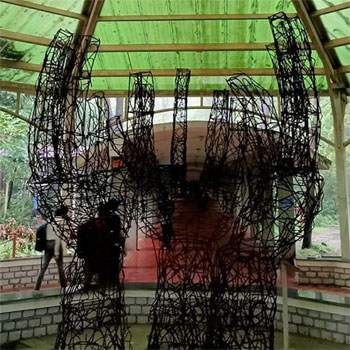
Sculpture at IIT Bombay
by Prof. Raja Mohanty
by Prof. Raja Mohanty
The sculpture at IIT Bombay designed by Prof. Raja Mohanty from the Industrial Design Centre (IDC) is a notable artwork that reflects his deep engagement with storytelling, visual language, and artistic exploration. Prof. Mohanty, known for his expertise in illustration, book design, and the use of traditional Indian art forms, likely incorporated these influences into the sculpture's design.
Details >>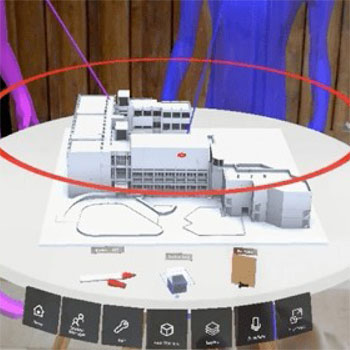
Project ArchDeck - Collaborative MR Application
by Prof. Jayesh Pillai
by Prof. Jayesh Pillai
Project ArchDeck, led by Prof. Jayesh Pillai at IDC IIT Bombay, is a collaborative mixed reality (MR) application designed to enhance collaboration in architectural design and related fields. The project leverages mixed reality to create a shared environment where multiple users can interact with 3D models, designs, and spatial layouts in real-time. Multiple users can view, modify, and discuss architectural designs simultaneously, regardless of their physical location. Architects, designers, and stakeholders can visualise structures in a spatial context, enabling better understanding of scale, proportions, and design details. The use of MR allows users to experience designs as if they were physically present, enhancing decision-making and creative discussions.
Details >>
ScholAR project - AR in Education & Remote collaboration in AR
by Prof. Jayesh Pillai
by Prof. Jayesh Pillai
The ScholAR project led by Prof. Jayesh Pillai at IDC IIT Bombay focusses on integrating augmented reality (AR) into education and enhancing remote collaboration through AR technology. ScholAR aims to revolutionise how students interact with educational content, making learning more immersive and interactive. By overlaying digital information on real-world environments, AR helps visualise complex concepts, enhancing engagement and understanding. The project also emphasises remote collaboration in AR, allowing students, educators, and professionals to collaborate in shared virtual spaces despite being geographically separated. This opens up new possibilities for virtual labs, interactive discussions, and hands-on learning experiences without physical proximity. AR’s potential in remote collaboration extends to real-time annotation, 3D visualisations, and interactive sessions, facilitating teamwork and problem-solving in a dynamic, virtual environment.
Details >>
Project ‘Manhole’ Real-time VR Narrative
by Prof. Abhishek Verma & Prof. Jayesh Pillai
by Prof. Abhishek Verma & Prof. Jayesh Pillai
Project 'Manhole' is a real-time Virtual Reality (VR) narrative developed by Prof. Abhishek Verma and Prof. Jayesh Pillai at IDC IIT Bombay. This project utilises the immersive capabilities of VR to tell a compelling, socially relevant story, engaging the audience through an interactive and experiential narrative format. The project likely focusses on bringing attention to societal issues, possibly drawing from themes like sanitation workers' lives or the hazards they face, symbolised by the manhole. Real-time interaction in VR allows the viewers to step into a dynamic environment where they can engage with the narrative as it unfolds, providing an immersive way to experience the story. This kind of VR storytelling amplifies emotional engagement and empathy by placing the user in the midst of the events, offering a powerful new dimension to narrative design.
Details >>
Boat Design
by Prof. Unni Mohan Mohanan
by Prof. Unni Mohan Mohanan
Prof. Unni Mohan Mohanan has contributed to the design of boats, with a focus on integrating innovative and user-centric design principles. His work in boat design likely combines functionality, aesthetics, and sustainable materials, taking into account both traditional boat-building techniques and modern engineering practices. Prof. Mohanan's design approach may emphasise ergonomics, efficiency, and environmental impact, ensuring that the boats are suited for their intended environments, whether for transportation, leisure, or specific industry purposes. His background in product design would lend itself to creating boats that are not only practical and efficient but also visually appealing and comfortable for users.
Details >>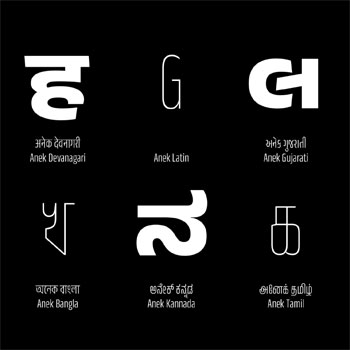
Anek multiscript variable font family
by Prof. Girish Dalvi
by Prof. Girish Dalvi
Anek is a multiscript variable font family designed by Prof. Girish Dalvi at IDC IIT Bombay. It is a modern, versatile typeface that supports multiple Indian scripts, aiming to unify diverse writing systems while maintaining their unique characteristics. The project aligns with the growing demand for typography solutions that accommodate the multilingual and multiscript environment of India, where users often require support for multiple languages in a single document or design. It is designed as a variable font, meaning that users can adjust properties like weight and width seamlessly across different styles, offering flexibility for a variety of applications. It supports multiple Indian scripts, including Devanagari, Bengali, Tamil, Telugu and others, making it suitable for use in diverse linguistic contexts.
Details >>
Sakshatkaaram, Malayalam short fiction film
by Prof. Sudesh Balan
by Prof. Sudesh Balan
Sakshatkaaram is a Malayalam short fiction film directed by Prof. Sudesh Balan, a faculty member at IDC IIT Bombay. The film delves into human emotions and inner realisations, exploring themes of self-discovery and personal transformation. Like much of Prof. Balan's work, it likely features a reflective narrative, focussing on subtle yet powerful storytelling techniques. Prof. Balan is known for his expertise in visual storytelling, and his approach in Sakshatkaaram might include innovative use of camera work, visual metaphors, and symbolism, typical of his design philosophy. The film likely emphasises character-driven narratives and emotionally resonant themes, aligning with his broader interests in communication design and cinematic expression.
Details >>
Voice-based netbanking for the elderly, with Bank of Baroda
by Prof. Anirudha Joshi
by Prof. Anirudha Joshi
The Voice-based Netbanking for the Elderly project, led by Prof. Anirudha Joshi, IDC IITB, in collaboration with Bank of Baroda, aims to make digital banking more accessible to senior citizens. Recognising that many elderly users face challenges with conventional online banking interfaces due to difficulties with technology, the project seeks to offer a more intuitive and user-friendly solution through voice interaction. The banking system is designed to be navigated via voice commands, making it easier for elderly users who may not be comfortable with traditional touchscreen or text-based inputs. Common banking tasks like checking balances, transferring money, or paying bills can be accomplished through simple, guided voice interactions.
Details >>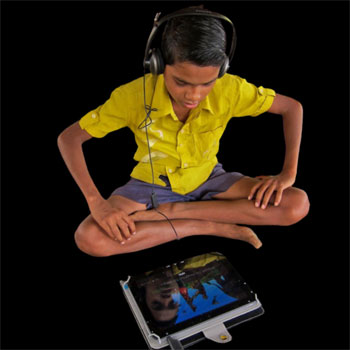
Learning English Through Stories
by Prof. Alka Hingorani
by Prof. Alka Hingorani
"Learning English Through Stories" by Prof. Alka Hingorani focusses on using narrative techniques to teach the English language in a more engaging and accessible manner. The approach emphasises storytelling as a medium for language acquisition, helping learners develop linguistic skills through context, emotion, and imagination rather than just conventional methods like grammar rules or vocabulary lists. By immersing students in stories, the program fosters comprehension, listening, and speaking skills, making it easier for learners to relate to and remember language concepts.
Details >>
Uniform Design for BSF Mahila Motorcycle Riders for the Republic Day Parade
by Prof. Kanika Jolly
by Prof. Kanika Jolly
The Uniform Design for BSF Mahila Motorcycle Riders for the Republic Day Parade by Prof. Kanika Jolly was a specialised design project aimed at enhancing both functionality and aesthetics for the Border Security Force (BSF) women riders. The design considered the rigorous physical demands of the motorcycle stunt performances while incorporating cultural and symbolic elements reflective of national pride. The uniform was crafted to balance safety, mobility, and comfort, ensuring that the riders could perform with ease during the high-profile event. Prof. Jolly's work focused on integrating modern design with traditional values, making the riders stand out during the Republic Day Parade.
Details >>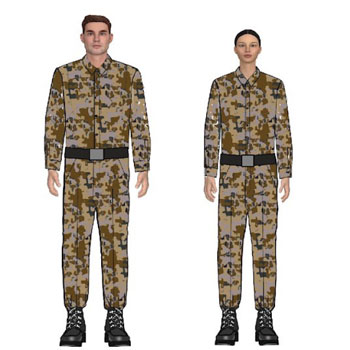
New Sansad Bhawan Security Officers’ Uniforms
by Prof. Kanika Jolly
by Prof. Kanika Jolly
The New Sansad Bhawan Security Officers’ Uniforms designed by Prof. Kanika Jolly aimed to create a modern and functional aesthetic for security personnel at the Indian Parliament. The design focused on comfort, durability, and professional appearance, incorporating materials suitable for varied weather conditions and demanding physical tasks. The uniforms likely featured distinct elements that reflected the authority and responsibility of the security officers while also promoting a sense of national pride. Prof. Jolly's approach would have emphasised both practicality and visual impact, ensuring the uniforms met the needs of the officers while presenting a polished image to the public.
Details >>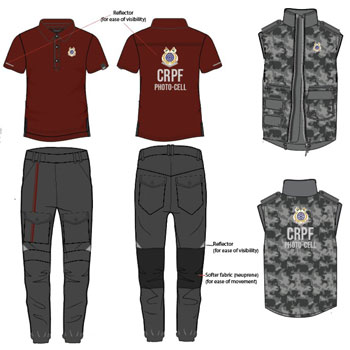
Uniform design for Central Reserve Police Force (CRPF) – PRO cell
by Prof. Kanika Jolly
by Prof. Kanika Jolly
The Uniform Design for the Central Reserve Police Force (CRPF) PRO Cell by Prof. Kanika Jolly was focused on creating a distinctive and functional uniform tailored specifically for the Public Relations Officers within the CRPF. The uniform was designed to convey authority and professionalism, making the PROs easily recognisable in public engagements. Emphasis was placed on selecting materials that provide comfort for long hours of wear while allowing ease of movement, particularly during interactions with the public and media. The design likely included strategically placed pockets for carrying communication devices, documents, and other essential tools required for their role. Incorporating elements that reflect the values and traditions of the CRPF fosters a sense of pride among the officers.
Details >>
Feature film in Hindi 90 minutes
by Prof. Mazhar Kamran
by Prof. Mazhar Kamran
The feature film in Hindi by Prof. Mazhar Kamran, approximately 90 minutes long, typically reflects his storytelling approach, often focussing on social issues, human emotions, and cultural narratives. While specific details about this film might not be widely available, his works generally aim to engage audiences with thought-provoking themes and relatable characters.
Details >>
Story Books
by Prof. Raja Moahnty
by Prof. Raja Moahnty
Prof. Raja Mohanty, known for his work in storytelling, illustration, and bookmaking, has authored and illustrated several storybooks that often blend traditional Indian folklore with contemporary themes. His storybooks are notable for their artistic approach, merging rich illustrations with compelling narratives. His stories often draw from Indian folklore, mythology, and cultural traditions, bringing ancient tales to life in modern contexts. As an artist and illustrator, Prof. Mohanty's books are visually rich, using illustrations to enhance the storytelling experience and engage readers of all ages.
Details >>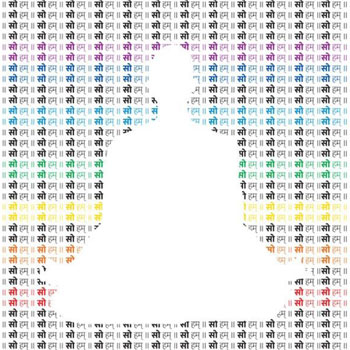
Posters for 18th Cheongju Jikji World Calligraphy Exhibition, Korea & South Asia Design Educators Alliance(SADED), Exhibition, USA
by Prof. G. V. Sreekumar
by Prof. G. V. Sreekumar
Prof. G. V. Sreekumar designed posters for two notable exhibitions: the 18th Cheongju Jikji World Calligraphy Exhibition, Korea, and the South Asia Design Educators Alliance (SADEA) Exhibition, USA. 18th Cheongju Jikji World Calligraphy Exhibition, Korea: The design for this exhibition poster likely embraced the aesthetics of calligraphy, combining traditional elements with modern design principles. South Asia Design Educators Alliance (SADEA) Exhibition, USA: The poster for this exhibition would have reflected design education and collaboration between South Asia and global design communities.
Details >>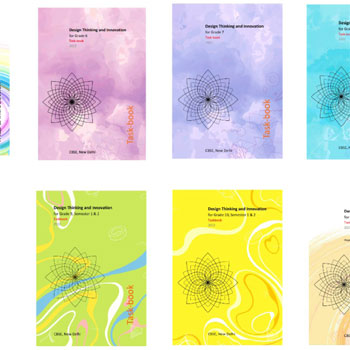
Curriculum Development for Design Thinking and Innovation in Schools from Grade 6 -12
by Prof. Ravi Poovaiah
by Prof. Ravi Poovaiah
The Curriculum Development for Design Thinking and Innovation in Schools from Grade 6–12 by Prof. Ravi Poovaiah from IDC IITB focusses on integrating design thinking into school education to foster creativity, problem-solving, and innovation among students. This curriculum is aimed at helping young learners develop critical thinking and hands-on skills that prepare them for real-world challenges. Teaching students the principles of design thinking, including empathy, ideation, prototyping, and testing, in a simplified and engaging manner. Encouraging students to apply these principles through hands-on projects where they can create solutions to real-world problems relevant to their communities or environments.
Details >>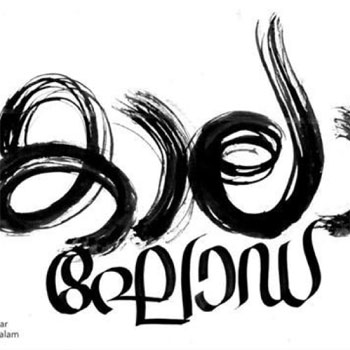
Calligraphy for Kala Ghoda Festival, Mumbai
by Prof. G. V. Sreekumar
by Prof. G. V. Sreekumar
The Calligraphy for the Kala Ghoda Festival, Mumbai, by Prof. G. V. Sreekumar, was likely a creative endeavour where he brought his expertise in typography and calligraphy to this iconic cultural festival. The Kala Ghoda Arts Festival is known for its celebration of arts, crafts, and culture, and Prof. Sreekumar's work would have added a rich visual element to the event. Prof. Sreekumar likely combined traditional Indian scripts with contemporary design aesthetics, creating visually compelling calligraphy pieces that resonated with the festival's diverse audience.
Details >>