Product Design
Batch 2014-2016
(48 items)

Product DesignBatch 2014-2016
(48 items)
(48 items)

POSHAK- Traditional Attire of Rajput Women
by Akanksha Rathore
by Akanksha Rathore
Rajasthan leaves no senses untouched. The colours, yellows, blues, greens and red are a delight to watch. The state has a distinct music to it with kartals and dholak singing the bravery of warriors and songs of Thar desert and festivities. Rajasthani cuisine made of dried vegetables and spices has a distinct flavor and fragnance. Dal bati churma, ker sangri, badi, pithode, gatte are few to be named .The land restores and tell stories of its art and culture in the kind of architecture practiced, various handcrafted items, clothing etc. Each motif is quintessential to the place and represents the uniqueness of the land in the best possible way. The major population of Rajasthan is of Rajputs Who belonged to the warrior class of people and are an image of feudalism and chivalry. The entire cultural ecstasy of the nation with all its regality and beauty boils down in the cultural beauty of the state of Rajasthan. The first recorded Rajput kingdoms emerged in Rajasthan in the 6th century and small dynasties later ruled much of northern India. According to the Hindu Mythology, the Rajputs of Rajasthan are the descendants of the Kshatriyas or warriors of Vedic India. The Rajput ethos is martial, in spirit, and fiercely proud and independent, and emphasizes lineage and tradition. Rajput women have always been known for their grace and conduct. From an early age Rajput girls have always been told that they must learn modesty for when they marry they will have to live in a new family, accept its customs, and obey its elders. On the contrary the tales of their bravery and courage to fight against all odds and taking to war when in need are well scripted in history .Women of the clan are known for their sacrifices as sati and are preached till date as sati mata.
Details >>
Report on Khamir, Reha & IDC
by Akanksha Rathore
by Akanksha Rathore
Khamir in the Kukma district of Kachch is a platform for the crafts, heritage, and cultural ecology of the Kachchh region of Gujarat. It was founded in the aftermath of the 2001 earthquake to provide a venue for artisans, resource groups and institutions, buyers, suppliers, and craft enthusiasts from around the world to exchange ideas, collaborate, and learn. It works to strengthen and promote the rich artisanal traditions of Kachchh district. The name Khamir stands for Kachchh Heritage, Art, Music, Information, and Resources. Born in 2005, it serves as a platform for the promotion of traditional handicrafts and allied cultural practices, the processes involved in their creation, and the preservation of culture, community, and local environments. Their main aim is to shift consumer perspectives and raise the cultural value placed on crafts.
Details >>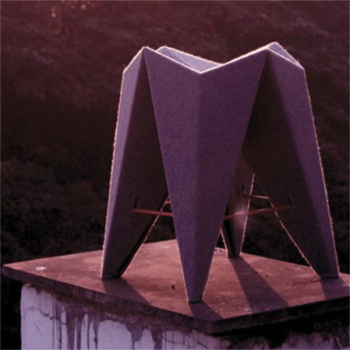
Origami Inspired Furniture
by Akanksha Rathore
by Akanksha Rathore
The heart of the appeal of origami: exploring the surprising magic of just how far you can change that square only by folding. - Robert Lang
Origami is an art of transformation. The strong identity of its textures, patterns of its fold with the involvement of human mind and skill makes it distinct and significant. This project is an attempt to understand the material (paper) and its relation when subjected to origami. To take essence from these folds and lines and creating furniture that brings playfulness in environment surrounding us.
Details >>
Toys Designed to Narrate Jataka Parables Inspired from turned Wood Channapatna Toys
by Akanksha Rathore
by Akanksha Rathore
Toys are a bundle of little joy and enjoyment for toddlers and young kids. Toys have been associated with children throughout history and in all cultures, and will continue to do so. Play time counts as one of the most fundamental and significant parts of childhood. Those attractive little tits and tots that we assume to me quite cute find themselves a perfect place in a kid’s wardrobe. While kids are dependent on us for food, and all other needs, toys prove to be their companion and friend for the first few years of their life. Psychologically speaking, kids require space to stock out their thoughts and emotions. And toys are just an ideal source on which they can easily bank upon- they can play with them, get angry, or throw them around as the like.
Details >>
Data generative art installation
by Bhavik grover
by Bhavik grover
How can we create a space more experiential using generative art? The aim of the research is to implement a data generative art installation by integrating a physical space with technology where people can come and be a part of that space, the sense of inclusiveness and engagement will create an emotional experience . We targeted to make mundane space more happening , and to reduce gap between physical world and digital world by giving an immersive experience to user.
Details >>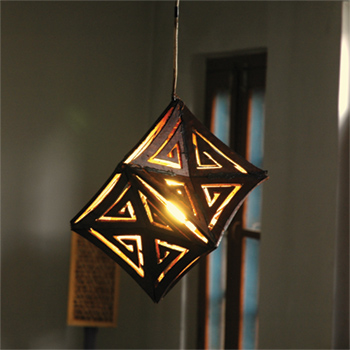
CDI srinagar
by Bhavik grover
by Bhavik grover
Kashmir, also known as the "crown of India," is a valley surrounded by beautiful, snow-covered mountains, green gardens and fields, vast, quiet lakes, clear and sweet water rivers, and wildlife, making it "heaven" in true English terms. The people of Kashmir are as beautiful as its nature; men are friendly and strong, and women are beautiful and peaceful. The strength and texture of walnut, the wavyness of rice paddies, the smell of apple orchid, the colours of tulip gardens, the quietness of Dal Lake, and the sound of nimaz make it a most pleasurable and beautiful place to live. It has a diverse variety in culture and tradition as well; the craftsmanship of the people of Kashmir is richer than any other state’s craft. Papier mache, wood carving, copperware, pashingmina shawl making, khatamband, pinjrakari, kashmiri embroidery, silver work, willow wicker, shikara, and house boats all contribute to Kashmir's rich culture.
Details >>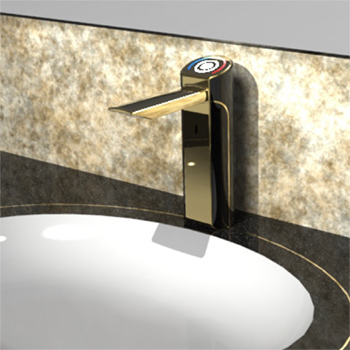
Faucets for smart usage of water
by Bhavik grover
by Bhavik grover
Water wastage is one of the biggest problems of today’s modern world, and it is witnessed predominantly at the industry, household level. The project addresses the upper-class segment of a user where water wastage is prevalent in their daily household usage, and have targeted the areas where awareness about water wastage can also be provided, I have selected faucets because at household level user interacts with faucets mostly for his daily life water using activities, The faucets in basin area were focused because most number of the water usage activities. The project is to design a faucet that prevents water wastage in daily activities of brushing teeth, washing face, shaving etc., And also making the user interactions more intuitive and informative. I have tried to make the entire process experiential, with combinations of digital and manual interactions of faucets, Certain functions like manipulation of the flow, temperature control were taken into consideration for all concepts. The formal study for ideation has been done using semantics approach and features has been shortlisted by taking inferences from market research and semantic studies.
Details >>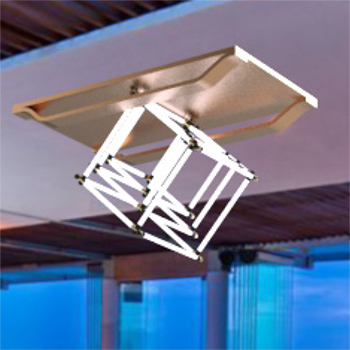
Transformable Luminaire
by Bhavik grover
by Bhavik grover
A luminaire is defined as “a complete lighting unit consisting of a lamp or lamps together with the parts designed to distribute the light, to position and protect the lamps and ballast (where applicable), and to connect the lamps to the power supply.” Since luminaries (lighting fixtures) were not previously defined, this new definition is meant to cover all aspects of a lighting unit, including the lamps that actually provide the illumination, as well as internal and external parts necessary for the proper operation of the unit. Luminaries can be of the traditional type, such as a recessed or surface-mounted incandescent, fluorescent or other electric-discharge luminaries. Luminaries can also be of the non-traditional type, such as fiber optics with the light source at one location and the fiber core or “light pipe” at another.
Details >>
Imagery from Buddhist thoughts on Ceramic ware
by Dattaram Chari
by Dattaram Chari
We all love beautiful ceramic artifacts and a decorative surface, of course, is the first thing noticed about any piece of ceramic ware and as with all things made with hand, the right concept makes all the difference. I have delved into exploring the virtually limitless world of ceramic art in the project. From the history to the abstract there are endless possibilities of expressions. The project focuses on philosophy behind the Buddhist Art forms and thoughts and exploration of imagery & details thereby breaking them into a structured reality with more simplistic details. With this project I have made an attempt to open up the creation of movement with the flow of shapes, lines, textures which delivers the beautiful imagery in the material. The theme, Gautama the Buddha, with its mystical presence, can be interactive in the sense that can invite the viewer to participate and interpret the piece of art.
Details >>
Internship at URAVU Indigeneous Science & Technology Centre
by Dattaram Chari
by Dattaram Chari
Indian design has always been indebted to its traditional design sector for identity within as well as outside India. The traditional design sector contributes significantly to the national income & accounts for 15 to 20% of country’s manufacturing workforce. A lack of technological and design upgradation, the changing preferences of consumers and sometimes and sometimes unethical policy level decisions have hit this creative and accomplished sector severely. The internship at URAVU Bamboo Training Centre & URAVU Eco links has helped me to understand traditional design sector and Bamboo as a new scope for sustainable design approach. It helped me to understand the material at depth & inspired me to go very close to nature & eco-friendly design. It was a decent and & happy approach to understand material from the local art & tradition inspired artists in the lush, green Wayand district. Initial motive to work in Bamboo eventually blossomed into understanding the traditions, culture & rich heritage of the place which itself resembles heaven in the God’s Own Country.
Details >>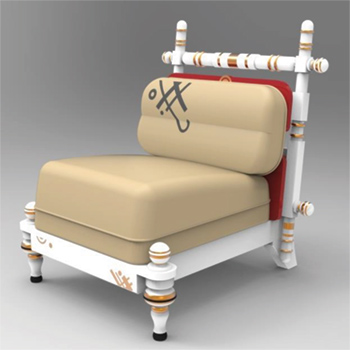
Design of Contemporary furniture range inspired from the Traditional Sankheda Craft
by Dattaram Chari
by Dattaram Chari
India has been a powerhouse for vast cultural and ethnic diversity and craft. This has enabled a variety of motifs, techniques and crafts to flourish in various parts of this land. Wood craft has been one of the integral part of the rich tradition of handicrafts in India. The hallmark of Indian wooden furniture has always been durability, ethnic flavor, elegance and design, attractive colors, unmatched workmanship and subtle elegance. Even today the traditional Indian craftsmen use the simplest of the tools and adhere to their style of their forefathers which has helped to keep the traditions alive. Today craftsmen are engaged in making furniture, products for everyday use, toys and decorative items that are in demand in the market. One such work is Sankheda wood craft in Gujarat wherein the artist put forth their ideas about mythology, emotions in their work which is losing its potential market. As an Industrial design student the area of work i have dealt in this project is to understand the particular wood craft furniture, understand the artisan issues, and explore various possibilities & ideas to reposition the craft in a higher segment of market.
Details >>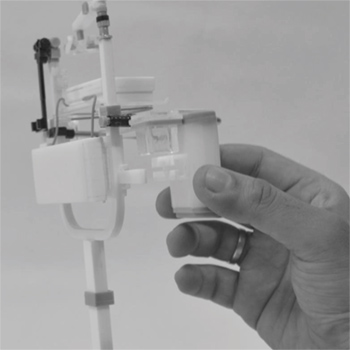
Design of an user friendly ECG System
by Dattaram Chari
by Dattaram Chari
ECG , Electrocardiograph has become a routine part of any complete medical evaluation .The ECG waveform allows one to infer information about electrical activity associated with different aspects of a heart beat and is therefore of particular value for assessing an individual’s cardiac rhythm and heart health. In this project, an approach of systematic redesign of the ECG is done to obtain the desired results at conceptual levels. The project aims at intervention in areas of product usability redesigning an easy to use, cost effective aid and system to record the heart activities and make the process of ECG recording less cumbersome. Although products which help in ECG monitoring do already exist in the market, this project differentiates itself from other products by being better at user centric design aspect and by being affordable on a slighter note. I have tried to come up with a better model considering the findings & observations made during the project duration. The project report discuss on the existing user related problems in ECG recording and then derive to the research and redesign of the product.
Details >>
Imagery from Nature on Ceramics
by Gaurav Vaidya
by Gaurav Vaidya
The motivation behind choosing ceramics for this project was to understand the medium and play with it to explore various techniques while working. The journey of this project helped me learn different stages involved in ceramic tile making. The theme of the design research seminar is Imagery from nature on ceramics. This involved observing the beauty in nature around us, looking at the minute details which makes it alluring and depicting the essence of it on ceramic tiles in the form of visual images. Working in ceramic studio and making tiles with hands was a major part of this project. A disciplined rou - tine in working allowed me to understand the nature of clay and its behavior in different stages.
Details >>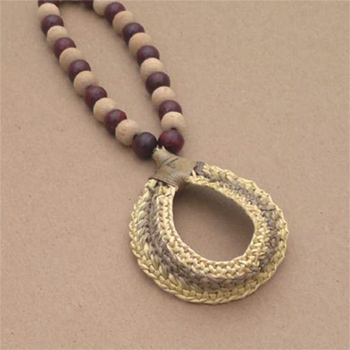
Dhokra Casting: A Traditional Tribal Craft of Jharkhand
by Gaurav Vaidya
by Gaurav Vaidya
My internship happened in two parts. First part was to
observe and understand the things and the second part was hands on exprience with different materials. Both the parts were done in completely different environments.
In my first part of internship, through Tata Centre at IIT Bombay, I got a chance to visit MIT Cambridge, Massachusetts. A group of 20 students from IIT Bombay went there to see the problem solving approach and research methodology followed at MIT. There we observed the institute’s working culture, different lab facilities, presentation techniques etc. We also interacted with faculties, students and entrepreneurs.
One more important feature of the first part was that I got a chance to visit different museums like Museum of Modern Arts, NY and Museum of Fine Arts, Boston where I could see works of well known artist, product designers, graphic designers. And of course, the fun part like visiting places like Times Square, the Statue of Liberty, World Trade Centre, Central Park, Rockefeller Centre etc.To explore newer frontiers of design I was unfilmiliar with,in second part of internship I chose to work in a completely new environment rather than mainstream production and industry. To explore crafts, I went to Shantiniketan, Bolpur in West Bengal. Who would know the traditional crafts and art in Shantiniketan region better than an artist, Mr. Bidyut Roy who has spent more than 30 years of his life in Shantiniketan. I feel fortunate to stay with him and understand his philosophy and his views on different issues.During the second part, I explored various things and worked with different materials but majority of my time I spent on Dhokra Casting which is a traditional craft of Jharkhand. Within one mont of my summer internship, I could experiance and explore people, their life, style, food, culture from different places like New York, Boston, Shantiniketan (W.B.) and tribal villages in Jharkhand.
Details >>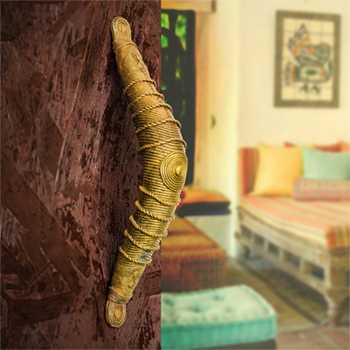
Enhancing Livelihood Possibilities Of Dokra Craftsmen Through Their Craft: Redesign Of Dokra Door Handles
by Gaurav Vaidya
by Gaurav Vaidya
In my Design Project 1, I had experienced the traditional technique of dokra casting by doing it myself, from the initial stage to making the final finished product, with the help of traditional craftsmen in one of the tribal areas of Jharkhand. Design Project II is a continuation from Project 1, and it involves making aesthetically pleasing objects that will also find use in day-to-day life rather than being just decorative pieces. These products will not only be visually appealing, but they will also serve the functional purpose for which they are intended. These everyday utility products will invoke sensitivity about craft, its rich background, and inherited tradition in the minds of people seeing or using them. Working with dokra craftsmen has been a major part of this project, where I experienced the pleasure of making my own metal objects that can actually be used. While exploring the methods and techniques to make quality articles, I also thought of how making such usable metal articles would be easy and beneficial to the craftsmen in the villages to earn a better livelihood. This report outlines the detailed design process being followed while creating a range of Dokra door handles.
Details >>
Design of Cookware for residential Rice Cooking application using Steam from Solar Steam Generator
by Gaurav Vaidya
by Gaurav Vaidya
Solar energy is a clean and abundant source of energy. This energy is utilised for many applications, and cooking is one of them. There are various types of solar cookers available on the market, but they are not that efficient. Each one has its pros and cons. For using currently available solar cookers, users need to have an open space where they will get an ample amount of continuous sunlight. They also need to track the sun all day. The whole process of cooking takes place outside the kitchen, and it is a very slow and cumbersome process. This project is an attempt to make the whole cooking activity quick, easy, and inside the kitchen while using steam generated from solar energy for a single home's usage. The cost-effective steam generation technology developed by Heat Pump Lab and the Mechanical Department (IITB) is used, and the product that uses this steam is designed during this project. The 7Cs of innovation, as guided by Prof. B. K. Chakravarthy, were the design methodology adopted for the project. This report outlines the detailed design process followed during the project.
Details >>
Ema Keithel : The mothers’ market
by Hirom Ulemba Meetei
by Hirom Ulemba Meetei
Broadly speaking , a market can represents many things. When we are young we grew up learning market is a place where selling and buying happened . But as time passed by, it started revealing its own nature of relationship between people and its surrounding, and also behaviour and attitude toward the society. Thus, marketplace literally become a storyteller of that particular society. Yes, In this project, I’m trying to find out what Ema market actually tell us . Ema in manipur means “mother”, named as mother market, this market has been providing livelihood for the entire Manipur from generation to generation. Being run only by the women , this market has perform a significant role in empowering the women in the Manipur society. Its traditional and culture bonding with people have make this market one of the biggest market of its own kind in the entire country The project mainly focus on the daily activity of the women and their perspective of the market. It also try to cover some of the untold story of the women whose unbeatable power in bringing up their family .
Details >>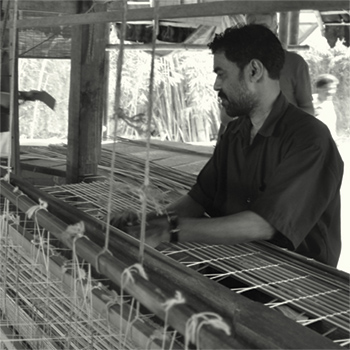
Summer Internship at Uravu
by Hirom Ulemba Meetei
by Hirom Ulemba Meetei
“URAVU” is a network of community based, non[1]profit organisation spread out in Wayanad district, Kerala state, South India. It works close with people, governments and business organisation for the implementation of sustainable development in local areas. Built with five main core branches , namely - Uravu indigenous science and technology study centre - Bamboo Nursery Unit - Uravu Eco Links Ltd - Bamboo Grove Project - Uravu bamboo village . This organisation is trying to improved the product and process development in bamboo handicrafts, furniture making and bamboo construction .It also helps in enhancing local skill and processing technique in handicraft and structural application of bamboo. Large number of their works include promoting community-led eco-tourism and local craftsmanship through local materials like bamboo and jute. The whole purpose of the study can be divided into two parts, the internship part which mainly focus on the product development for Uravu and its associated units .Then workshop part , a bamboo workshop which aims on developing structural application of bamboo on housing and furniture design for rural and tribal areas .
Details >>
Redesigning Deployable Mosquito Net Structure For Tribal Settlement
by Hirom Ulemba Meetei
by Hirom Ulemba Meetei
Malaria is always been a life-threatening disease from the time it has been known. Probably it’s one of our oldest enemy of all time, taking more human-life than any other disease. Each year millions of people died and around half the population of the world is put in risk due to this dreadful disease. Sub-Saharan Africa being the highest affected region followed by Southeast Asia and others, this disease spreads all over the world. In India itself, every year, thousands of people lost their life and another million were still living under the burden of this disease, with most of the case coming from rural areas (especially the tribal areas). Though we have known how to cure malaria from the beginning, it got an entirely different story in most of the tribal inhibited areas, often a darker one. It has been reported that 30% of the total cases in India come from this regions. Apart from poverty, poor health facilities and lack of proper education, the tribal regions are most of time isolated from the mainstream not only geographically but also socioculturally. Despite taking measures to prevent malaria including mosquito nets and other programs, the cultural barriers make it difficult to control the same. To understand the problems more critically, a Abstract field trip was planned with the help of SEARCH organization and visited different villages in Gadchiroli, Maharashtra. One of the most important issue which come out from this study was the lack of seriousness about this disease in those areas. When further research is done, it opened up to many issues from economical to educational to cultural. But as part of this project, the focus is put only into the specific problems related with usages of mosquito net in this area. In the early stage, the project try to question the most common attitude of people toward the difficulties of not using the mosquito net, which were given to them through government. It also try to critically analyze the problem from the lens of cultural obstacles, the climatic hindrances and the typology of the houses toward this behavior . In the later section of the project, the issues is taken up to a design level problem and try to solve using different design approaches and methods. This includes mind- mapping, ideation, concept generation system design etc. Finally, as a deliverable of the project a deployable mosquito net structure named “Kavach” is created, which can be easily made by the local people, using locally available materials with minimum cost.
Details >>
Domestic Poultry Incubator for micro-poultry farming
by Hirom Ulemba Meetei
by Hirom Ulemba Meetei
Although India is one of the major countries in poultry production, it has not been able to meet the increasing demands of the nation completely. In many cases, this has led the poultry industry to use artificial drugs and steroid for faster growth. Hence people are diverting to healthier options such as organic eggs and chicken. This opens up an opportunity for rural areas to critically look at their methods of backyard poultry farming, which they have been following from ages. The project mainly aims at uplifting the socio-economic status of the villager through self employment. It focuses on putting relevant technology and design intervention in developing a sustainable poultry incubator which would be less dependent on electricity. The early phase of the project mainly includes addressing the problems in rural context , a research on various available incubator and the different technology which are used This is supported by a field study to Central Poultry Development Organization, Aarey colony Mumbai. In the later stage of the project, the concept is further narrow down with the help of various design method including brainstorming, idea sketching , concept evaluation , mock up model user feedbacks etc. Finally as a deliverable of the project a concept of modular domestic incubator which have a hybrid power system with both solar energy and electricity is suggested with a f maximum of 96 eggs capacity . A simple business module is also suggested which complement the idea of micro-poultry farming in community level.
Details >>
Design Thinking: Collection & Review of literature on design thinking for students of management studies
by Pai Sanket Satish
by Pai Sanket Satish
Design thinking has become a buzzword in most organisations and institutions over the past decade. This has given rise to multiple educational institues of various domains incorporating design thinking in their curriculum. This project examines some of the design thinking courses available to management students across the world. This study has led to generation of structure for an ideal design thinking course for management students.
Details >>
Internship at IN2 ON2 Food and Hospitality Pvt. Ltd
by Pai Sanket Satish
by Pai Sanket Satish
There has been a spate of ice cream centres blooming in major metro cities in India this year. The most interesting thing about some of these shops is that they use liquid nitrogen to create ice cream almost instantly in front of the customer. However, all these places, including the ones abroad, directly pour nitrogen in the mix used to prepare ice cream. We wanted to create a product which would do everything that these people do, while using indirect cooling. This project documents my summer internship with IN2 ON2 Food and Hospitality Pvt. Ltd where we tried to create this innovative product.
Details >>
Design for elderly: For safer and easier cooking
by Pai Sanket Satish
by Pai Sanket Satish
The ageing population of the world has seen an upward trend over the last two decades along with tendency of independent living by the elderly. Currently efforts are being made to create comfortable and safer housing environment for the elderly. However the kitchen still remains as the most neglected area in terms of redesign. This project tries to focus on the kitchen as the independent living facility in order to make cooking easier and safer focusing more on the women elderly population. The project started with primary and secondary study, leading to multiple insights in areas of mobility, posture, while using tools and consideration for user reach. These insights were then used to derive features and to come up with designs specifically for the food preparation area. The final design was developed after creating a test rig to check required heights for different activities.
Details >>
Design of a surgeon friendly laparoscopic device for electrosurgery procedures
by Pai Sanket Satish
by Pai Sanket Satish
A laparoscopic surgery is a minimally invasive surgery where the surgeon creates small incisions on patient’s body in order to insert instruments and a light with a camera to perform surgical procedures. Even though this surgery results in quicker recovery time and lesser pain for the patients, it is highly demanding for the surgeons. Since the operations lasts for hours, there is a need to design and develop devices which minimize the surgeons discomfort while enhancing the usability. This project is an attempt to design such a device for the procedure of cutting and coagulating tissues during laparoscopic surgery. After constant trials and multiple mock up prototypes, the device is designed to gently grip the hand and uses flexible linkages to provide comfort to use, ease of assembly and maintenance.
Details >>
Multi-sensorial perception & Design
by Patric john
by Patric john
An object is never identified as the object at the fraction of the second. It would take, a few milli seconds for the brain to read the signals from eyes, ears or other sensory organs to sense and perceive it as an object. Depending upon the complexity of the object or its features, the time taken by brain can vary to perceive and understand. Design is a domain in which perception is much considerable and influential. In this Design Research Seminar i am curious to know about, how senses works & how perception matters in design. What are the elements or factors among senses and sensation which affects the perception.? The focus area of the project is to know about multi-sensorial perception in the framework of design. How a design with multi-sensorial (catering to more than one sense) perception, is different from a design which is single-sensorial (catering to only one sense). Can multi-sensorial design bring more value to a product? What are the possibilities and limitations of multi-sensorial perception in Design.
Details >>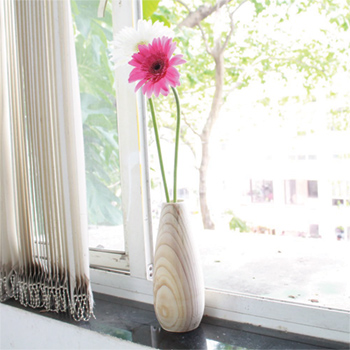
Learning Woodwork
by Patric john
by Patric john
This report is part of Project I-summer internship in Silpa-sadana, Sriniketan. The duration of summer internship was around 1 month. The objective of the internship is to learn something new which supports my design knowledge and to apply what i have learned in the field of design. I worked in wood and learned the basics of wood working. I was also able to learn about wood and the hand tools for woodworking which helped me alot in learning woodworking. I focused a bit more on turning wood. I made a few flower vases and some other products. Well after one month of summer internship the experiences which I gained through it helped me to create a better sense towards crafts and design. Also the learning about the wood and understanding about other crafts in Silpa-sadana was very useful and informative. I further look forward in continuing woodworking and would suggest anyone in design/arts/architecture field to have a first hand experience in crafts from this place.
Details >>
Design of Food Kiosk for street vending: Urban Indian scenario
by Patric john
by Patric john
With over 1.2 billion people of various beliefs, religious practices, life styles, and cultures, India is the seventh-largest country by area and the second-most populous country. Urban India is a place where you can see and experience this diversity and variety. The project aims to design a food kiosk that will cater to these urban areas. Today, street foods have inseparably become part of urban culture. Due to the huge population and diversity of the urban population, even the street foods evolved and multiplied over time. Today, a large variety of traditional street foods and modern street food items are available. In this project, I attempted to look at these street foods as well as the various interconnected elements and stakeholders in the system and come up with a solution: a kiosk that could cater to a segment of street foods and vendors, thereby supporting and enhancing their business potential. The project also looks at a plan or strategy that would complement each stakeholder in this system and enable it to go forward in a better way.
Details >>
Design of Teaching-Learning Aids for Blind Children
by Patric john
by Patric john
A project which started with an objective of “Design Intervention for the blind”, progressed and specified with the objective “Help with design , the blind children to learn/make them teach about geometry in Mathematics”. This project investigates the existing/ current scenario and comes up with a few ideas which would help the blind children to learn about particular concepts of Geometry in maths. The project initially started with study about blind and other related issues of being blind. With the help of two organizations which help and support the blind, the direction was chosen and focus area was determined. Problem solving was one of the major priorities of the project which remained since ideation and progressed along with conceptualization and evaluation.
Details >>
Data generative art installation
by Shashank Gautam
by Shashank Gautam
How can we create a space more experiential using generative art? The aim of the research is to implement a data generative art installation by integrating a physical space with technology where people can come and be a part of that space, the sense of inclusiveness and engagement will create an emotional experience . We targeted to make mundane space more happening , and to reduce gap between physical world and digital world by giving an immersive experience to user.
Details >>
Internship At Uravu
by Shashank Gautam
by Shashank Gautam
Bamboo has a long and well-established tradition as a craft and building material throughout the world’s trophical and sub-trophical regions. It is widely used as a material for many forms of products and construction, in particular for traditional art and craft in rural areas. Bamboo is a renewable and versatile resource, characterized by high strength and low weight, and is easily worked using simple roots. It is widely recognized as one of the most important non-timber forest resources due to the high socio economic benefits from bamboo based products. It is estimated that there are 1200 species growing in about 14.5 million hectares area. Most of them grow in Asia, Africa and Latin America. And India is the second largest producer of Bamboo.
Details >>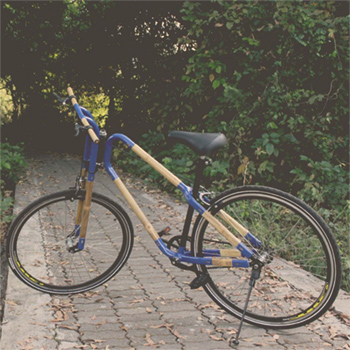
Use Of Bamboo In Bicycle
by Shashank Gautam
by Shashank Gautam
Bamboo has a long and well-established tradition as a craft and building material throughout the world’s trophical and sub-trophical regions. It is widely used as a material for many forms of products and construction, in particular for traditional art and craft in rural areas. Bamboo is a renewable and versatile resource, characterized by high strength and low weight, and is easily worked using simple roots. It is widely recognized as one of the most important non-timber forest resources due to the high socio economic benefits from bamboo based products. It is estimated that there are 1200 species growing in about 14.5 million hectares area. Most of them grow in Asia, Africa and Latin America. And India is the second largest producer of Bamboo.(National Mission on Bamboo Corporation, 2015). Bamboo is one of the strane species of grass which nature endows. The mechanical properties of bamboo is unbelievable. Bamboo has been in wide usage since ancient times as a low cost material for houses, bridges etc.
Details >>
Climate Responsive Building Facade
by Shashank Gautam
by Shashank Gautam
The project investigates responsive building facade systems that adapt to the dynamic environmental conditions to regulate the internal conditions in a habitable space over different periods of time by exhibiting a state of motion and dynamism. Heat, Light and wind are the primary parameters for regulation, leading to energy efficiency and dynamic spatial effects. Passive and active skins using pneumatic actuators are developed through investigations of smart systems that integrate smart materials and smart geometries. The precedents in this domain have rarely dealt with individually controlled multiple parameters of heat and light in a single system, which is attempted in this project.
Details >>
Idital - Digitization of tribal script, Sora Sompeng
by Sony Salma Priyadarshini
by Sony Salma Priyadarshini
Sora Sompeng is the script of Sauras, a tribal group predominant in Odisha and Andhra Pradesh. Saura mostly uses Odia and Telugu to write their language. This has pushed Sora to the verge of extinction. Recently, a growth of interest in Sora Sompeng shows that there is a scope for reviving and digitizing the script. This project is an effort to analyse and understand Sora Sompeng in order to make a suitable typeface for the script. The focus was to understand aspects of the script, its visual features and the design decisions taken towards achieving this.
Details >>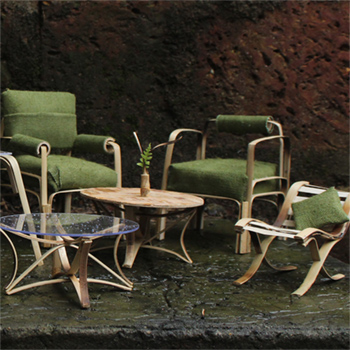
Summer Internship At Uravu
by Sony Salma Priyadarshini
by Sony Salma Priyadarshini
The core idea that led to the formation of Uravu Trust in 1996 was revitalizing indigenous knowledges and upgrading productive skills of people were essential for ensuring sustainable development of rural areas. The trust’s activities were borne out of the realization that ensuring access to resources- natural resources used as raw materials for production; appropriate skills and technologies; finance and markets etc- was essential for overall development of marginalized social groups. The key objective of the organization is to improve livelihood sustenance of women & marginalized people through sustainable entrepreneurship.
Details >>
Cutlery Explorations using coconut shell
by Sony Salma Priyadarshini
by Sony Salma Priyadarshini
Coconut palm tree is one of the most valuable natural resources. It is called ‘Kalpavriksha’ meaning wish-fulfilling divine tree. It is because almost every part of the tree is used in some or the other way. Coconut shell has always been used as a cooking fuel and to make small multiple[1]utility bowls or serving spoons with simple bamboo joinery. Coconut Shell has remarkable properties such as strength, hardness, durability and resistance to fungal attack. These properties can be used to make products of different varieties and it has a huge scope in market. The project aims to change the perception of coconut shell to something that could be used creatively and aesthetically as a lifestyle accessory espousing crafts, craftsmanship and related livelihood. An in-depth study of coconut shell such as its anatomy, structure, composition, patterns and texture was done. Not only this, the variety of cuts to produce different forms was also looked into. Understanding appropriate and relevant tools to work with shell was one of the crucial parts of the project. This led to discovering new tools that could be used. Example of one such tool is the ordinary wire brush that could be mounted in the drilling machine to clean the insides of the shell. Prior to this, cleaning the insides of shell was done manually which was took more effort and was time consuming. After an initial phase of exploring possible product range, cutlery (ladles and spoons) was chosen for further exploration. Study of available cutlery, its anatomy, proportions and usage was done. Since the shell is Abstract hard, quick and dirty mock-ups were done through soft prototyping. In this, plastic balls were used in place of coconut shell. Similarly, other materials such as PVC pipes, styrene, soft aluminum etc. were also used. Joinery details to improve stability, strength and to enhance aesthetics of the product were tried out. Various mock-ups were made and the desired ones were selected to be developed with coconut shell. The process then focused on combining the shell with other materials such as bamboo, wood, steel, brass and aluminum for material exploration. The explorations fell in these categories: 1) Combing shell with natural materials such as wood, bamboo, cane etc. 2) Combining shell with industrial material such as steel, brass, aluminum etc. 3) Combining shell with both natural and industrial materials etc. We went ahead with the third category because it was a new area where industry and craft could come together. Three materials—coconut shell, aluminum wires and bamboo were used. Jigs were designed for easy production and replication of different parts in less time. As part of the final deliverable a range of a family of ladles was proposed. Branding and logo details were done to complement the product. ‘Utsavam’ which means celebration chosen as the name of the product range. This was to imbibe the celebratory nature of the product.
Details >>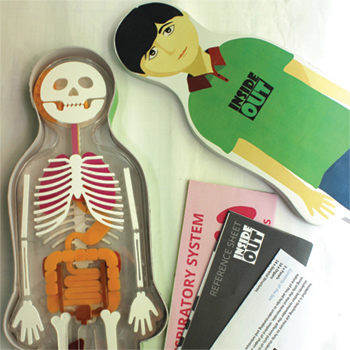
Interactive methods to teach human anatomy
by Sony Salma Priyadarshini
by Sony Salma Priyadarshini
The primary objective of the project is to provide a means to educate small children about the human anatomy in a fun and engaging way. Understanding human anatomy and physiology consists of major part of learning biology. Unlike subjects such as maths and physics, biology needs a larger part to be understood and memorised. The subject gets complicated further as the student goes to higher classes. Unless the students have a strong grasp of basics, they tend to lose interest in the subject. Anatomy is linked with many other fields of study such as nutrition, keep good health, hygiene, physical education, sports etc. Understanding anatomy leads to clarity in other areas. Since most of the available materials are basically instructional, the project aims to facilitate the foundational learning of basic anatomical concepts in an alternative way where the child “learns through playing”. The final product had a kit which contained the different systems of human body in a simplified form in layers. This kit can not only be for demonstration school but also as an examination tool. The design was scalable in sense that more layers of other systems could be added if wanted. The product is affordable, simple and child-friendly.
Details >>
Visual Ethnography: KOLAM
by Shreelekha Lakshmipathy
by Shreelekha Lakshmipathy
Ethnography is a collection of qualitative methods used in the social sciences that focus on the close observation of social practices and interactions. These qualitative methods enable the researcher to interpret and build theories about how and why a social process occurs. They are particularly useful for elucidating the steps of processes that have not been well understood, and to create rich descriptions of people’s experiences. Qualitative research tends to be inductive and hypothesis-generating; that is, it helps the researcher make educated guesses about how or why a process happens. Quantitative research, on the other hand, tends to be deductive and hypothesis-testing; it helps the researcher determine how true such an educated guess is across a population. Ethnography’s unique contribution to qualitative methods is that it deeply examines the context in which activities occur, usually involving work by the researcher with participants as they go about their daily lives. An ethnographer also describes a situation by asking multiple people about an event, or by analysing multiple types of documentation, such as policies or historical records. In this way, ethnography allows the researcher to make fine distinctions and see ambiguities in the way a situation is interpreted.
Details >>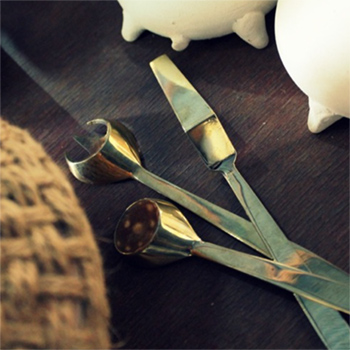
Report on Khamir, Reha & IDC
by Shreelekha Lakshmipathy
by Shreelekha Lakshmipathy
Khamir in Kukma district of Kachch is a platform for the crafts, heritage and cultural ecology of the Kachchh region of Gujarat. Instituted after the earthquake of 2001, it is a space for artisans, resource groups and institutions, buyers, suppliers and craft lovers from around the world to gather under one roof to exchange ideas, collaborate and learn. It works to strengthen and promote the rich artisanal traditions of Kachchh district. The name Khamir stands for Kachchh Heritage, Art, Music, Information and Resources..Born in 2005, it serves as a platform for the promotion of traditional handicrafts and allied cultural practices, the processes involved in their creation, and the preservation of culture, community and local environments. Their main aim is to shift consumer perspectives and raise the cultural value placed on crafts.
Details >>
DIY furniture using Bamboo
by Shreelekha Lakshmipathy
by Shreelekha Lakshmipathy
To design a Furniture system using Bamboo with post modern approach using bamboo poles and joineries that could be assembled by the user post an online purchase. Called Underconstruction, the system includes two different joints that can be used to build and configure tables, coat pegs and storage rails with bamboo poles. Exactly what they end up being used for is down to the needs and imagination of the customer, but almost anything is possible due to the system of a basic frame and accessories that can be added or removed as necessary.The collection has taken a different approach to furniture design; rather than provide a fixed solution to a given functional requirement, this is instead a toolkit that can be adapted to any eventuality. Key to this system are the removable accessories that have been made from a mix of materials – metal mesh, Bamboo weaves – so if your furniture needs an extra surface, it can be added. This project is also a manifestation of an experimentation with materials and how these can be distanced from their common assumptions and be placed in new contexts, where the goal was to combine bamboo and plastic within a functional structure by looking for the most suitable form and state of plastic in order to make it utile. The number of different components is kept to a minimum and the various pieces within the series are easy to assemble, requiring no specific tools. The design comprises of a series of lightweight pieces that aim to both change existing perceptions of bamboo(from a 'ecoresort'y, touristy, crafty product to a everyday product that fits into a contemporary lifestyle setting) and rekindle interest in the traditional material and its various possibilities by the design boasting exposed joinery and bold bursts of vibrant color. Adding weaved baskets and other details blend the concept of Furniture and ‘miscellaneous interior goods thereby including craftmanship, a major aspect related to the material which would bring in the ‘Bambooness’ into the product. The collection includes side table, console table and hang rack and majorly focuses on a minimalist, airy design.
Details >>
Experiencing Materials - Concrete
by Shreelekha Lakshmipathy
by Shreelekha Lakshmipathy
We like to define historic eras based on the materials that were prevalent at the time, as in ‘Stone Age’, ‘Bronze Age’, ‘Iron Age’ and so on, because they define our relationship with the physical world. This project, at the outset, states the importance of materials in our world and identifies the softer aspect of the materials - its Character, its Personality, its Association, its Story and continues to showcase the material and design innovations that drive us to the future. The project then moves into choosing a particular material - CONCRETE, the second most used material on the earth after water. The project identifies the image of the material and continues into exploring the possibilities of the material in the area of Product Design.
Details >>
Expression of forms
by Sridhar Geddala
by Sridhar Geddala
Every product has its own expression, which comes from the visual details the designer include in the product. Most of them are intentional and some are functional. Though expression is subjective, we can clearly classify products under different expressions. One of those classification is done by Prof. A G Rao(IDC, IIT Bombay). This project try to dissect these expressions using eye tracking as a tool. Though the project focussed on the primary analysis like fixation points and gaze time, a detailed analysis of the eyetracking data is give at the end for one expression(soft).
Details >>
Leather Craft - Santiniketan Leather Products
by Sridhar Geddala
by Sridhar Geddala
Leather or leather products are sophisticated, symbol of luxury and brings lots of character to the object. Shilpasadan a department under Visva Bharati which is pioneering institute in teaching crafts and design train students the necessary skills needed to make and create traditional leather products. The place is known for inception for many techniques in leather craft. Batik work, block embossing, tooling work, understanding leather are some of the learnings during the internship period. Apart from being a place where craft and craftsman are immensely respected the place teaches simple and humble lifestyle.
Details >>
Interactive Device For Schools Redesigning of Clicker System
by Sridhar Geddala
by Sridhar Geddala
Failing in exams, unable to understand the concepts taught in class and psychological or health related issues are some of the reasons that keeps some students from backward classes from education. This project focuses on designing a product that will assist students in their learning , such that the dropouts will be reduced. After visits to schools (like KV IIT Bombay , IIT campus school, Aarambh Organisation for kids) and discussions with teachers it was found "Lack of interaction” could be one of the major reason for not understanding or showing less interest in the class. K-YAN and STUDENTS RESPONSE SYSTEM or CLICKERS are two Interactive products available in the market (K- Yan allows teachers to interactively display information to a whole class and CLICKERS is an interactive technology that enables instructors to pose questions to students and immediately collect and view the responses of the entire class). After understanding both the systems, how they work and their advantages in classroom , Redesigning clickers for schools is taken forward . Some major problems with current clickers system is -expensive, complicated, whole system is fixed to one class and requires internet connection. The brief was to design a simple, economical and yet maintaining the core advantages of the system. Alternative technologies are considered where ever it is necessary so that whole system can be low cost, mass manufacturable and mobile . The final concept is a system with a led display board and a set of clickers. The display board is to show the timer and histogram of the results and clickers to communicate the answers.when the teacher writes the Question on the board and starts the timer, students respond with their clickers before the timer stops and the results are displayed on the LED screen subsequently. The whole system is proposed to cost much lesser than the existing solutions.
Details >>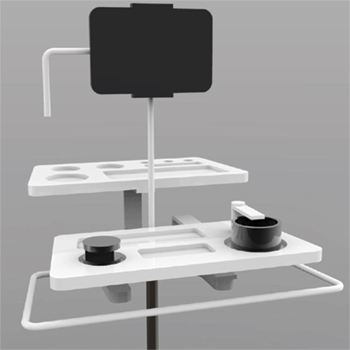
Surgeon Friendly Biopsy Device And Tissue Collection Device For Cancer Diagnosis
by Sridhar Geddala
by Sridhar Geddala
Failing in exams, unable to understand the concepts taught in class and psychological or health related issues are some of the reasons that keeps some students from backward classes from education. This project focuses on designing a product that will assist students in their learning , such that the dropouts will be reduced. After visits to schools (like KV IIT Bombay , IIT campus school, Aarambh Organisation for kids) and discussions with teachers it was found "Lack of interaction” could be one of the major reason for not understanding or showing less interest in the class. K-YAN and STUDENTS RESPONSE SYSTEM or CLICKERS are two Interactive products available in the market (K- Yan allows teachers to interactively display information to a whole class and CLICKERS is an interactive technology that enables instructors to pose questions to students and immediately collect and view the responses of the entire class). After understanding both the systems, how they work and their advantages in classroom , Redesigning clickers for schools is taken forward . Some major problems with current clickers system is -expensive, complicated, whole system is fixed to one class and requires internet connection. The brief was to design a simple, economical and yet maintaining the core advantages of the system. Alternative technologies are considered where ever it is necessary so that whole system can be low cost, mass manufacturable and mobile . The final concept is a system with a led display board and a set of clickers. The display board is to show the timer and histogram of the results and clickers to communicate the answers.when the teacher writes the Question on the board and starts the timer, students respond with their clickers before the timer stops and the results are displayed on the LED screen subsequently. The whole system is proposed to cost much lesser than the existing solutions.
Details >>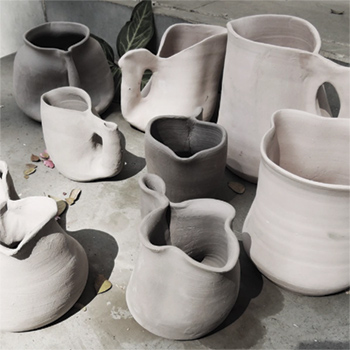
Nature in Ceramics - Pottery exploration on wheel
by Vishal Bhushan Jha
by Vishal Bhushan Jha
Traditional wheel pottery is one of the oldest form of arts. It has so many possibilities that in the past 10000 years or so of history, infinite forms and experimentations have been done on it and even now new outcomes keep coming. There is immense possibility of creating something new every time with pottery. This project is my attempt to create interesting fluid forms in ceramics inspired from Nature. The main goal here is to create interesting contemporary forms while maintaining the formal sophistication of wheel pottery “Fursat”, A beautiful Urdu word which means disengagement is something missing in the industrial design scenario currently. We are very requirement oriented people worrying about th project goals and outcomes, always eager to tick the checklist, trying to finish the task. Though trying to maintain quality and perfection this over engagement and level achieving attitude often leads to designer’s soul getting lost in process. Fursat on the other hand is disengagement and more or less is prevalent in an artists work. An artist usually works more on intuitions and less on logic. The reason also might be that there is not much of questioning in an art work about why the artist did a particular thing and why not something else. Also there are several interpretations of some work. This project was an attempt towards an open ended exploration in pottery. There was no set objectives to reach which gave way to more of explorations for own satisfaction and less of doing something for finishing it.
Details >>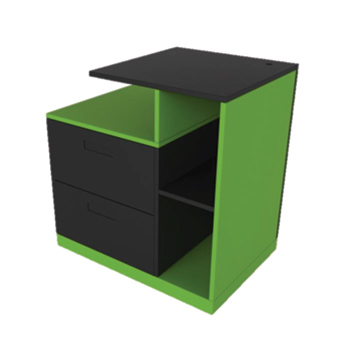
Summer Internship at Godrej interio
by Vishal Bhushan Jha
by Vishal Bhushan Jha
Tata Centre for technology and Design is an organization initiated by Tata trust to promote design for bottom of pyramid in Developing countries. The centre has chapters at MIT Boston and IIT bombay and the fellows and research scholars at each college work in various fields related to bottom of pyramid some of them being Housing, healthcare, Education, Power and Energy etc. The trip of Tata fellows to MIT was organized to facilitate mutual learning, wider exposure to international research methodologies and contact building. Tata fellows spent 1 week at MIT getting exposed to various projects done at MIT and India. Also I took this oppurtunity to visit all the famous buildings of boston and also Museum of fine arts boston which has Americas largest artwork collection. After MIT I extended my trip by further 4 days to explore architecture, art and design scene of New York. In New york I visited MOMA, American Museum of Modern Arts, American museum of natural History and street artist at Times square.
Details >>
Design of Furniture Systems for Affordable Housing-Fitting more in Volume
by Vishal Bhushan Jha
by Vishal Bhushan Jha
The title of this project is Furniture System Design for Affordable Volumetric Housing. There is a huge shortage of housing in urban areas, mainly because of a shortage of land and the very high prices of the land that exists. As a result, slums are springing up in cities to house the large number of immigrants who are flocking to those areas. To overcome the housing shortage and provide good living conditions in a lesser area, "Affordable Housing: Fitting More Into Volume" was a project carried out from July 2014–November 2014 by 3 IDC students: Manu Revi, Gautham Varma, and Anulal. The project dealt with the creation of spaces by utilising volume, going vertical, and giving exact headroom as required. Based on these studies, the minimum space required for a family of six was calculated, and different layouts were made for the same. Many places' building codes may prohibit a permanent mezzanine structure in a small house. Thus, if the furniture makes the mezzanine floor, it will not be considered an additional floor, thus qualifying for stricter bylaws. For the current project of Furniture System Design for Volumetric Housing, the basic concepts of spaces arranged in volumes, listing of heights, and accommodating six people are taken from a previous project. On the basis of the previous project and the current study of slums and sheet metal working, new layouts were made, keeping in mind flexibility in layout and optimal utilisation of spaces. The layouts created allowed various possibilities for arrangements with the same components. Then the furniture is detailed with three approaches: wall-fixed furniture, floor-standing furniture, and a central core supporting all furniture. Throughout the project, the most important factor that was kept in mind was whether it could be DIY, incremental, economical, and space-saving. At many places, the weight of components and materials was also considered as it was a DIY assembly and needed to be light to be easily handled.
Details >>
Arsenic Water Filter for Domestic Usage
by Vishal Bhushan Jha
by Vishal Bhushan Jha
Arsenic poisoning due to underground water is a big health concern in India, especially in the states of Uttar Pradesh, Bihar, Jharkhand, West Bengal, Assam and Manipur. These are the states with few of the lowest literacy rates, High population, considerably high water table and are economically backward. Also these are the states with irregular to no electricity in many villages and remote areas. The main objective of this this project is to develop an Arsenic water filter without using power supply is necessary. Also Arsenic contaminated water is not visually contaminated and most of the people don’t know about it hence awareness of arsenic poisoning among people is necessary. The main challenge in this project is to make a product which will filter water and will actually be used by the people of the region. Form factor, visual presentation, handling, Usage, Cleaning, Economics and Durability are main considering factors for design.
Details >>