Product Design
Batch 2015-2017
(55 items)
Product DesignBatch 2015-2017
(55 items)
(55 items)

Comparative Analysis between Design Education of Germany and India
by Anirban Maiti
by Anirban Maiti
This is a quantitative content analysis research-based project to look into the course curriculum of several famous design institutions from two countries: India, the fastest growing country, and Germany, the most developed country, and how they are very different in the principles and focus of the education system with respect to background history and the present political and socio-economic situation. After this, synergy between these countries will be discussed, and accordingly, the paper will conclude with relevant inferences from the experiment.
Details >>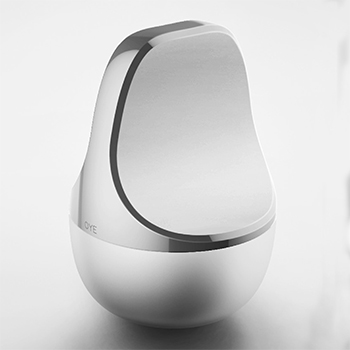
Summer Internship at TEQZO
by Anirban Maiti
by Anirban Maiti
The design of a ceiling fan for AARNA within the given domain with minimal change in the process line to create a new aesthetic style to revive their position in the current competitive market.
Details >>
Smart Kitchen Appliance
by Anirban Maiti
Details >>
by Anirban Maiti
In the coming days, spaces will be very costly. For that reason, size(area) for homes will be lesser and lesser day by day. From this point of view, people will start reducing spaces in toilets, bathrooms, kitchens, balconies, and other secondary spaces after having the minimum primary spaces for bedrooms, living rooms, etc., and that is how Open Kitchen evolved.
And if we see any kitchen in a modern house, there will be lots of electronic gadgets for saving time, space, and further maintenance costs. But as the space in the kitchen area is reducing day by day, people will need some smart and multipurpose kitchen devices that will act more efficiently, save spaces, and keep the kitchen clean.

Drowsiness Prevention System
by Anirban Maiti
Details >>
by Anirban Maiti
Many drivers know this scary situation: on long highway drives, attention drops instantly. Due to many reasons, the driver gets tired and can't resist sleeping on the wheel. Those sleep-related fatigue issues can be monitored easily, and there is a huge opportunity to save thousands of lives from highway accidents, especially at night time.
In India, drowsiness is one of the major reasons behind accidents like drunk driving. So, it is an important field to work on and come up with non-intrusive solutions with less cognitive load.

Armature design for animatronics and stop motion animation
by Ankur Rawal
Details >>
by Ankur Rawal
Animatronics originates from the words anima and electronics. Anima means to animate, while electronics provides the control parameters for the movements. Animatronics refers to the use of robotic devices to emulate a human or an animal or bring lifelike characteristics to an otherwise inanimate object. A robot designed to be a convincing imitation of a human is more specifically labelled as an android. Modern animatronics have found widespread applications in movie special effects and theme parks and, since their inception, have been primarily used as a spectacle of amusement.
Animatronics is a multi-disciplinary field that integrates anatomy, robots, mechatronics, and puppetry, resulting in lifelike animation. Animatronic figures are often powered by pneumatics, hydraulics, and/or electrical means and can be implemented using both computer control and human control, including remote operation. Motion actuators are often used to mimic muscle movements and create realistic motions in limbs. Figures are covered with body shells and flexible skins made of hard and soft plastic materials and finished with details like colours, hair, feathers, and other components to make the figure more realistic.
Design of a Frugal Vein Detector for Kids
by Ankur Rawal
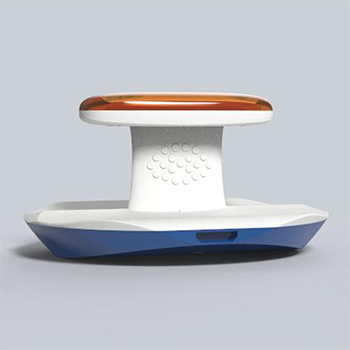
- Form fits the hand of children in the age group 2-10 years. - Comfortable for the doctor to hold. - Provides illumination on the back of the hand for effective venipuncture. - No parting lines come in contact with the patient’s skin, keeping it averse to catching germs.
Details >>
by Ankur Rawal
Intravenous injections have been used in the medical industry for various drug deliveries. Locations for conducting venipuncture are hospitals, pathology labs, dispensaries, etc. A key issue in this procedure lies in finding a suitable spot for injection. Many individuals face difficulties as their vein is not visible or close enough to the surface for a successful venipuncture. A vein detection device was made by Trivikram Annamalai, an IDC ex-student, in 2014. This project takes the technical learnings from the development of the vein detector and targets a specific user segment—kids—owing to their special requirements and constraints.
Kids, owing to their soft epidermal tissues and thin bones, allow for red light (in the near infrared region) to pass through their palms and make the venal structure visible on the back of the hand. This aspect, along with ethnographic observations from the hospital about the way paediatric patients are handled for a venipuncture, led to the development of a doctor- and patient-friendly form. The final design includes the following:
- Form fits the hand of children in the age group 2-10 years. - Comfortable for the doctor to hold. - Provides illumination on the back of the hand for effective venipuncture. - No parting lines come in contact with the patient’s skin, keeping it averse to catching germs.
Design Intervention in Ambadi Calyx Removal
by Ankur Rawal
Details >>
by Ankur Rawal
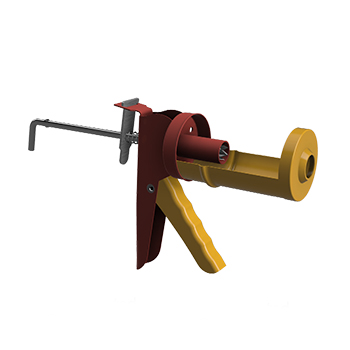
Ambadi, globally known as Roselle (scientific name: Hibiscus sabdarifa), is a nutritional herb with various health and economic benefits stemming from the processing of its various parts. Over the past few years, the importance of Indian rosehip has re-emerged as a nutritional and medicinal herb. Global demands have skyrocketed for its healthy Hibiscus tea. It is envisioned that Indian rosella reaches a higher economic potential to match that of Malaysia, China, and Africa. The current bottleneck lies in optimising the separation process so that more produce can be made from the 10-day annual cultivation season. Hence, this project aims at bringing in a design intervention for enhancing production while exploring MSME and SHG style set ups to enterprise the crop and bring benefit to the farmer and associated channels at large.
The plant’s morphology and vernacular nomenclature were first observed, along with gathering all available information about the dimensions of the varieties under cultivation. Through the RuTAG team and the project guide’s network in Vidharbha region, two enterprises were found: one was an institute for village initiatives, and the other was an entrepreneur who has India’s first FSSAI licence for Ambadi Tea. The two economic models were thoroughly studied for their approaches to labour, logistics, and quality. Desk research about Roselle’s development in Florida, Sudan, Kenya, and Malaysia was done, along with understanding the basics of food post-processing. Two commercial retailers from e-commerce websites were also contacted to seek bottlenecks for the industry in general.
The task at hand was to reduce the drudgery in the calyx removal process of Ambadi, and initial ideations, including sketches and mockups, were done much before the harvesting period so as to get primary feedback from stakeholders while doing an initial field visit. This helped us have very involved conversations with the enterprise heads, and the modifiable nature of the mockups helped us quickly iterate based on feedback.
Product Possibility of Form Generation Tools for Bamboo Craft
by Antik Mallick
Details >>
by Antik Mallick
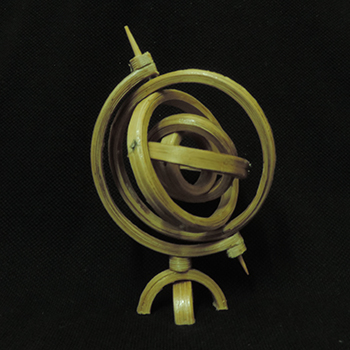
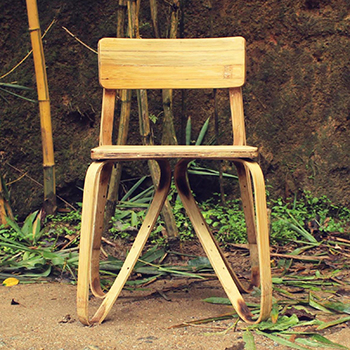
This shape generation tool aims towards the modernization of bamboo, where bamboo strips are used as an industrial material. Bamboo strips have been a traditional material for weaving baskets and many more different kinds of lifestyle accessories. IDC Bambu Studio is also putting forth its efforts to develop many mass-manufacturing tools, product manuals, and workshops for working with bamboo strips and the system connected with it.
During the time duration of my project 2, we decided to make the shape generation tool specifically for jewellery application because of its need in the system.
These tools follow A.G. Rao sir’s philosophy of "Product Specific Tools for Bamboo Craft". They also provide opportunities for the further design and development of some tools, which could prove to be game changers in both craft and industrial product design.
Summer Intership at URAVU (NGO)
by Antik Mallick
by Antik Mallick
"Uravu is a non-government organisation (located in Trikkaipetta village in Wayanad district, Kerala state, south India) that works with people, governments, and businesses to implement programmes for sustainable employment and income generation in rural areas. Uravu is a nonprofit trust established in 1996 and registered under the Indian Trusts Act. Uravu promotes social enterprises based on the value addition of local natural resources, especially bamboo, the "green gold."
Details >>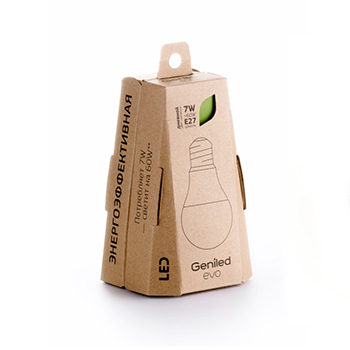
Report on Interactive Packaging
by Arjun Prasanth
by Arjun Prasanth
The packaging of a product is what connects the consumer to the product. It is the outer shell, the apparel, of the product. Interactive packaging enhances the user experience of the product in accordance with the context of its usability aspect with the additional values of interaction elements for the user to make it more exciting and engaging. Extensive study has gone into this paper, which includes everything from a literature review to an analysis of different types of packaging to bring out a clear definition for interactive packaging. The similarities and differences among smart, intelligent, and interactive packaging have been analysed.
Details >>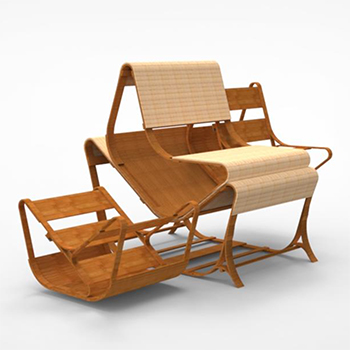
Journey with bamboo
by Arjun Prasanth
by Arjun Prasanth
An extensive exploration of the wonder material ‘bamboo’ is done at Uravu, Wayanad, for a deep understanding of the possibilities that can be achieved through the manipulation of the material. Certain design solutions and suggestions for an existing resort were put forward as a development of the current scenario there. During the course of one month, staying at Wayanad with a bunch of bamboo enthusiasts around helped a lot in terms of design thinking and acquiring a deep understanding of the material, which in turn helped to make toys out of bamboo.
Details >>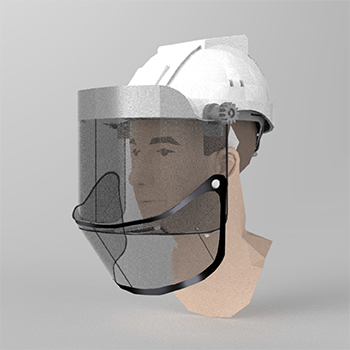
Wearable for Jalaai( brick firing) workers for thermal protection
by Arjun Prasanth
by Arjun Prasanth
Brickmaking is labour-intensive, mostly unskilled work, and requires different levels of skill in different parts of brickmaking. Each worker has a specific function and has to be highly skilled and specialised in that work. Brick kilns in India are mostly manually operated. The process of jalaai involves baking green bricks and strengthening the bricks for a specified time. The workers who perform this task are known as Jalaai workers. Jalaai workers have to endure high heat stresses while working on the kiln top against the background of general environmental heat. This study was focused on the Jalaai workers and the challenges that they face while working, their occupational health hazards, and their possible solutions. This project, in particular, was aimed at reducing the radiant heat being experienced by the workers, with special reference to their face and neck region.
Details >>
Design of head gear and personal protective suit for wild honey bee harvesters
by Arjun Prasanth
Details >>
by Arjun Prasanth
The project addresses the issues faced by wild honey harvesters by having a comprehensive study of the entire wild honey harvesting process. The non-violent harvesting of rock bee honey and wax and their post-harvest storage are taken into consideration when developing a comprehensive design approach. The wild bee (Apis Dorsata) is considered the most defensive of all honey bee species, and their nests are mainly built in exposed areas far from the ground, like on tree limbs, under cliff overhangs, and sometimes on buildings.
A site visit to Wardha, Maharashtra, improved the knowledge of the wild honey harvesting process through the interaction of honey harvesters. The visit to the workshop where the protective suits are made helped in understanding the issues with the existing suit design and manufacturing process. The tools and methods used to make the suits are very frugal, and a similar approach was continued in the project in order to make it easy for manufacturing. After analysing the manufacturing process and the interactions with honey harvesters, the design direction for the project was formulated.
The design direction was to achieve an optimised solution for the manufacturing of the suit using locally available facilities. The protective suit was required to withstand bee stings and wear and tear from the bark of trees while climbing and crawling during the harvesting process to ensure safety and personal protection for honey harvesters. Hence, the fabric chosen should be durable enough, so canvas cloth is chosen as the material. An industrial hard hat had also been integrated to ensure the safety of the skull area. The need for cleaning the suit after every honey collection was taken into account in the design process. The design had evolved to ensure smooth working and the safety of the personnel, who climbed several beehives one after another without compromising on comfort.
Initial ideas with mockups were made, and further feedback from actual users was obtained. Prototype testing with the mock-ups helped refine the concept. Based on the feedback received from the harvesters, some ideas were taken forward to develop them as concepts with features like quick fixing of canvas with the helmet, lightweight and durability, ease of washing, and ease of manufacturing. Anthropometric measurements of three sizes (small, medium, and large) were adopted during fabrication. A full protective suit was made for demonstration, and constructive feedback was received. The project was useful in the field of wild honey harvesting to raise awareness of safety and self-protection while carrying out the harvesting process.
Paper Lamps; Metaphors of Light
by Arun Shah
Details >>
by Arun Shah
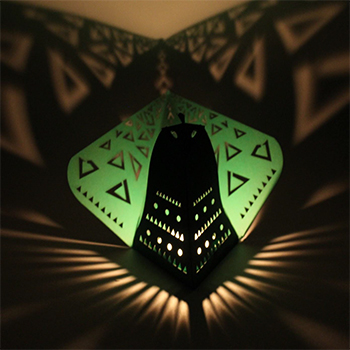
Lamps have a primary function. To provide light But why do we need the light, and how do we need the light? This is where design becomes an answer. Light, colour, shadow, pattern.. All these can be manipulated to bring in meanings and emotions.
Paper lamps are known as very common and very simple products. The catch here is the play of light and shadow. This is what makes the lamp so emotional. Where light and shadow create visual metaphors, they give another meaning to the product.
This project aims to explore the design of a tea candle paper lamp by developing the design and improving its usability and aesthetics.

Copper Bells of Kachchh
by Arun Shah
Details >>
by Arun Shah
Kachchh, commonly written as "Kutch," is the largest district in India and is located in Gujarat state. Kutch is an ethnic web of interwoven cultures, a land of vibrantly colourful art and craft heritage. This cultural mix plays host to a thriving exposition of textiles, ornaments, and living styles, eulogised within a contemporary framework. Kutch literally means something that intermittently becomes wet and dry; a large part of this district is known as the Rann of Kutch, which is a shallow wetland that submerges in water during the rainy season and becomes dry during other seasons.
The Rann is famous for its marshy salt flats, which become snow white after the shallow water dries up each season before the monsoon rains. The district is also famous for the ecologically important banni grasslands with their seasonal marshy wetlands, which form the outer belt of the Rann of Kutch. The district is surrounded by the Gulf of Kutch and the Arabian Sea in the south and west, while the northern and eastern parts are surrounded by the Great and Little Rann (seasonal wetlands) of Kutch. The languages spoken predominantly in the Kutch district are Kutchi and Gujarati. The script of the Kutchi language has become extinct. It is now mainly written in the Gujarati script.
Portable Patient Chair for Dental Camps
by Arun Shah
by Arun Shah
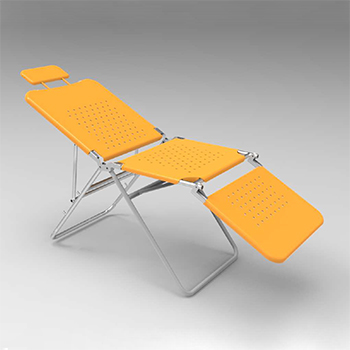
My research in dentistry had begun when I was doing a collaborative course with the BETiC lab at IIT Bombay. I was working with a group of students and was working on developing dental equipment for lighting in dental surgeries. We had done a background study on dentistry and the issues related to it. In focus, we also studied the dental chair. There were many issues that we were trying to address. The portability of the dental chair was one of the issues that came to my attention. From earlier conversations with dentists, I had gotten the idea of developing a portable dental chair. After the completion of the course with BETiC, this project was taken forward, and I did my research on this specific issue. The chair is not just a chair for the patients; it is also the work station for the dentists. This understanding of the usability of the chair is what triggered the design thinking for me. This project gave me a lot of experiences and a lot of insights in the field of Indian dentistry. In the following chapters, I will describe in detail the process of designing this product and the insights and scope of this project.
Details >>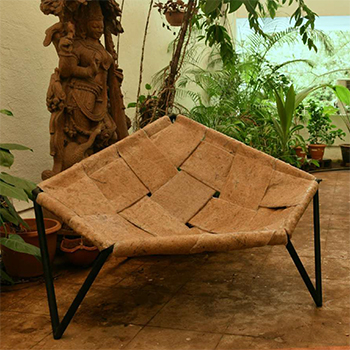
Coir In Furniture
by Arun Shah
Details >>
by Arun Shah
The coconut tree is called "Kalpa vriksha". Which means that the tree makes every dream come true. That's pretty much the truth after all. The coconut tree is one of the most useful trees in the environment; from flower to root, every bit of it can be used for many applications. Coir is the natural fibre from coconuts. There are many products made out of coir.
The Coi Board of India is a government institution under the Ministry of Micro, Small, and Medium Enterprises. They have been researching the development and improvement of this sector. There have been a lot of new turnovers in terms of processing and product development, and India is one country with a really large scale of coconut tree plantations. This amazing fibre contributes more than just a handful of products to different sectors in Kerala. It is also being exported to many countries because of its characteristics and durability.
Furniture design using coir is not an entirely new thing. There have been many innovations in design using coir as a raw material. The coir board itself promotes student projects in many areas to bring innovation to the sector.
In this project, I will be exploring the possibilities of coir as a material for furniture design. I will look into different manufacturing processes and see whether we can manipulate them to yield new forms, textures, etc.
Visual Ethnography of Sankheda Craftsmen
by Aswin Sasindran
Details >>
by Aswin Sasindran
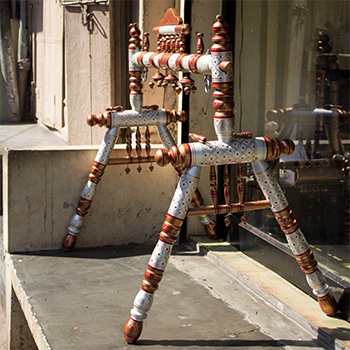
This visual ethnographic study aims at capturing the pulse of the Suthar community in Sankheda, a village in Chhota Udaipur district in the Indian state of Gujarat. The study was an experiential bliss for the hearts of the craftsmen that embody the turned wood furniture craft. Me and my camera were met by heart-warming families that shared their life, its struggles, and their craft with open arms. The study involved interviews with various craftsmen, including a master craftsman, a methodical documentation of the manufacturing process, a qualitative analysis of their work environments, their involvement with the craft, and the conflict of interests faced by present-day generations.
Summer Intership at Sargaalaya, Kerala Arts and Crafts Village, Iringal
by Aswin Sasindran
Details >>
by Aswin Sasindran
The report is part of the summer internship project carried out as a part of the M-Des in Industrial Design programme at IDC, IIT Bombay. The project helps to understand the various parameters that essentially make a tourism project successful. It aims to visualise the key issues faced by the institute in disturbing these parameters, which might hinder the development of the place at a later stage. The report also suggests solutions that are capable of giving a facelift to the institute with tiny tweaks to relevant parameters.

Redesign of Commercial Vegetable Processor
by Aswin Sasindran
by Aswin Sasindran
Vegetable processing in commercial kitchens is carried out without the help of machines with a wide range of processing capabilities and functions, and they require extreme durability along with higher productivity and performance. Most of the existing products in the Indian market, manufactured industrially, are imitations of their international counterparts and exhibit various design flaws. As an industrial designer, the purpose of redesign is to introduce new and competing products to the current scenario by optimising the existing design. The final concept addresses usability, ergonomics, and productivity issues considering a set of functional and manufacturing constraints.
Details >>
Sankheda: Design Optimisation and Production
by Aswin Sasindran
Details >>
by Aswin Sasindran
Sankheda is a village in Gujarat located in Chhota Udaipur district renowned for its turned wood furniture crafts. The craftsmen of Sankheda follow the traditional working postures in most of their activities, adapting them to their indigenous machinery and processes of manufacturing. Task analysis and interviews with craftsmen reveal the need to design and optimise their workplace for better productivity and health benefits. This project aims at designing a workstation for the craftsmen, focusing on reducing drudgery in their work environment and optimising the production process. The final concept can be extended to allied work environments to impart similar benefits.

Subsistence Design
by Devanshi Saksena
Details >>
by Devanshi Saksena
The word "design" is generally associated only with intricate, exclusive, and expensive products. In the marketplace, the names of top designers are used to sell overpriced products in all fields, be it cars, aircraft, or even handbags.
However, design is not the exclusive preserve of overpaid designers sitting in air-conditioned studios. Often, common folk faced with recurrent problems come up with elegant and low-cost solutions involving the modification of existing products. Manufacturers of everyday items are often surprised to see the innovative and unintended uses of their products. Smartphones, WhatsApp, and the internet ensure that such design ideas are widely communicated and replicated. In view of the usefulness and popularity of these homegrown products, mainstream designers have been forced to acknowledge the existence of this genre of design, which is classified as "subsistence design", jugaad," and "frugal innovation."
The aim of the present project is to examine the design efforts of common people who are not design literate academically but who design products for the specific needs of their particular communities from the resources available to them, mostly on a shoestring budget.
Summer Intership at Godrej & Boyce Pvt. Ltd
by Devanshi Saksena
Details >>
by Devanshi Saksena
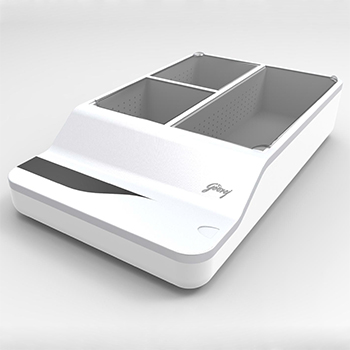
Food steamers have been used for centuries. The ancient Chinese used pottery steamers to cook food, which date back to 5000 BC. Earthen, bamboo, and stainless steel materials were mostly used for food steaming. In India, steamers are mostly used in the north-eastern and southern parts. Earlier, people used to steam rice, fish, momos, and vegetables. With the recent changes in lifestyle and health, more and more people from other parts of India are turning to electric food steamers. People are using different techniques, including steaming. Food steamers are so advanced that there have been hardly any changes in terms of form and function.
DIY Leather Kit
by Devanshi Saksena
Details >>
by Devanshi Saksena
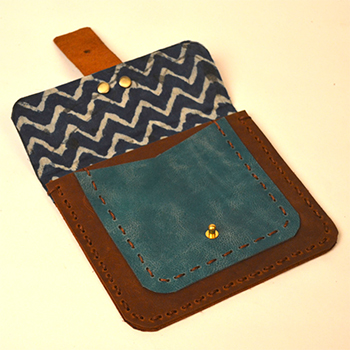
Leather is a unique commodity that links the grass-roots level of villages with high societies and traditional practises with emerging technologies. For many developing countries, leather and leather manufacturers constitute an indispensable and dependable source for export trade and foreign exchange earnings. For India, leather is a high-priority industrial sector, and footwear exports are an extreme focus area. In just four decades since independence, India has made significant gains from the leather trade, progressing from the status of an exporter of 90% or more raw hides and skins to that of an exporter and predominantly leather product manufacturer.
Buoyed by good past performance and encouraged by the expanding world market for leather articles, India is on the move to increase its market share from the present level of around 3%. Earning foreign exchange aside, such trade expansion would mean the generation of substantial employment, skill building, and entrepreneurship development, as well as other widely spread socio-economic benefits.

Summer Internship at Imaginarium Pvt. Ltd
by Faizan Zahid
Details >>
by Faizan Zahid
A world in which manufacturing on-demand is a reality might not be that far away, as the price of 3D printers is dramatically falling. With costs for lower-end plastic-printing machines having plummeted in the last few years, the technology is now on the cusp of becoming mainstream. At this rate, any designer could have a tabletop 3D printer and use rapid prototyping without wasting time making handmade prototypes, time that can be spent more productively.
Product design, automobile design, or any design in general, along with the machine parts industry, healthcare, retail, and food are some of the examples and predictions of how 3D printing will intersect with modern manufacturing. This will be an influential technology in the coming years. While a number of industries will see positive change, few will undergo as many drastic shifts and evolutions as manufacturing.
We wanted to be a part of this revolution. We wanted to learn about the technology, processes, and future of product design. With that said, Imaginarium is India's largest rapid prototyping and rapid manufacturing centre. There’s no better place to start this journey than Imaginarium. With Imaginarium at the doorsteps of our college, there was no second thought.

Design of Furniture for Govt. Primary Schools
by Faizan Zahid
Details >>
by Faizan Zahid
These were the questions that came to mind when I visited government schools, regardless of the place, city, or village in which they were situated. But, these were not the only questions that bothered my mind, and I’m sure that I’m also not the only one to have noticed this.
Being a part of a family where teaching is a major profession, I have had quite a bit of exposure to schools and educational facilities. Evidently, the quality of the furniture (if present) depends upon the kind of school it is and the kind of funds available for it. But it's not just about the funds available; it's also about the nature and design of the furniture, which is a major part of the problem and will be discussed later in the report. As a student of design, it was a natural instinct to look for a design intervention for this scenario. It might, however, be a system-level intervention, but one can look at it as an approach to a level where apparent flaws in design could be removed. Hence, I started looking for clues.
It was even more surprising to learn that there had been a fair amount of research done on this topic throughout the country to understand the issue behind the ill-designed furniture in schools, especially in rural and remote areas. After going through a few of these reports, the validity of the issue was more clear, and I took it as a challenge to turn this potential topic into a successful design intervention.

Design for Blind People Accessing Public Buses
by Faizan Zahid
Details >>
by Faizan Zahid
Public transportation is the basic amenity that any city is supposed to have for travelling within and outside the city. That being the case, this amenity must be available to the residents irrespective of their social status, gender, physical condition, etc. It is also a basic right for every citizen to be able to navigate comfortably to places of work and so forth in the city of their residence.
Buses and trains are used by a large number of people on a daily basis. "Bus and rail networks are the lifeblood of Indian society and prime movers of the local economies," says Jamie Osborne, a transit planner and accessibility specialist with the San Francisco Municipal Transportation Agency, after a trip through India (Osborne, 2007). A lot of work keeps happening in the domain of transportation to give this comfortable commute to the citizens of a country like India with such a large population. Year after year, more people move to cities for opportunities, and the cities have to battle with infrastructural maintenance nonetheless, but we still need to buckle up to make public transportation accessible.
India has the largest blind population in the world at nearly 20 million. Around 1.5% of the population is blind. But the impairment does not restrict them from studying, having ambitions, or raising a family. Sadly, many portions of the world have still not been completely made accessible. Their basic requirement is affected when the navigation is curbed. Many people prefer staying indoors than to get out there and battle everyday with transportation and infrastructure.
This entire project is an attempt to help the visually impaired access public transportation with less difficulty and navigate to places that meet their needs more efficiently. As part of this project, I spent the initial part of the project’s tenure in Darmstadt, Germany. This was an attempt to understand the cultural differences, the infrastructural advancements, the attempts to provide solutions, and the design of a guiding system that would act as an assistant to the person using it, whether they were visually impaired. For the project, the chosen mode of transportation is the public bus since, after looking at some other transportation means, it seems the bus system is pretty much the same in both Germany and India. Both countries have visions to make their countries barrier-free by 2020 (Johari, 2017). Though one is a developed country and one is developing pretty fast, the visually impaired citizens did have their concerns about not being able to travel like their counterparts.
How do people of different age group tackle staircase?
by Irshath Ahamed
by Irshath Ahamed
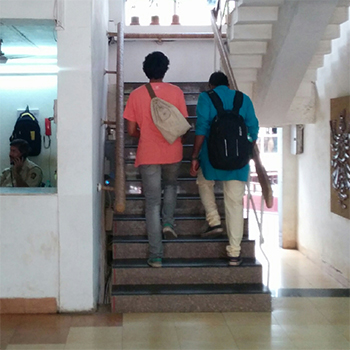
A comprehensive movement analysis of stair climbing can help in the research of several rehabilitation methods. This research study provides the investigations and observations of a human’s lower extremity during ascent and descent walking at different inclinations. In addition to this, the analysis of stair ascent and descent can be useful in the design of private and public environments where stairways are employed. Several normal subjects ascended and descended a flight of stairs at similar inclinations for the study. Observations such as the subject’s starting position and reaching position, handrail usage, ascending and descending speed, foot position, knee position, body position, vision, and stuttering were noted; their psychological feel on the staircase, handrail material, and their problems were also discussed during the interview.
Details >>
Summer Internship at Imaginarium Pvt. Ltd
by Irshath Ahamed
by Irshath Ahamed
A world in which manufacturing on-demand is a reality might not be that far away, as the price of 3D printers is dramatically falling. With costs for lower-end plastic-printing machines having plummeted in the last few years, the technology is now on the cusp of becoming mainstream. At this rate, any designer could have a tabletop 3D printer and use rapid prototyping without wasting time making handmade prototypes, time that can be spent more productively. Product design, automobile design, or any design in general, along with the machine parts industry, healthcare, retail, and food, are some of the examples and predictions of how 3D printing will intersect with modern manufacturing. This will be an influential technology in the coming years. While a number of industries will see positive change, few will undergo as many drastic shifts and evolutions as manufacturing. We wanted to be a part of this revolution. We wanted to learn about the technology, processes, and future of product design. With that said, Imaginarium is India's largest rapid prototyping and rapid manufacturing centre. There’s no better place to start this journey than Imaginarium. With Imaginarium at the doorstep of our college, there was no second thought.
Details >>
Redesign of a Paediatric Standing Frame
by Irshath Ahamed
Details >>
by Irshath Ahamed
It is to design a standing frame for children that is inexpensive, has all the basic features, and could be used by all the children aged 16 to 18 months with cerebral palsy.
My shortlisted topic by the faculties is to design and create a new standing frame for children with cerebral palsy. The product should be used indoors.
Although the work should take into consideration all areas of the design process, particular attention should be paid to the functionality, aesthetics, and production cost of the proposed design concept. The Pinal solution should have a retail value of Rs. 10,000 or less.
I had a time period of 4 months to complete and submit this design brief. The primary presentation should be digital and include freehand sketches and final, realistic renderings.

Personal Protective Equipment for Beekeepers
by Irshath Ahamed
Details >>
by Irshath Ahamed
Beekeeping is the maintenance of honey bee colonies, commonly in man-made hives, mainly for their honey. Among all the equipment that the beekeeper or apiarist uses, the most important one is the sting-proof suit (bee suit), as it prevents the beekeeper from getting stung. Unfortunately, little has changed in the design of the bee suit since the 1800s, especially in the Indian scenario.
In developed countries, beekeeper’s clothing and accessories are available in a variety of fabrics and garment styles to meet the diverse requirements and circumstances related to handling bees. In India, however, due to a lack of availability of protective clothing, beekeepers are suffering from the sting of bees physically as well as psychologically. A survey conducted by IIT Delhi shows that presently, beekeepers in India are using mainly their personal conventional clothes, like conventional pants and shirts, kurta pyjamas, simple shoes and socks, and a bee veil, in their profession. They have no or insufficient special clothing to fulfil their professional needs.
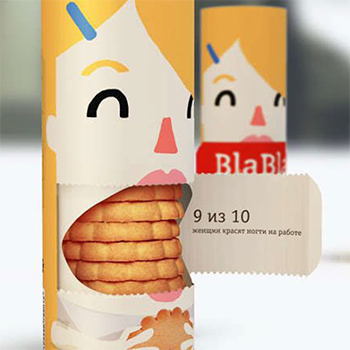
Defining Interactive Packaging
by Juwin Thomas
Details >>
by Juwin Thomas
Off late, it has been observed that we tend to issue fancy names and terminologies without much thought about the impact they would create. One such name (which is also the topic of this paper) is interactive packaging." In this paper, we look to identify and define the true meaning of interactive packaging. Extensive study has gone into this paper, which includes everything from a literature review to speaking to experts in packaging from India and abroad. In this paper, we attempt to bring out a clear definition of interactive packaging. We also want to shed light on other terms like intelligent or smart packaging and determine if and how they differ from interactive packaging.

Summer Internship at Sargaalaya, Kerala Arts and Crafts Village, Iringal
by Juwin Thomas
by Juwin Thomas
The report is part of the summer internship project carried out as a part of the M-Des in Industrial Design programme at IDC, IIT Bombay. The project helps to understand the various parameters that essentially make a tourism project successful. It aims to visualise the key issues faced by the institute in disturbing these parameters, which might hinder the development of the place at a later stage. The report also suggests solutions that are capable of giving a facelift to the institute with tiny tweaks to relevant parameters.
Details >>
Redesign of Insect Killer
by Juwin Thomas
Details >>
by Juwin Thomas
A pest is defined as a destructive insect or other animal that attacks crops, food, livestock, and humans. Insects like houseflies, mosquitoes, and moths are often attracted to food, human or animal presence, and light. These are the most commonly found pests in public areas, and if left unchecked, they rapidly spread diseases and cause considerable damage to the environment. It is thus necessary to implement pest control measures to ensure healthy living conditions.
Pest control equipment and insect traps are getting increasingly popular these days. They play a key role in trapping and killing insects in public and indoor spaces, which helps minimise pest populations in surrounding areas. In this project, I have looked into the possibilities of redesigning insect killers by adopting newer technologies that are safer and more effective with reduced health hazards.
Soil Moisture Sensor
by Juwin Thomas
Details >>
by Juwin Thomas
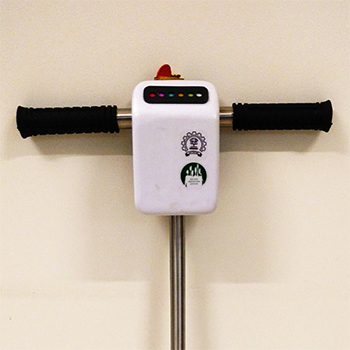
Agriculture is "the backbone of the Indian economy". In 2012–13, agriculture contributed to 13.9% of the total GDP and employed 47% of the total workforce population. Due to the increasing population, basic needs such as food and water are increasing day by day. Thus, it is substantial to save these resources and utilise them in an efficient manner. Since water is one of the most important elements in our daily lives, we must adapt to efficient ways of utilising it and saving it for future generations. One of these methods is efficient irrigation management practises for fields. Irrigation water management practises could greatly benefit from knowing the amount of moisture in the soil. By knowing the moisture value, we can estimate when and how much to water the fields so that there is no over-watering or wilting of crops. Water-holding capacity varies from soil to soil. Moreover, different varieties of crop require different amounts of water for optimum growth.
Rajul S. Patkar (2016) has developed low-cost piezoresistive cantilever platforms for agricultural applications as a part of her Ph.D. thesis at IIT Bombay under Prof. V. Ramgopal Rao and Prof. M.S. Bagini. Through this project, I aim to design a low-cost soil moisture sensor by utilising proposed sensor-based technology developed at the electrical department of IIT Bombay for small and medium-scale farmers that helps them provide optimum irrigation for crops and thereby increase productivity.
Defining Interactive Packaging
by Nishith Parikh
Details >>
by Nishith Parikh
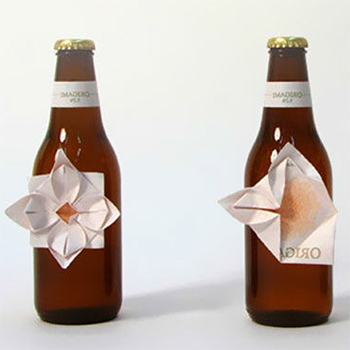
Off late, it has been observed that we tend to issue fancy names and terminologies without much thought about the impact they would create. One such name (which is also the topic of this paper) is interactive packaging." In this paper, we look to identify and define the true meaning of interactive packaging. Extensive study has gone into this paper, which includes everything from a literature review to speaking to experts in packaging from India and abroad. In this paper, we attempt to bring out a clear definition of interactive packaging. We also want to shed light on other terms like intelligent or smart packaging and determine if and how they differ from interactive packaging.
Development of a smart cooking aid. Godrej and Boyce Mfg. Co.
by Nishith Parikh
Details >>
by Nishith Parikh
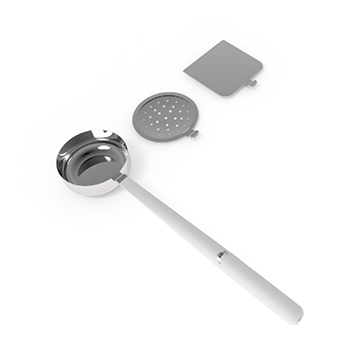
Cooking is the practise or skill of preparing food by combining, mixing, and heating ingredients. Anyone who has a fair amount of experience in cooking knows that it is certainly more than that. It is, in a way, science. It is how different ingredients react with each other over time and how the reactions can be altered with various factors such as time, type of heat source, and also the type of vessel used. It is a delicate balance of flavours and textures, and the experience of eating that perfect meal is unlike any other.
India, owing to its diversity, has a wide variety of cooking habits and cultures. Each region has over the years developed its own staple food based on the produce and environment. Food habits vary not only across large distances but also between two different places in the same state. As a result, no other country in the world offers such complexity and diversity in its cooking habits as India does.
Indian cooking is one of the most complex of all cuisines. Originally developed by our ancestors, it usually involves quite a few ingredients and multiple steps. Even something as common as a dal has around three to four cooking processes. These steps are essential to not only obtain the best flavour but also retain its nutritional properties. So, it is no secret that Indian cuisine is considered to be the most balanced and healthy of all. Recipes passed down from generations have ensured that rich and healthy food is still consumed by a considerable number of people. Even though newer cooking appliances like microwaves and induction cooktops have made their way onto the market, we have still found a way to cook our Indian dishes on them.
Redesign of the (Million SoUL) Solar Lamp
by Nishith Parikh
by Nishith Parikh
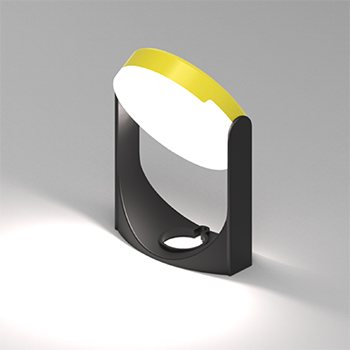
A staggering 40% of our country’s population still uses the kerosene lantern as their main source of lighting. In the age of efficient and affordable lighting solutions, it is the bitter truth that we as a nation must accept. Million SoUL is an IIT Bombay initiative where people work to localise solar energy through the local assembly, sale, and usage of 1 million Solar Urja Lamps (SoUL) in India. Te team is rigorously working to enable children in the rural parts of India to study without the dependence on primitive forms of lighting such as kerosene lamps. This project is an attempt to redesign the lamp made by Million SOUL so as to improve its usability, reduce its overall cost, and also bring a comprehensive change with respect to the current design.
Details >>
Product for catering service on semi luxury non suburban Indian Passenger Trains
by Nishith Parikh
by Nishith Parikh
The number of passengers travelling in non-suburban Indian trains has almost doubled in the past four years. Consequently, more trains have been added, and a lot of these include express trains that run over long distances. As a result, more people now have to be fed. The methods have, however, remained more or less the same for quite some time. Even in semi-luxury express trains like the Rajdhani, Shatabdi, etc., we can still see the primitive ways of serving food. This project attempts to solve the problems faced by the waiters on semi-luxury express non-suburban trains with regard to the distribution of food to the passengers.
Details >>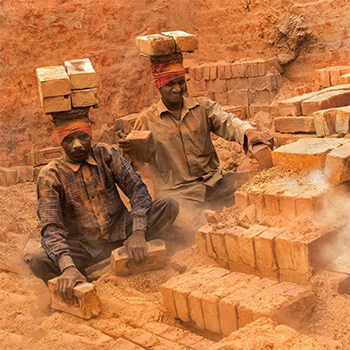
Ergo-design considerations on respiratory filter design for Brick Kiln workers
by Pooja Kulkarni
Details >>
by Pooja Kulkarni
Bricks are a very important raw material in the construction industry. Due to the rapid urbanisation, the requirement for bricks is high. India is the second-largest producer of bricks (after China), yet most of the tasks are still performed manually.
There is a huge discrepancy in the wages and the working hours for the brick kiln workers. Also, the working conditions are wretched. Low wages and hazardous working conditions lead to the deterioration of the health of the workers and lower productivity.
Usually, an entire family is involved in brick production, and they get Rs 400–500 for 1000 bricks. Although the industry provides employment to a large number of people, it violates their rights as the labourers are underpaid and exploited. "The labourers become bound after they take an advance. They are physically tortured by the contractor if they wish to leave their job. Even their payments are stopped, making it hard for an entire family to survive," Sudhir Kumar Katiyar, project coordinator of the Udaipur-based non-profit Prayas Centre for Labour Research and Action, said at the dialogue.

Summer Internship at 3F Design Company
by Pooja Kulkarni
by Pooja Kulkarni
The project was to design a desktop organiser series using organic forms and create an interesting range of products that will stand out on the office desk. Using unconventional forms, materials, and processes to design products that will be manufactured in small quantities. The minimalist cube made during the Advanced Forms course was the starting point for the project. Aluminium casting and resin casting were the two processes that were shortlisted. Another inspiration for the project was the product range developed by Mukul Goyal.
Details >>
Design of a Deployer Device for Endo Retractor
by Pooja Kulkarni
Details >>
by Pooja Kulkarni
During a laparoscopic cholecystectomy, traditionally, four incisions are made. One is for the laparoscope, two are the operating ports, and one is to hold the gallbladder to expose the Calot’s Triangle that needs to be cauterised to separate the gallbladder from the liver. Endoretractor was designed by Lata Chawla with BETiC and under the guidance of Dr. Rasik Shah to hold the gallbladder in place. This device eliminated one port and the need for human assistance during the surgery.
As the endorectal retractor in itself is an innovative design, no specific devices were used to deploy it. A crude set of devices and a lengthy procedure were used to test and validate the device. As the device is soon to be launched into the market, the need for a sophisticated deployer device arose.
Device for Cryoablation of Tumors in Soft Tissue
by Pooja Kulkarni
Details >>
by Pooja Kulkarni
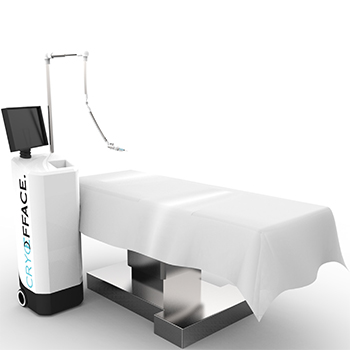
In the past two decades, major developments have happened in finding alternate cure methods for cancer. Cryosurgery is one such promising technique that uses extremely low temperatures to kill cancer cells. As this procedure can be performed with minimal invasion, it has huge benefits over the traditionally performed surgeries. Research and development have been happening in developing devices for curing breast cancer using cryosurgery.
Abdul Mateen A. G. Shaikh, Prof. Atul Shrivastava, and Prof. Milind Atrey have designed a liquid nitrogen cryoprobe and tested it for ice formation. This device needs design intervention to make it usable. There is scope to innovate and come up with a product that can change the cancer research scenario worldwide.
The project aims to design an ergonomic probe for cryosurgery for breast cancer, which can later be scaled to incorporate other organs, and also propose a system for the same. The primary aim of the project is to design an ergonomic probe, keeping in mind the design constraints for a class II device and also for a cryogenic device. An operative process that requires less time compared to the current operative processes and is minimally invasive has also been proposed.
Craft Branding & Positioning
by Pritesh Chavan
Details >>
by Pritesh Chavan
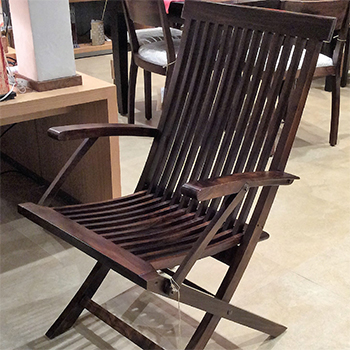
India is the land of rich handicrafts and beautiful traditions, as well as marvellous and unique artistic work. From decades, Indian craft has offered a warm charm to our many day-to-day objects with its unique design and quality.
It’s interesting how there are a lot of portals today showcasing art forms and handicrafts from remote corners of India. This project is an effort to analyse and understand brands that promote craft products specifically made in India. The focus was to understand how some craft companies in India brand themselves and position their products for the contemporary urban consumer.

Furniture Design for Kids
by Pritesh Chavan
Details >>
by Pritesh Chavan
In PurpleStem, all the product designers are assigned to one particular category of furniture designs. Some designers were working on living room furniture, some on sofas, tables, etc. I was very fortunate to get to work on a new category that wasn’t explored yet in PurpleStem, and that was furniture for kids. This was not the only reason to get me excited, but also that the end products were going to get manufactured and sold on the new website. So it was a great responsibility to produce something concrete, something that will really work, something that will make the difference.
I was also lucky to get good guidance and support from the fellow designers and colleagues to help me enjoy my one-month tenure and the opportunity to work hard towards the finished products.
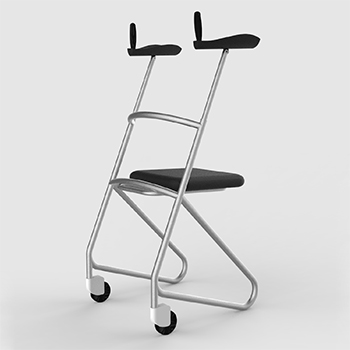
Walking Aid for Elderly
by Pritesh Chavan
Details >>
by Pritesh Chavan
In the medical field, suturing is the joining of tissues with a needle and "thread," so that the tissues bind together and heal. The "thread" is actually specialised suture material.
Dr Hemant Bhansali (laparoscopic surgeon from Nanavati Hospital, Mumbai) and Dr Rupesh Ghyar (chief scientist at BETiC, OrthoCAD Lab, IIT Bombay) have already developed and patented an auto-suturing device. During this project, problems related to functionality and usability were resolved.
A simpler suturing device was developed, which can be used by surgeons as well as paramedics with reduced cognitive load, resulting in ideal suturing.
The final output of the project is a full-scale model, and the working has been shown in the SolidWorks software with rendered animation.

Auto-Suturing Design
by Pritesh Chavan
Details >>
by Pritesh Chavan
In the medical field, suturing is the joining of tissues with a needle and "thread," so that the tissues bind together and heal. The "thread" is actually specialised suture material.
Dr Hemant Bhansali (laparoscopic surgeon from Nanavati Hospital, Mumbai) and Dr Rupesh Ghyar (chief scientist at BETiC, OrthoCAD Lab, IIT Bombay) have already developed and patented an auto-suturing device. During this project, problems related to functionality and usability were resolved.
A simpler suturing device was developed, which can be used by surgeons as well as paramedics with reduced cognitive load, resulting in ideal suturing.
The final output of the project is a full-scale model, and the working has been shown in the SolidWorks software with rendered animation.
Subsistence Design
by Quashif Qureshi
Details >>
by Quashif Qureshi
The word "design" is generally associated only with intricate, exclusive, and expensive products. In the marketplace, the names of top designers are used to sell overpriced products in all fields, be it cars, aircraft, or even handbags.
However, design is not the exclusive preserve of overpaid designers sitting in air-conditioned studios. Often, common folk faced with recurrent problems come up with elegant and low-cost solutions involving the modification of existing products. Manufacturers of everyday items are often surprised to see the innovative and unintended uses of their products. Smartphones, WhatsApp, and the internet ensure that such design ideas are widely communicated and replicated. In view of the usefulness and popularity of these homegrown products, mainstream designers have been forced to acknowledge the existence of this genre of design, which is classified as "subsistence design", jugaad," and "frugal innovation."
The aim of the present project is to examine the design efforts of common people who are not design literate academically but who design products for the specific needs of their particular communities from the resources available to them, mostly on a shoestring budget.
Summer Intership at SELCO Foundation, Bangalore
by Quashif Qureshi
Details >>
by Quashif Qureshi
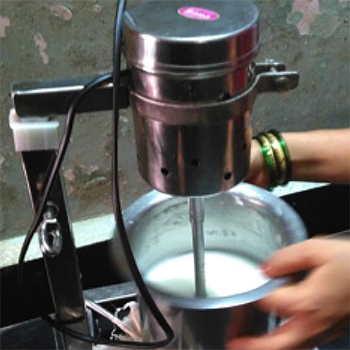
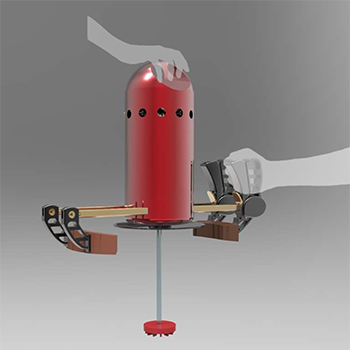
India is a nation where the main occupation of the people in rural areas is agriculture and animal husbandry; in fact, India ranks first in milk production, accounting for 18.5 percent of the world's population. Even the urban areas are not left behind in fulfilling the local dairy needs of the people.
However, the availability of equipment to process the milk is very scarce and old-school, which has not changed for many years. People in villages still use muscular energy to make dairy products due to the unavailability of versatile equipment that can be used with their vessels. The frequent power cuts in these areas make it difficult to use modern electric devices for household use.

Manually Operated Brick Moulding Machine
by Quashif Qureshi
Details >>
by Quashif Qureshi
India is the second-largest brick producer (after China) in the brickmaking industry. Due to rapid urbanisation, demands for bricks are increasing from day to day.
The brick kiln industry is one of the major unorganised sectors in India, where most of the jobs are performed manually. While performing the job, the workers suffer biomechanically, physiologically, and psychophysically. The workers are also exposed to high concentrations of dust and temperatures. The sustained awkward squatting posture adopted by the workers for more than 6 to 8 hours imposes severe musculoskeletal stress and is thereby likely to cause permanent musculoskeletal injury to the workers. The human body is not suitable for this type of unnatural stress. As per our previous study, the average age of the brick kiln workers is 28 years. Due to tremendous work-related stresses, people beyond 40 years of age are seldom visible in this operation.
Previous studies in India showed that workers in brick-making industries suffer from assorted health problems due to awkward postures while making bricks and transferring heavy loads, heavy manual load handling, working under high environmental temperatures with high levels of dust, and facing extensive drudgery.
The purpose of the project is, therefore, to develop low-tech appropriate technology by introducing a versatile product that can help to reduce the drudgery in the most unplanned industry, which is the brick-making industry. It should create value for the human cost involved in such an intense process as brick moulding.

Design and fabrication of a Manually Operated Brick Moulding Machine
by Quashif Qureshi
Details >>
by Quashif Qureshi
After China, India is the second-largest brick producer in the brickmaking industry. Due to rapid urbanisation, demands for bricks are increasing from day to day.
The brick kiln industry is one of the major unorganised sectors in India, where most of the jobs are performed manually. While performing the job, the workers suffer biomechanically, physiologically, and psychophysically. The workers are also exposed to high concentrations of dust and high temperatures. The sustained awkward squatting posture adopted by the workers for more than 6 to 8 hours imposes severe musculoskeletal stress and is thereby likely to cause permanent musculoskeletal injury to the workers. The human body is not suitable for this type of unnatural stress. As per our previous study, the average age of the brick kiln workers is 28 years. Due to tremendous work-related stresses, people beyond 40 years of age are seldom visible in this operation.
Previous studies in India showed that workers in brick-making industries suffer from acute health problems due to awkward postures and repetitive manual load handling while making and transferring bricks, heavy manual load handling, working under high environmental temperatures with high levels of dust, and facing extensive drudgery.
The purpose of the project is, therefore, to develop low-tech appropriate technology by introducing a versatile product that can help to reduce the drudgery in the most unplanned industry, which is the brick-making industry. It should create value for the human cost involved in such an intense process as brick moulding.
Structures in Nature
by Shefali Ugavekar
by Shefali Ugavekar
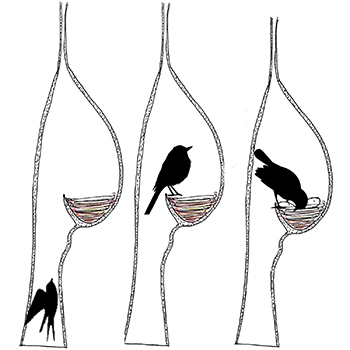
Structures are an integral part of our world. Our nature is full of such inspiring structures. The man-made structures are often derived from or inspired by the natural structures. This research focuses on studying these natural structures present in nature, picking one of them, studying it thoroughly, and coming up with creative applications of that structure.
Details >>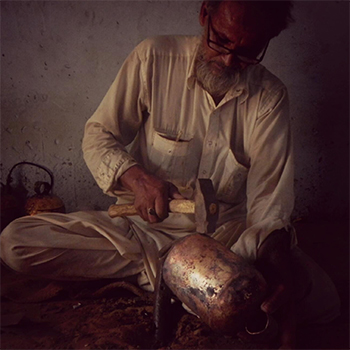
Copper Bells of Kachchh
by Shefali Ugavekar
by Shefali Ugavekar
Kachchh, commonly written as "Kutch," is the largest district in India and is located in Gujarat state. Kutch is an ethnic web of interwoven cultures, a land of vibrantly colorful art and craft heritage. This cultural mix plays host to a thriving exposition of textiles, ornaments, and living styles, eulogized within a contemporary framework. Kutch literally means something that intermittently becomes wet and dry; a large part of this district is known as the Rann of Kutch, which is a shallow wetland that submerges in water during the rainy season and becomes dry during other seasons. The Rann is famous for its marshy salt flats, which become snow white after the shallow water dries up each season before the monsoon rains. The district is also famous for the ecologically important Banni grasslands with their seasonal marshy wetlands, which form the outer belt of the Rann of Kutch. The district is surrounded by the Gulf of Kutch and the Arabian Sea in the south and west, while the northern and eastern parts are surrounded by the Great and Little Rann (seasonal wetlands) of Kutch. The languages spoken predominantly in the Kutch district are Kutchi and Gujarati. The script of the Kutchi language has become extinct. It is now mainly written in the Gujarati script.
Details >>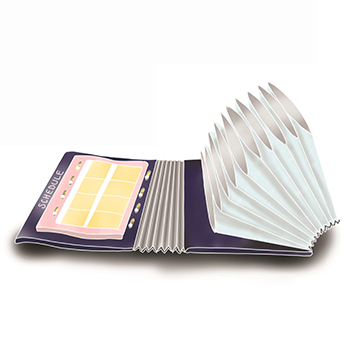
Medicine Organiser for Elderly
by Shefali Ugavekar
Details >>
by Shefali Ugavekar
Elderly consist of ages nearing on surpassing the average life span of human being. In India, it is 60 years. The boundary of old age cannot be defined exactly, as it does not have the same meaning in all societies. According to the WHO, the ageing process is a biological reality that has its own dynamics that are largely beyond human control. Age of 60-65 years i.e. retirement age is said to be starting of old age. 7.4% of the total population of India is said to be elderly, which is more than the male elderly population. Literacy rates are very low, around 20 for females and 50 for elderly males.
The need for a device or system arises due to the integration of various diseases in the elderly and the disability of the elderly to take care of themselves. Which results in dangerous ends. Diseases like dementia increase forgetfulness in older people, which results in accidents, skipping meals, skipping medicine, forgetting to go home, etc. Amongst these, forgetfulness in taking medicine is a bigger cause of many deaths. Forgetfulness sometimes also results in patients taking more dosages of medicines than recommended or even the wrong medicine. Reminding the patient of his medicines is the priority here. Due to old age's physical decline, the number of diseases increases. Resulting in increase in no.of pills i.e, 20-30 pills a day. It is difficult to manage those pills according to meal.
Solar Solution For Domestic Use In Rural Scenario
by Shefali Ugavekar
Details >>
by Shefali Ugavekar
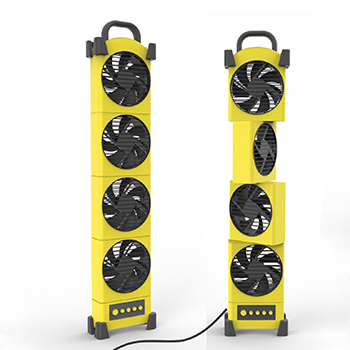
Even after the electrification of 96% of villages in India, almost 30% of households still lack electrification, due to which villagers use kerosene as their main source of lighting. SoUL at IIT Bombay started an initiative to provide power in rural parts of India with solar energy to electrify regular households, helping rural people with day-to-day domestic activities and reducing their dependence on kerosene.
This project is an attempt to develop a solar solution to serve domestic needs in rural houses by providing them with a kit containing a set of lamps and add-ons like a fan, a mobile charger, and a radio, thereby improving their livelihood and enhancing usability. The kit is so designed that assembly, distribution, installation, and servicing will be done by the local villagers to create job opportunities.