Four-wheelers
1941-1950
(1 items)
1951-1960
(2 items)
1961-1970
(3 items)
1981-1990
(7 items)
1991-2000
(8 items)
2001-2010
(5 items)
2011-2020
(5 items)
2021-present
(1 items)
Four-wheelers
1941-1950
(1 items)
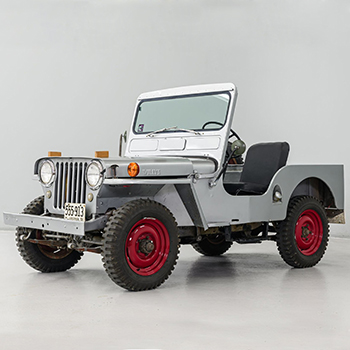
Mahindra CJ3A 1949
by Mahindra (licensed from Willys, USA)
by Mahindra (licensed from Willys, USA)
The Mahindra CJ3A (1949) was one of the earliest utility vehicles manufactured in post-independence India by Mahindra & Mahindra Ltd., under licence from Willys Overland, USA. The CJ3A was perfect for tough terrain because of its short wheelbase and high ground clearance. It was powered by the robust Go Devil 134.2 cu in (2.2 L) L-head inline-4 petrol engine, mated to a 3-speed manual transmission with a 2-speed transfer case. The body was built on a ladder-style steel chassis and was mainly made of stamped steel with reinforced panels for endurance. The minimalistic design included a fold-down windscreen and removable canvas top. It was Mahindra's first automobile, and it was a major contributor to the motorisation of rural India. Although it was not designed in India, it was assembled in India using CKD (Completely Knocked Down) kits imported from the United States.
Details >>1951-1960
(2 items)
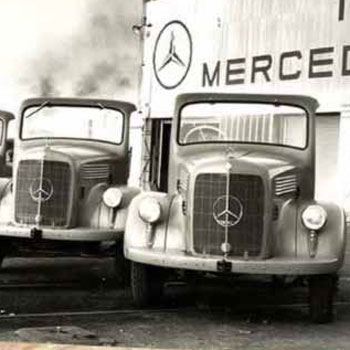
Tata Motors Truck
by Joint venture between Tata Group, India and Daimler-Benz, Germany
by Joint venture between Tata Group, India and Daimler-Benz, Germany
Tata Motors, a well-established Indian automobile manufacturer, entered into a joint venture with Mercedes-Benz in the 1950s to manufacture trucks and commercial vehicles in India. This partnership aimed to leverage Mercedes-Benz's technology and Tata's local expertise.
Details >>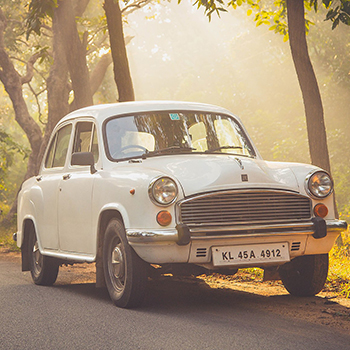
Hindustan Ambassador 1954
by Hindustan Motors (based on Morris Oxford, UK)
by Hindustan Motors (based on Morris Oxford, UK)
The story of Ambassador begins with the land master, which is basically the Morris Oxford II. Often referred to as the "King of Indian Roads", the Hindustan Ambassador (1954) was based on the Morris Oxford Series II, which was designed in the United Kingdom and manufactured by Hindustan Motors at their Uttarpara plant close to Kolkata. Its front-engine, rear-wheel-drive layout came with a side-valve 1.5L petrol engine, which was later updated with overhead-valve and diesel variants. The vehicle had a spacious cabin, a sturdy body that was appropriate for Indian road conditions, and a traditional, bulbous style with rounded outlines. The body was composed of pressed steel panels that were welded together to create a sturdy unibody shell that was supported by a steel subframe and provided durability and structural stability. Over time, important parts like the steering, axles, and suspension systems were made locally, which helped to localise it. This vehicle was designed for those who would rather sit in the back and enjoy the ride. The Ambassador was a spacious and multipurpose car. Mostly owned as a politician's preferred car, it stood as a symbol of India's automotive independence and resilience for decades.
Details >>1961-1970
(3 items)
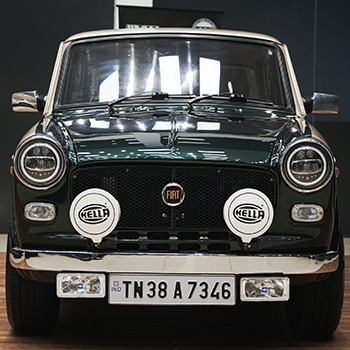
Premier Padmini 1964
by Premier Automobiles Ltd. (licensed from Fiat 1100, Italy)
by Premier Automobiles Ltd. (licensed from Fiat 1100, Italy)
Premier Automobiles Limited (PAL) launched the Premier Padmini in India in the mid-1960s, basing it on the Italian Fiat 1100D. The Padmini was small and fashionable for its time, with a sleek, European style that appealed to the middle class in urban India. It had rounded edges, a chrome grille, and simple yet graceful lines. Known for its dependability and fuel efficiency, it had a 1.1L inline-four petrol engine and a 4-speed manual gearbox. Although it was made in Mumbai, it was not designed in India. Aesthetically, the car was simple and sleek. It had a 3-box design with chrome-lined round headlights placed at corners with a giant grille at the centre housing the PAL logo and blinkers placed beneath it. It had curved front and rear bumpers crafted in chrome, door handles and a hub wheel cap also made up of chrome. Its cost-effective production was made possible by the local manufacturing of several of its pieces, including the body panels, engine parts and suspension systems, under licence from Fiat. The Premier Padmini became a cultural icon of Indian cities, particularly Mumbai, where it was a well-known black-and-yellow cab for many years due to its small size, ease of manoeuvrability, and fashionable appearance.
Details >>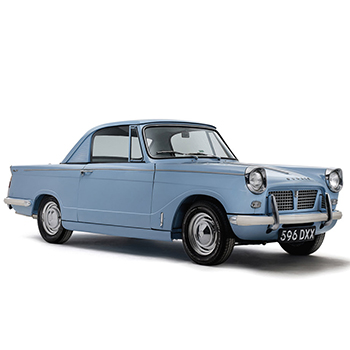
Standard Herald 1965
by Standard Motors (licensed from Triumph Herald, UK)
by Standard Motors (licensed from Triumph Herald, UK)
The Standard Herald 1965 was a compact sedan produced by Standard Motor Products of India Ltd. (SMPIL) under license from the British company Standard-Triumph. Although it was adapted for Indian conditions, it was based on the Triumph Herald. With a two-door or, subsequently, a four-door saloon body, a forward-hinged bonnet (facilitating quick engine access), and sharp, angular lines, the car had a unique design. The 1965 model was more sophisticated than many of the other models thanks to its 948 cc or updated 1147 cc gasoline engine, rear-wheel drive and independent front suspension. The interiors were simple but practical, usually with metal consoles and vinyl-covered seats, while the body panels were pressed steel with chrome accents on the grille and trimmings. Despite being regarded as rather underpowered, the car, which was manufactured in Chennai (formerly Madras), gained popularity among middle-class families in India due to its dependability and simplicity of maintenance.
Details >>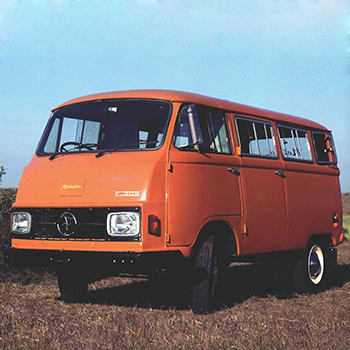
Force Metador 1969
by Force Motors (based on Hanomag & Mercedes-Benz, Germany
by Force Motors (based on Hanomag & Mercedes-Benz, Germany
The Force Matador 1969 was one of India’s earliest light commercial vehicles, manufactured by Bajaj Tempo Ltd. (now Force Motors) under a license from Tempo-Werke, Germany. It was manufactured in India, not designed in India. Its boxy, practical van-like form made it perfect for transporting both passengers and luggage, and it quickly became common throughout Indian cities and towns. Powered by a 2- or 3-cylinder diesel engine, which is renowned for its toughness and fuel efficiency, the vehicle featured a front-engine, front-wheel-drive arrangement, which was uncommon in India at the time. The Matador's body was made from pressed steel panels, built on a ladder-type chassis, offering durability and ease of repair. The interiors were minimal, with metal dashboards and basic seats using leatherette or vinyl upholstery. Because of its adaptable design, it might be used as delivery vans, minibuses, or ambulances. In India's transport history, the Matador was particularly important for rural travel and small-scale trade in the late 1960s and early 1970s.
Details >>1981-1990
(7 items)
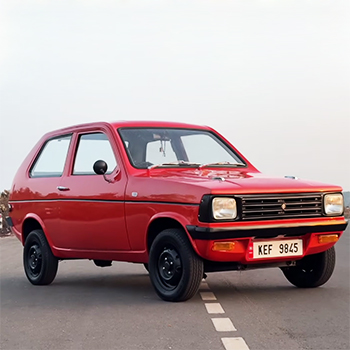
Sipani Dolphin 1982
by Sipani Automobiles (based on Reliant Kitten, UK)
by Sipani Automobiles (based on Reliant Kitten, UK)
The Sipani Dolphin, launched in 1982, was a compact hatchback manufactured by Sipani Automobiles Ltd in Bangalore, India. The Dolphin, which was based on the UK's Reliant Kitten, was notable for having a fibreglass body, which made it lightweight and resistant to rusting. Its design was compact and sporty, with a two-door configuration, sloping rear hatch, and a simplistic yet forward-looking aesthetic for early 1980s India. An 848 cc four-cylinder petrol engine with rear-wheel drive was installed in the front. The fibreglass panels created problems with durability and repair even though they assisted in lowering production costs and vehicle weight. The fibreglass body was attached to a steel frame that served as the chassis. The interiors were basic, with functional instrumentation and modest fabric or vinyl seating. The Dolphin is still a fascinating episode in Indian automotive history, despite its commercial struggles brought on by a lack of dealer backing and the market's reluctance to accept non-metal bodies.
Details >>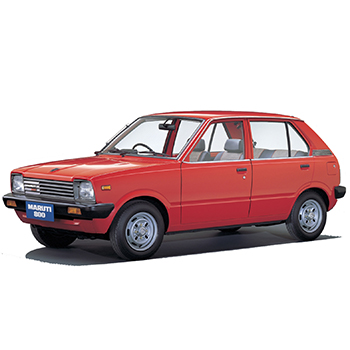
Maruti 800 1983
by Maruti Udyog Ltd. (collaboration with Suzuki, Japan)
by Maruti Udyog Ltd. (collaboration with Suzuki, Japan)
The Maruti 800, launched in 1983, a contemporary, small, and fuel-efficient hatchback for the general public, signalled a dramatic change in the Indian automobile industry. The Suzuki Fronte/Alto SS80 served as the model for its simple yet useful design, which was perfect for Indian city roads because of its boxy profile, small size, and sparse decoration. Known for its dependability and economy, the car's 796 cc, 3-cylinder, F8B petrol engine was produced by Maruti Udyog Limited in partnership with Suzuki Motor Corporation of Japan. While parts like the dashboard and bumpers were moulded from sturdy polymers, the body shell was composed of monocoque pressed steel panels. The Maruti 800's mass appeal, affordability, and ease of maintenance made it a representation of India's economic liberalisation and the aspirations of the middle class. At the time of its launch, it cost Rs. 48,000, which was a rather substantial amount.
Details >>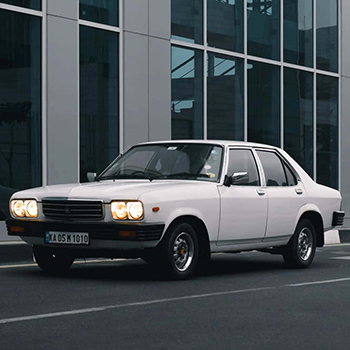
Hindustan Contessa 1984
by Hindustan Motors (based on Vauxhall VX Series, UK)
by Hindustan Motors (based on Vauxhall VX Series, UK)
One of India's first luxury sedans, the Hindustan Contessa was introduced by Hindustan Motors in 1984 and was based on the UK's Vauxhall Victor FE from the 1970s. Buyers looking for a high-end vehicle with a Western taste were drawn to its design because of its long, wide body, straight lines, and regal demeanour. It started out with the outdated 1.5L BMC engine, which was also utilised in the Ambassador. Later, it was upgraded with a 1.8L petrol engine and 5-speed gearbox from Isuzu, which greatly increased performance and refinement. The Contessa featured a steel monocoque chassis, pressed steel body panels, and chrome accents, while interiors were furnished with moulded plastic dashboards, fabric upholstery, and faux wood trims. The vehicle, which was manufactured at Hindustan Motors' Uttarpara facility in West Bengal, reflected a period of transition in Indian auto production by combining local assembly with imported components. During the 1980s and early 1990s, politicians and business leaders favoured the Contessa because of its comfort, spaciousness, and official appeal.
Details >>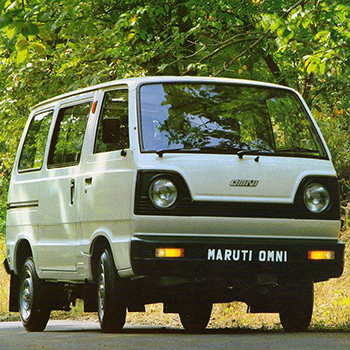
Maruti Omni 1984
by Maruti Suzuki (Suzuki Every, Japan)
by Maruti Suzuki (Suzuki Every, Japan)
The Maruti Omni, launched in 1984 by Maruti Udyog Limited (now Maruti Suzuki India Limited), was India’s first microvan designed for both commercial and family use. The Suzuki Carry, particularly the ST90 generation of the early 1980s—a well-liked kei van/microvan made by Suzuki Motor Corporation, Japan—was the inspiration for the design and concept of the Maruti Omni (1984). Its cab-over-engine configuration and small, boxy shape maximised cabin space. Large windows for visibility, a flat front, and sliding doors were all part of its functional design. The Omni was equipped with a 796cc, 3-cylinder petrol engine, shared with the Maruti 800, offering modest performance with high fuel efficiency. For economical mass manufacturing, the car was built at Maruti's Gurgaon facility using a monocoque chassis mainly composed of mild steel sheets. The interiors had simple vinyl and plastic components, while the body panels were stamped and welded with rudimentary corrosion protection. The Omni has been a common option for ambulances, school vans and the transportation of products on Indian roadways for more than thirty years due to its lightweight design, ease of maintenance and versatility.
Details >>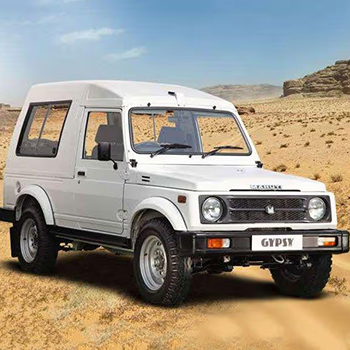
Maruti Gypsy 1985
by Maruti Suzuki (Suzuki Jimny SJ410, Japan)
by Maruti Suzuki (Suzuki Jimny SJ410, Japan)
The Maruti Gypsy, launched in 1985, was a rugged off-road vehicle based on the Suzuki SJ410 (Jimny) platform, adapted for Indian terrain by Maruti Udyog Limited in collaboration with Suzuki Motor Corporation, Japan. Its design featured a boxy, utilitarian body, flat panels, round headlamps, and a signature slatted grille, suited for durability and ease of repair. The Gipsy was perfect for rugged terrain, military applications, and rural use since it was built on a ladder-frame chassis and had high ground clearance, leaf spring suspension, and part-time 4WD. The early model was powered by a 970cc, 4-cylinder F10A petrol engine, paired with a 4-speed manual gearbox. It was manufactured at Maruti's Gurgaon plant with a steel chassis, pressed mild steel body panels, and simple vinyl, fibreboard, and injection-moulded plastic interiors. The Gipsy cemented its status as an iconic Indian 4x4 by becoming a favourite among the Indian Army, police, and rally drivers due to its dependability and ability to travel anywhere.
Details >>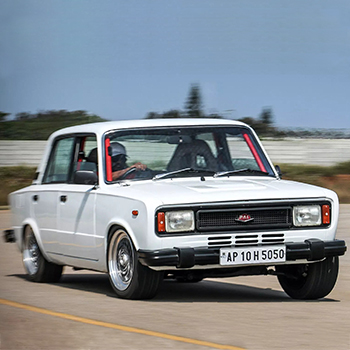
Premier 118NE
by Premier Automobiles Ltd. (Fiat 124 + Nissan A12 engine, Japan)
by Premier Automobiles Ltd. (Fiat 124 + Nissan A12 engine, Japan)
The Italian Beauty Fiat 124, which is known in India as the Premier 118NE, launched in 1985 by Premier Automobiles Limited (PAL), was a mid-size sedan developed through a collaboration between PAL, Fiat (Italy), and Nissan (Japan). Although it used Nissan-licensed technical parts, such as the 1.2L (1171cc) Nissan A12 inline-4 petrol engine and a smooth 4-speed manual transmission with rear-wheel drive, it was built on the Fiat 124 platform. With Japanese mechanical dependability, the design kept the Fiat 124's round headlights, chrome embellishments, and clean, boxy European style. PAL's Kurla plant in Mumbai manufactured the body using pressed steel panels and a monocoque construction for structural rigidity. Cost-effective manufacturing was evident in the interiors, which featured vinyl-covered seats, simple plastic dashboard components, and analogue instrumentation. Despite having few amenities, the 118NE was well liked by upper-middle-class Indian families in the late 1980s and early 1990s due to its smooth engine performance, smoothness, and comfortable ride.
Details >>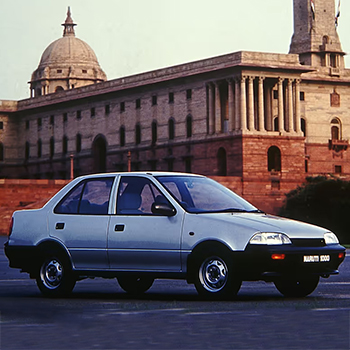
Maruti 1000 1990
by Maruti Suzuki (Suzuki Cultus/Swift, Japan)
by Maruti Suzuki (Suzuki Cultus/Swift, Japan)
The Maruti 1000, launched in 1990, was Maruti Suzuki's first entry into the mid-size sedan segment in India and marked a significant step up from its smaller hatchbacks. It was designed as a compact family sedan and was based on the Suzuki Cultus sedan (SA310). It had a clean, boxy appearance with rectangular headlamps, a straightforward grille, and little decoration, which reflected the practical aesthetics of the time. The vehicle was powered by a 3-cylinder, 970cc, carburetted gasoline engine that generated around 46 horsepower and was mated to a 4-speed manual gearbox. Although many essential parts were initially imported, it was manufactured at Maruti's Gurgaon factory with considerable localisation efforts. Vinyl and plastic were utilised for the inside trims, while mild steel was used for the body shell. Dashboards were constructed from injection-molded ABS plastic, while upholstery was manufactured from synthetic cloth. The Maruti 1000 was one of the first sedans in India to offer relatively refined ride quality and better NVH insulation, setting the stage for future compact sedans in the Indian market.
Details >>1991-2000
(8 items)
Maruti Suzuki Zen
by Maruti Suzuki
by Maruti Suzuki
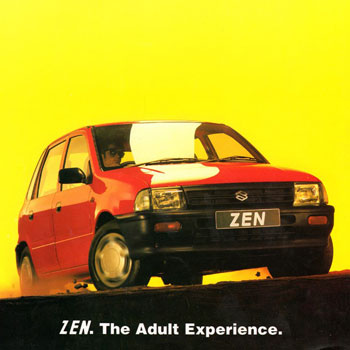
In the early 1990s, Maruti Udyog Limited (now Maruti Suzuki India Limited) set out to launch a compact and stylish car to cater to the growing Indian middle-class market. The result was the Maruti Suzuki Zen, a car designed and manufactured in India.
Details >>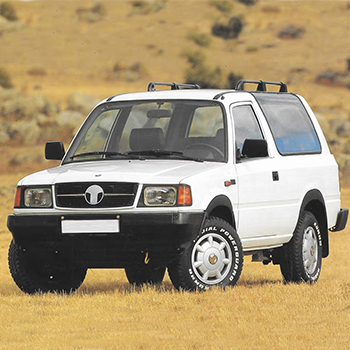
TATA Sierra 1991
by Tata Motors (in-house design, engine tech from Peugeot, France)
by Tata Motors (in-house design, engine tech from Peugeot, France)
The Tata Sierra, launched in 1991, was a pioneering vehicle in Indian automotive history, being the first Indian-designed and manufactured SUV with a 3-door body style and modern features like power windows and air-conditioning—rare at the time. It was also an innovation in Indian automotive history. It had a huge, curved back glass area that gave it a unique appearance and great visibility thanks to its strong, futuristic design. Targeting urban shoppers seeking a balance between comfort and functionality, the design was both elegant and tough. Powered with a 2.0L Peugeot XD88 diesel engine—later updated to a turbocharged version—it was constructed on Tata's X2 chassis, which was adapted from the Tata Telcoline pickup. A significant amount of in-house engineering and fabrication was done during manufacturing at the Tata Motors facility in Pune. Steel panels that had been pressed and welded together made up the Sierra's body, while fibreglass was used for the rear roof cladding and some trim. Interiors featured moulded plastic dashboards, fabric seats, and vinyl-lined trims, giving it a car-like feel inside. The Tata Sierra helped influence the direction of utility vehicles in India and was a daring step towards domestic SUV development.
Details >>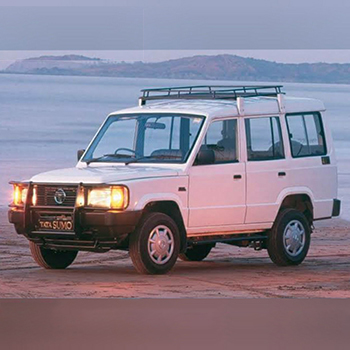
TATA Sumo 1994
by Tata Motors (in-house, engine based on Peugeot XD88)
by Tata Motors (in-house, engine based on Peugeot XD88)
The Tata Sumo, launched in 1994, was a landmark multi-utility vehicle (MUV) developed entirely in India by Tata Motors, aimed at both civilian and military use. With its spacious cabin, flat hood, and towering stance, the Sumo's boxy, utilitarian design provided enough room for up to nine people. Its practical design placed a strong emphasis on longevity and ease of upkeep, which made it perfect for Indian road conditions. A 2.0L Peugeot XD88 diesel engine powered it; later, Tata's own upgraded engines took its place. Using a ladder-frame chassis, pressed steel body panels, and strengthened underbody structures for strength, the Sumo was constructed at Tata's Pune factory. Depending on the version, the dashboard and interior trims were made of plastics and vinyl, the frame and body were made of mild steel, and the seat upholstery was either vinyl or cloth. Throughout the 1990s and the beginning of the 2000s, government organisations, taxi drivers, and rural families all chose the Tata Sumo because of its sturdy construction, roomy cabin, and affordability.
Details >>
Force Trax 1998
by Force Motors (licensed Mercedes-Benz platform)
by Force Motors (licensed Mercedes-Benz platform)
The Force Trax (1998) was a rugged multi-utility vehicle developed by Force Motors Ltd., formerly known as Bajaj Tempo Ltd., aimed primarily at rural, semi-urban, and commercial markets. With a lengthy wheelbase that can hold up to 12 passengers or large goods, flat panels, and a high ground clearance, its boxy and functional design prioritised functionality over aesthetics. It had a 2.0- to 2.6-litre diesel engine, produced under licence and renowned for its dependability and ease of maintenance, that was adapted from Mercedes. The vehicle's ladder-frame structure provided structural integrity for both load-bearing and off-road situations. The body panels were made of stamped sheet metal with a strengthened steel frame, and the inside was simple with vinyl upholstery, moulded plastic accents, and few electronic parts to reduce maintenance costs. Its sturdy construction and ease of use made it a favourite among Indian government, law enforcement, and rural transportation users.
Details >>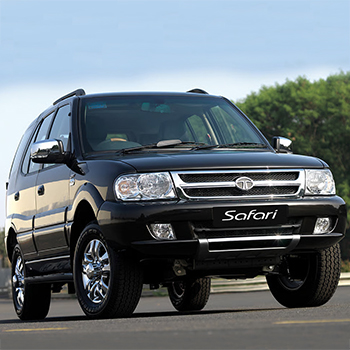
TATA Safari 1998
by Tata Motors
by Tata Motors
The Tata Safari (1998) was India's first true SUV designed and developed entirely by an Indian company, marking a milestone for Tata Motors. Featuring a lofty stance, an upright front grille, wide wheel arches, and a side-opening rear door, the Safari's aggressive and muscular look at launch embodied the tough SUV image of the time. It was propelled by a 2.0-litre turbocharged diesel engine that was first purchased from Peugeot and subsequently improved in later models. The ladder-frame chassis on which the vehicle was constructed provided durability for off-road use. A large percentage of the car was locally made in India, with manufacturing taking place at Tata's Pune factory. The Safari's body panels were composed of pressed steel, and its interior had fabric or leatherette seats, injection-moulded plastic accents, and some internal fittings reinforced with glass fibre. It was marketed as a high-end Indian SUV for both urban and outdoor customers, with equipment including air conditioning, power steering, and optional 4WD.
Details >>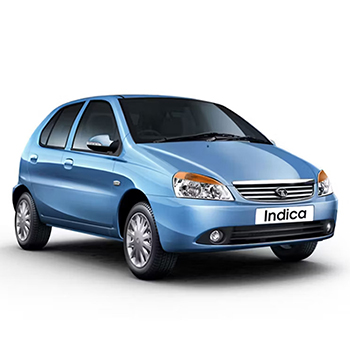
TATA Indica 1998
by Tata Motors
by Tata Motors
The TATA Indica, launched in 1998, was India’s first fully indigenous passenger car designed by Tata Motors. Its design, created in partnership with the Italian design firm IDEA Institute, was a small hatchback with rounded, European-inspired style. At a time when the combination of a diesel engine, a roomy cabin, and fuel efficiency was uncommon in small automobiles, the Indica stood out. Manufacturing took place at Tata’s Pune facility using a high degree of local content. For durability and safety, the body structure was constructed using steel monocoque, while the bumpers, interior panels, and trim were made of plastic and fibre-reinforced materials. With its 1.4L diesel engine (and later gasoline variants), independent suspension, and front-wheel drive, the automobile was reasonably priced and useful. The TATA Indica, which marked Tata Motors' entry into the passenger automobile market, marked a turning point in India's automotive history.
Details >>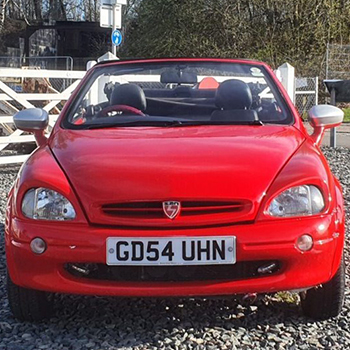
San Storm 1998
by San Motors (design by Le Mans Group, France)
by San Motors (design by Le Mans Group, France)
San Motors India Ltd. introduced the San Storm in 1998; it was one of the few convertible sports cars made in India specifically for urban consumers looking for a fun, fashionable car. With its low-slung profile, rounded front, and sporting spirit, the design, which was created in partnership with the Le Mans Group in France, has a distinctly European flair. In contrast to automobiles with metal bodies, the fibreglass-reinforced plastic (FRP) body is lightweight, corrosion-resistant, and less impact-absorbent. The San Storm was powered by a 1.2L petrol engine from Renault that was installed on a tubular steel chassis and coupled to a 5-speed manual gearbox. The majority of the body panels were hand-laid at San Motors' Goa plant, indicating a semi-custom build technique. Despite its distinctive positioning, the car's restricted dealer network, niche appeal, and lack of practicality caused it to struggle in the Indian market; yet, it is still a noteworthy attempt at producing sports cars domestically.
Details >>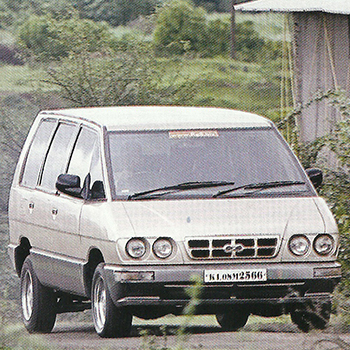
Rajah Kazwa
by Rajah Group
by Rajah Group
India's first MPV attempt was the Rajah (later Kajah) Kazwa, which was introduced in 1998 by Kerala's Rajah Group (which produces Ayurvedic and beedi goods under Rajah Motors). It was two years ahead of Toyota's Qualis. The Kazwa, which was constructed on a specially designed sheet-steel chassis and had a fibreglass body, was heavily influenced by the Renault Espace, as seen by its tall, spacious interior, low window line, and broad frontal glass. It had a 2.0 L Hindustan Isuzu Contessa diesel engine under the hood that produced about 70–72 PS. Hindustan Motors supplied the drivetrain, suspension (independent front, semi-floating rear), brakes, power steering, and gearbox. Dual air conditioning, power steering, windows, central locking, power mirrors, an available sunroof, alloy or wire-spoke wheels, and even a sporty violet-grey dual-tone paint were all features that were ahead of their time. At their Chavakkad, Thrissur factory, some four to seven prototypes were constructed; but, because of problems with regulatory permission and a lack of a sales-service network, they were unable to achieve mass production. The Kazwa, which combines a domestically constructed steel-fibreglass hybrid chassis, European-style styling, and parts from reputable domestic sources, is nevertheless an important if underappreciated pioneer in India's automotive history, even if only a small number of them are left today.
Details >>2001-2010
(5 items)
TATA Indigo 2002
by Tata Motors
by Tata Motors
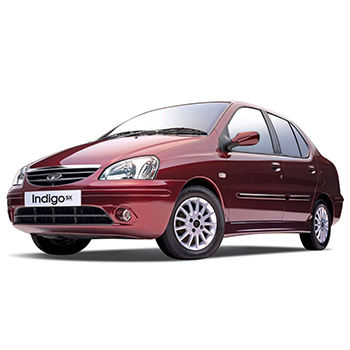
The Tata Indigo, launched in 2002, was Tata Motors’ first compact sedan based on the successful Tata Indica platform. It had a more spacious cargo and kept the front half of the Indica's design, making it an inexpensive family vehicle with a sedan form factor. Targeting urban Indian buyers, the style was understated with a more sophisticated rear portion, a chrome-finished grille, and body-coloured bumpers. It was produced utilising monocoque construction at Tata's facility in Pune. The vehicle's exterior panels were made of pressed steel, while its interior was composed of a combination of metal and plastic parts. High-tensile steel was used in the chassis to provide structural stiffness. In addition to using materials like aluminium for engine components, plastic-moulded dashboards, fabric upholstery and glass-reinforced plastic for some interior components, the Indigo was available with both petrol and diesel engine options. Its value-for-money approach, low cost of ownership, and straightforward yet functional design allowed Tata to establish a presence in the Indian entry-level sedan market.
Details >>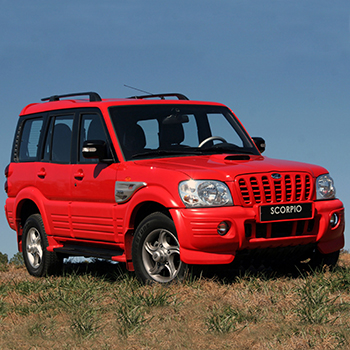
Mahindra Scorpio 2002
by Mahindra & Mahindra
by Mahindra & Mahindra
The Mahindra Scorpio, launched in 2002, marked a significant milestone as Mahindra & Mahindra’s first indigenously designed and developed SUV. Its design was a collaboration between Mahindra’s in-house engineering team and AVL (Austria) for engine development, with styling inputs from the renowned design firm Ken Balough. With its lofty posture, vertical grille, and prominent wheel arches, the Scorpio's appearance was bold and tough, indicating its off-road prowess. It had rear-wheel drive and four-wheel drive options and was constructed on a ladder-frame chassis, which combined strength and durability. A 2.6L turbocharged diesel engine (created in collaboration with AVL) and a 5-speed manual gearbox propelled the car. In order to keep costs down, manufacturing was done at Mahindra's Nashik facility using locally sourced components. The inside included vinyl, fabric upholstery, and injection-moulded plastic accents, while the body panels were mostly composed of stamped steel. With the introduction of the Scorpio, Mahindra's reputation was completely changed, and the business went from making utility vehicles to becoming a major participant in the domestic and foreign SUV industries.
Details >>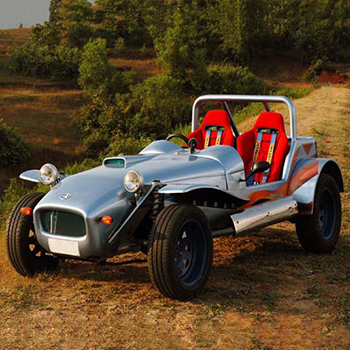
Chinkara Roadster 2003
by Chinkara Motors (inspired by Lotus Seven, UK)
by Chinkara Motors (inspired by Lotus Seven, UK)
The Chinkara Roadster 1.8S, introduced in 2003 by Chinkara Motors in India, was a lightweight, open-top sports car inspired by the classic Lotus Seven. Inspired by the vintage Lotus Seven, Chinkara Motors debuted the lightweight, open-top Chinkara Roadster 1.8S in India in 2003. It had a low-slung body, exposed wheels, and a tubular space frame chassis that prioritised performance and agility in its minimalist, retro-modern design. The design, which offers a purist experience with few electronic aids, was geared towards driving aficionados. A 1.8L MPFI petrol engine from the Maruti Suzuki Esteem, which produced about 88 horsepower, was used to power the vehicle. It was mated to a 5-speed manual gearbox. Many parts were manufactured or modified from pre-existing Indian cars in order to keep costs down throughout the manufacturing process, which was conducted in a small-scale, semi-custom setup close to Mumbai. High-tensile steel tubes were selected for rigidity and crash safety in the chassis, while lightweight fibreglass-reinforced plastic (FRP) was used for the body. With a focus on weight reduction, the interior materials were simple, with metal finishes, leather or vinyl seats, and no instrumentation. With the goal of providing a reasonably priced, track-ready sports car experience, the Chinkara Roadster operated as a niche performance offering in India.
Details >>
ICML Motors Extreme 2006
by ICML (Sonalika Group, India – in-house design)
by ICML (Sonalika Group, India – in-house design)
The ICML Extreme, launched in 2006 by International Cars and Motors Ltd. (ICML)—a subsidiary of the Sonalika Group—was designed as a rugged, multi-utility vehicle targeting both rural and semi-urban markets in India. It featured a boxy, SUV-inspired design with a high ground clearance and a no-frills exterior, prioritising utility over aesthetics. The Mahindra Bolero had an influence on the design language, which appealed to consumers looking for a durable and dependable car. It had a 2.0L diesel engine under the hood that was created in partnership with Ricardo PLC (UK) and was renowned for its dependability and fuel efficiency. With a focus on strong localisation of parts, the vehicle was produced at ICML's factory in Amb, Himachal Pradesh. The inside was functional, with simple plastics and easily maintained fabric upholstery, while the body sections were composed of reinforced steel. With possibilities for both 7- and 9-seater configurations, the ICML Extreme was marketed as an affordable solution for both family and business use.
Details >>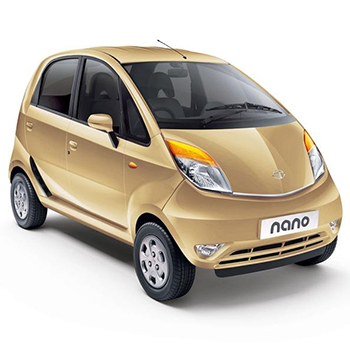
TATA Nano 2008
by Tata Motors
by Tata Motors
The Tata Nano, launched in 2008, was conceived as the world’s cheapest car, envisioned by Ratan Tata to provide an affordable mobility solution for Indian families. The Nano, created by the in-house team of Tata Motors in partnership with IDEM and Trilix, had a small, egg-shaped design and a rear-engine, rear-wheel-drive configuration—a unique decision meant to maximise internal space while minimising the footprint. Its lightweight design was made possible by a 624 cc two-cylinder petrol engine that was situated at the back. Production was previously done in Pantnagar, but the manufacturing was done at Tata's plant in Sanand, Gujarat. In order to cut costs, the Nano made extensive use of lightweight materials, including plastic bumpers, a monocoque body structure made of thin-gauge steel, little sound insulation, and simplified parts like a single windscreen wiper and no power steering. The interior was simple, with cloth seats and harsh plastics, emphasising utility over elegance. The Nano's low-cost innovation and efficient design make it a significant milestone in automotive engineering, even with its modest success.
Details >>2011-2020
(5 items)
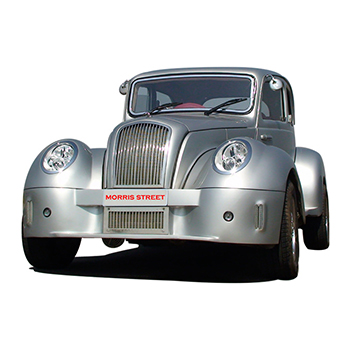
Hradyesh Morris Street 2011
by Hradyesh
by Hradyesh
India's first real street rod and most costly domestically produced luxury vehicle is the Hradyesh Morris Street, which was introduced in 2011 by the boutique luxury manufacturer Hradyesh. The Morris Street was constructed almost entirely by hand using the existing chassis of a 1940s Morris model, but every component—from the motor, gears, and brakes to the specially designed chassis and high-performance suspension—is made to exacting specifications. A 1,400 cc custom-block engine that produces about 90 horsepower and 120 Nm of torque powers the vehicle, giving it a distinctly swaggering, vintage driving sensation. The interior is furnished with hand-stitched, royal-red leather, period-style aesthetics, and a top-tier audio-visual system, all of which are designed to create a luxurious ambiance that radiates exclusivity and individuality. The body is beautiful and curvy, and it is finished in a super-silver paint. The Morris Street, which costs over 2.7 crore and is the only one ever constructed, is a unique handcrafted masterpiece that embodies Hradyesh's goal to bring an ultra-luxury, made-to-order "masterpiece edition" to the Indian auto industry.
Details >>
Mahindra Electric e20 2013
by Mahindra Electric (formerly Reva Electric, India)
by Mahindra Electric (formerly Reva Electric, India)
The Mahindra Electric e2o (2013), a compact urban electric hatchback, was India’s first mass-produced electric car under Mahindra Reva Electric Vehicles, following Mahindra’s acquisition of Reva Electric Car Company. The e2o, which was primarily made for city commuting, had a clever, futuristic look with a big windscreen, two doors, and a simple, environmentally friendly design. It included a reinforced bonded monocoque structure composed of polycarbonate and ABS panels, which are strong and lightweight materials that improve corrosion resistance and efficiency. The vehicle was powered by a 48V lithium-ion battery and a 19 kW (25.5 bhp) electric motor, offering a range of approximately 100 km per charge. In keeping with its sustainability-driven philosophy, the e2o was put together at Bengaluru's first platinum-rated green manufacturing facility using low-emission and energy-efficient techniques. It was a cutting-edge electric transportation solution for its time, with an interior that prioritised smart communication and included touchscreen infotainment and remote diagnostics.
Details >>
Mahindra XUV500 2014
by Mahindra & Mahindra
by Mahindra & Mahindra
The Mahindra XUV500 (2014) was a flagship SUV designed with a strong focus on bold styling, performance, and modern features to compete in the premium SUV segment. With aggressive lines, powerful wheel arches, a unique front grille, and swept-back headlamps that added to its dramatic road presence, its design was inspired by a cheetah. The monocoque chassis design, which was Mahindra's first internal effort, provided improved handling and increased rigidity. High levels of localisation and engineering contributions from Mahindra's R&D centre, the Mahindra Research Valley in Chennai, were included in the XUV500, which was manufactured at Mahindra's factory in Chakan, Pune. For structural integrity, the body shell was mainly composed of high-strength steel, but the body panels also contained stamped steel and a small amount of composite and plastic for the cladding and bumpers. In order to create a more upscale feel, interior components included brushed aluminium highlights, injection-moulded plastics, and imitation leather for upholstery in higher variations. With features like touchscreen infotainment, all-wheel drive, and cutting-edge safety systems for its time, the SUV was propelled by a 2.2L mHawk diesel engine and a 6-speed manual gearbox.
Details >>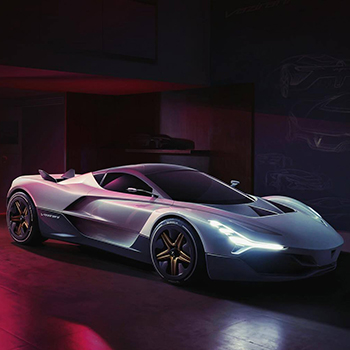
Vazirani Shul 2018
by Vazirani Automotive (India, concept car, with support from Michelin and Force India F1 team)
by Vazirani Automotive (India, concept car, with support from Michelin and Force India F1 team)
Vazirani Automotive, an Indian firm started by Chunky Vazirani, introduced the Vazirani Shul (2018), a high-performance electric hypercar concept. In order to blend state-of-the-art Indian engineering with international design sensibilities, the Shul was created with input from the Force India F1 team and the esteemed Rolls-Royce aerospace business. It has an aggressive front fascia, a modern cabin that emphasises performance and minimalism, and a remarkable aerodynamic design with flowing lines. The Shul is powered by a jet turbine-electric hybrid powertrain, where a microturbine charges the battery, which in turn powers four individual electric motors, offering all-wheel drive and instant torque. For increased strength and decreased weight, it makes use of carbon fibre body panels and a monocoque carbon fibre chassis. Despite having precision-engineered and internationally sourced components, the vehicle's design language preserves subtleties of Indian culture, making it a representation of India's aspirations for the future of the automotive industry. Even though it was only a concept when it was unveiled, it demonstrated India's growing potential in luxury electric vehicles.
Details >>
2021-present
(1 items)